
A third of my inking trips have been solo. Up till this whirlwind trip (arrive-ink-sleep-ink-sleep-ink-depart), that meant once outside the tattoo studios any meaningful interaction with the locals was largely done for the day. But this visit was different.
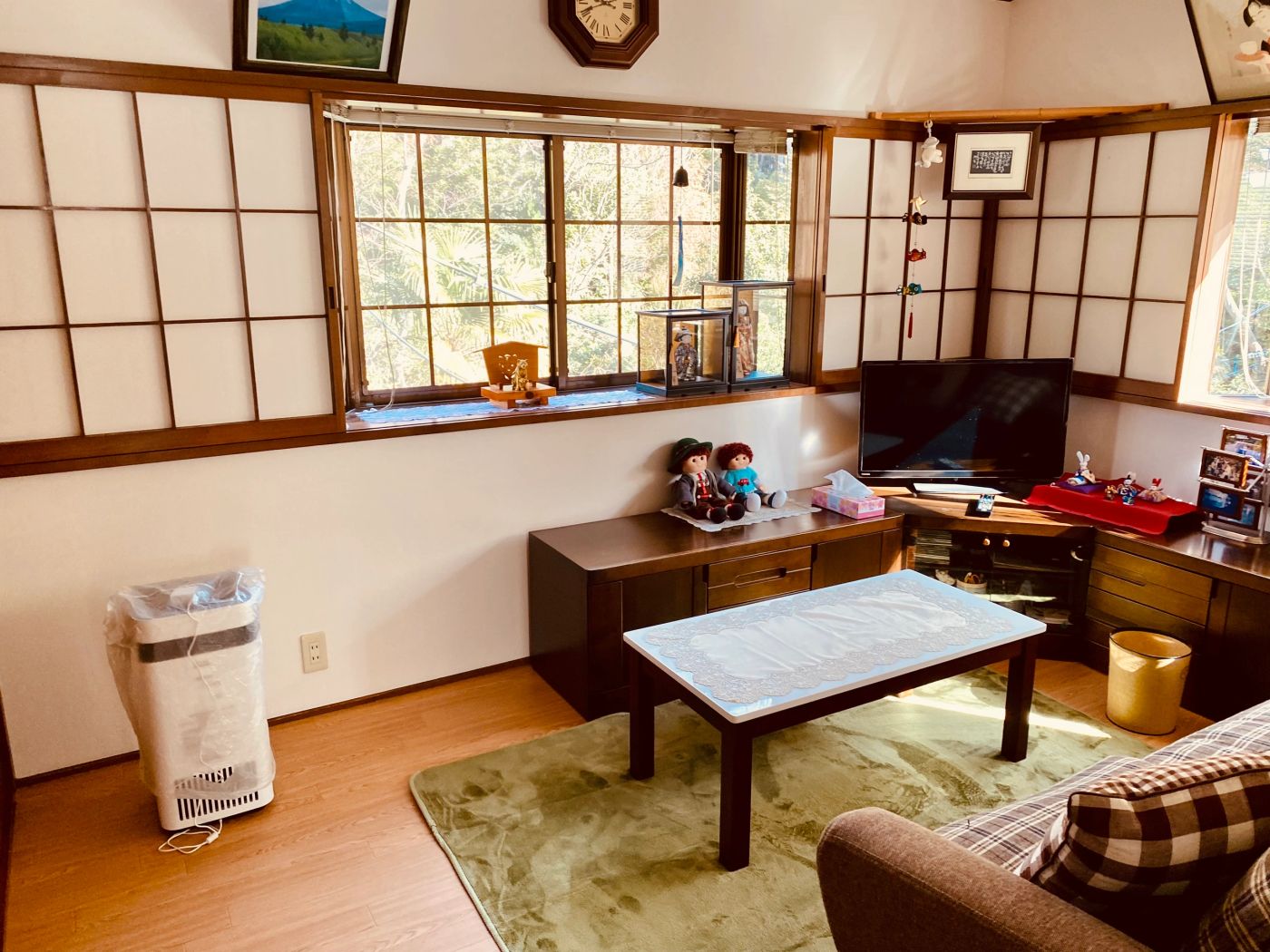
Instead of renting a hotel room or Airbnb, for the 4th Tokyo session I stayed in a furnished room in the home of an older, Japanese widow. I’ll call her ‘Humira,’ which my medical pals will of course recognize as an important drug for treating a variety of autoimmune conditions; her real name, curiously enough, is a perfect anagram for that of the medication. I’d planned to stay with her on my first trip, but she canceled at the last moment—apparently she’d gotten sick and had to be hospitalized. I took her explanation at face-value; though I couldn’t completely shake the notion that perhaps she’d been frightened of having a heavily-tattooed foreigner lurking in the shadows of her home in the middle of the night. But I tried again for the current trip: I contacted her once more, and she reported improved health. So this time I would be a house-guest in an authentic Japanese home.
Humira speaks English and we texted periodically in advance of my arrival. She told me that she’d lost weight and aged a good deal from respiratory illness. That she now considered herself an ugly old woman and had given away all of her jewelry. It saddened me to hear this, and at risk of possibly offending I sought out and found a nice silver and turquoise Navajo necklace to give as a small gift.
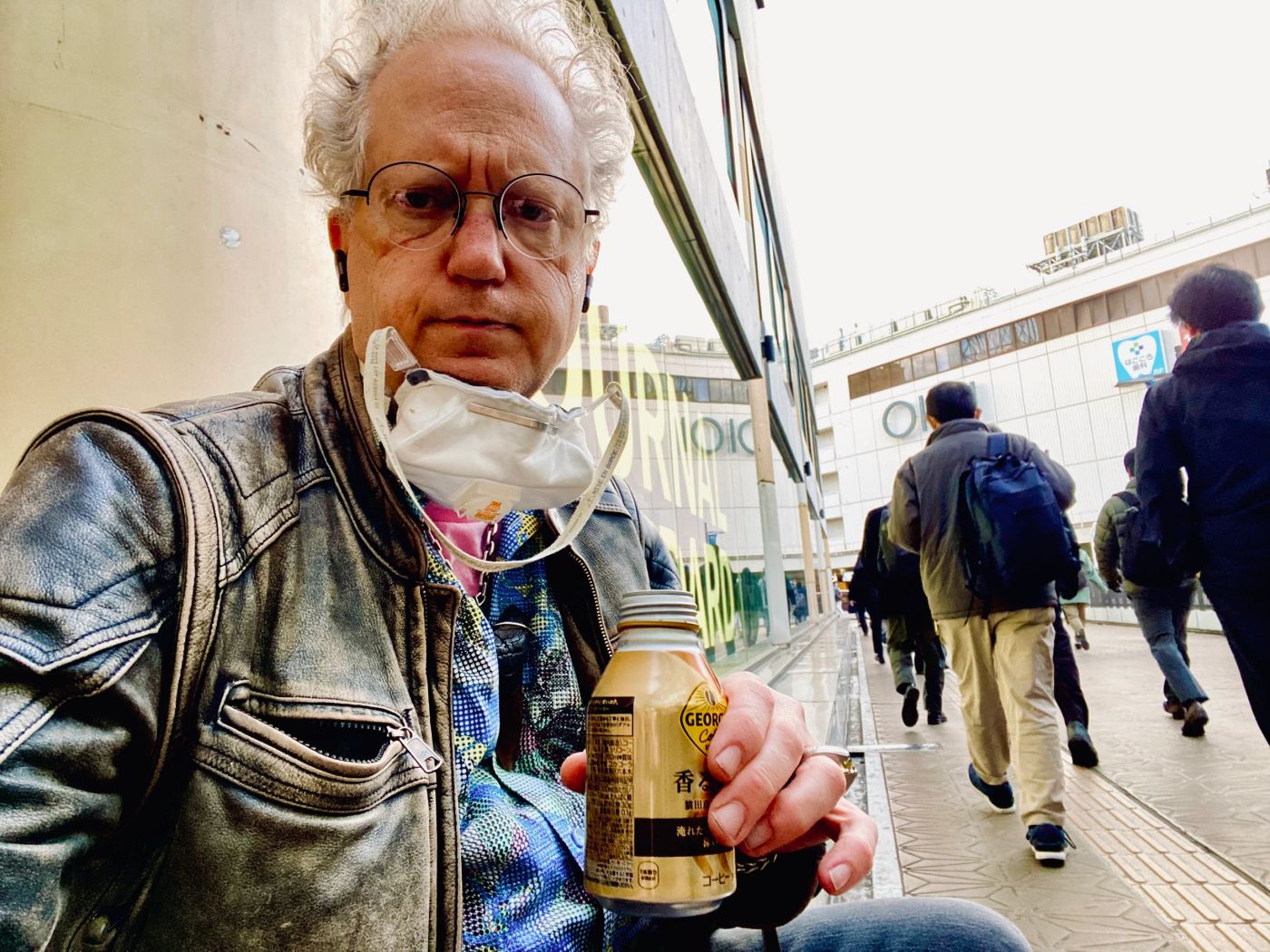
Bringing neither family nor dozens of pounds of sterile water permitted efficient packing. So I nestled the necklace and gifts for Sensei into the tight corners of my carry-on luggage and headed to LAX, then on to Haneda via a red-eye, arriving at 5am—before even the coffee shops were open. Fortunately the trains are already going by then, though, and so I used my newly-loaded rail app to pay like a local and arrived at Machida Station in good time. Still, no shops in the station were open; I hit up the vending machines for some hot cocoa and sat on a cold, metal curb, surely looking like a vagrant to the unending swell of commuters I watched flow by on their way to wherever.
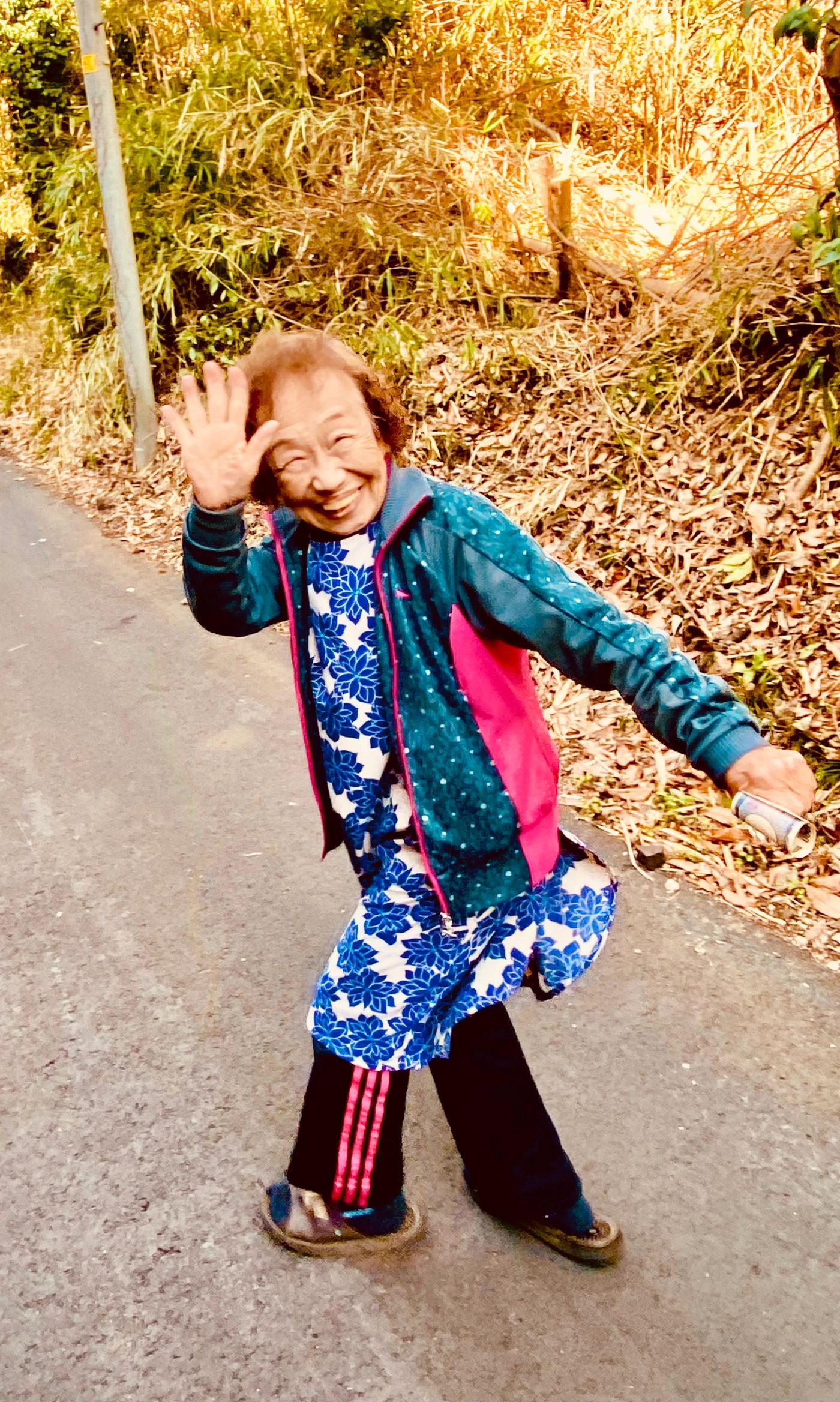
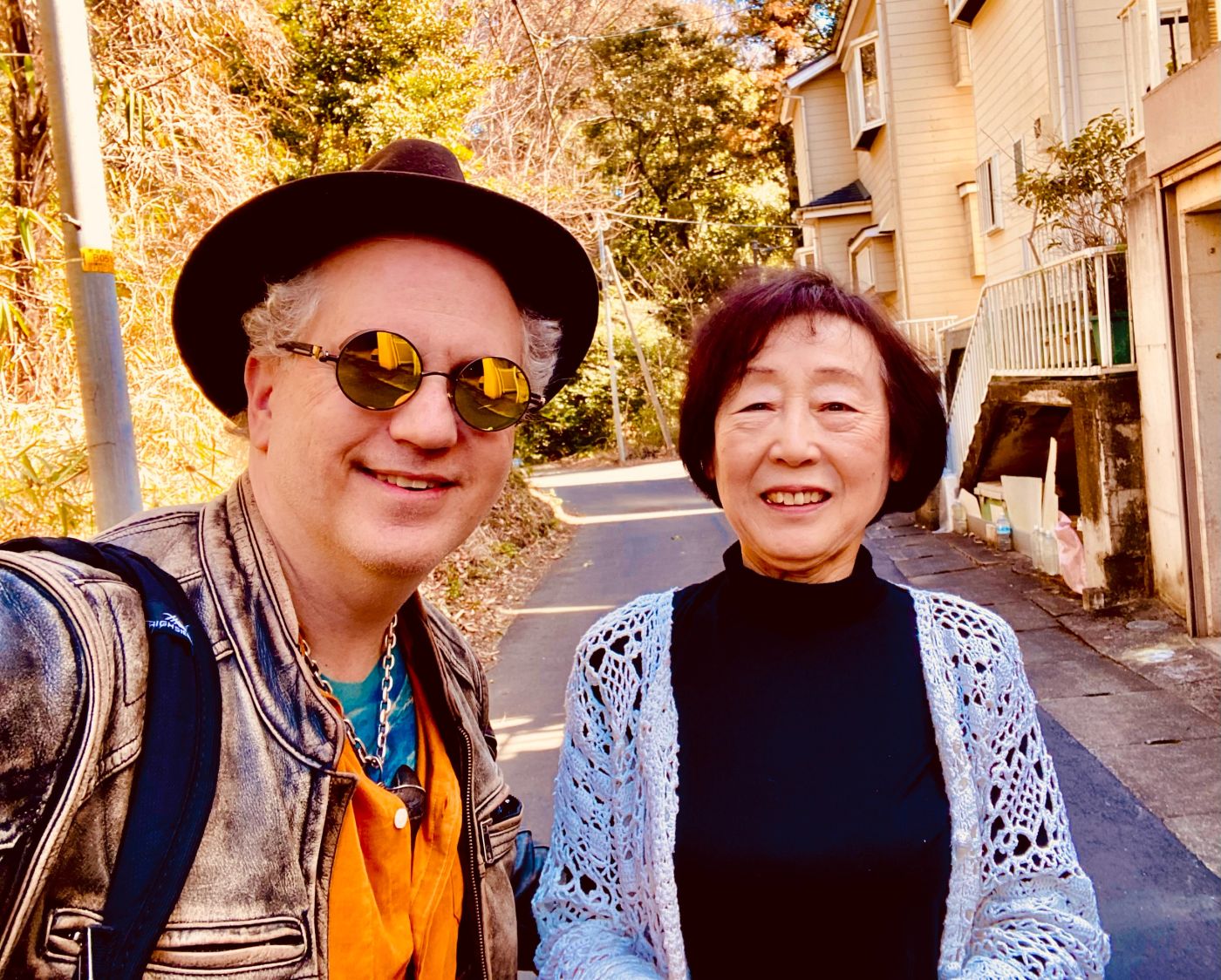
At a reasonable time I set off for Humira’s house in a quiet neighborhood next to a wooded park. As usual I couldn’t find the place; I showed her photo to another old woman who spoke a mile a minute in Japanese, not clearly to me or to herself, who escorted me to the right address.
A small, tidy woman emerged from a small and tidy house and was very friendly. Inside there were instructions on where to remove my shoes and what to do where. I unpacked gifts and we spent a good while chatting. It was a relief to see that she wasn’t at all intimidated by or awkward with such a wacko guest.
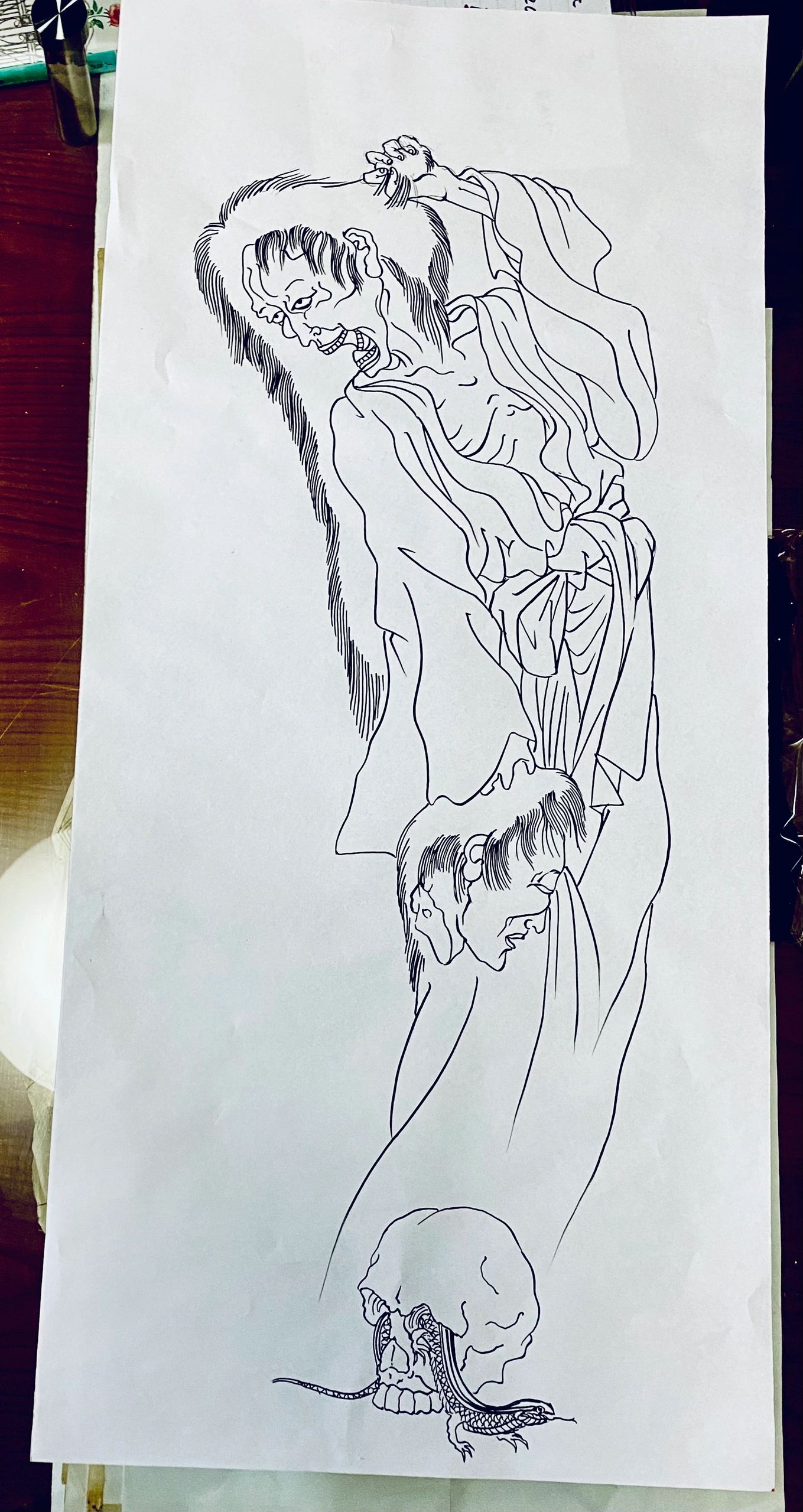
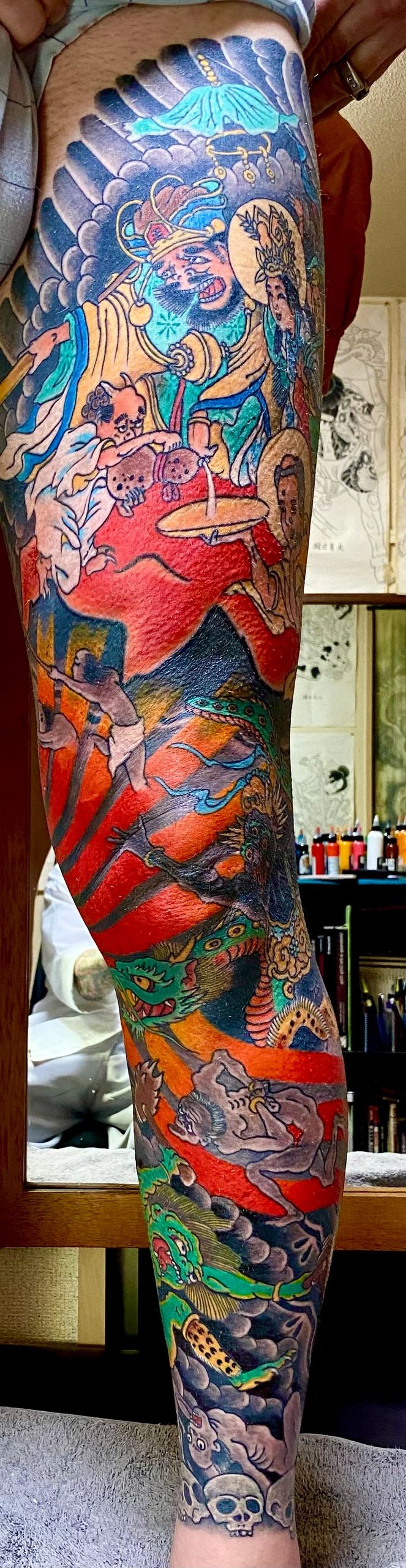
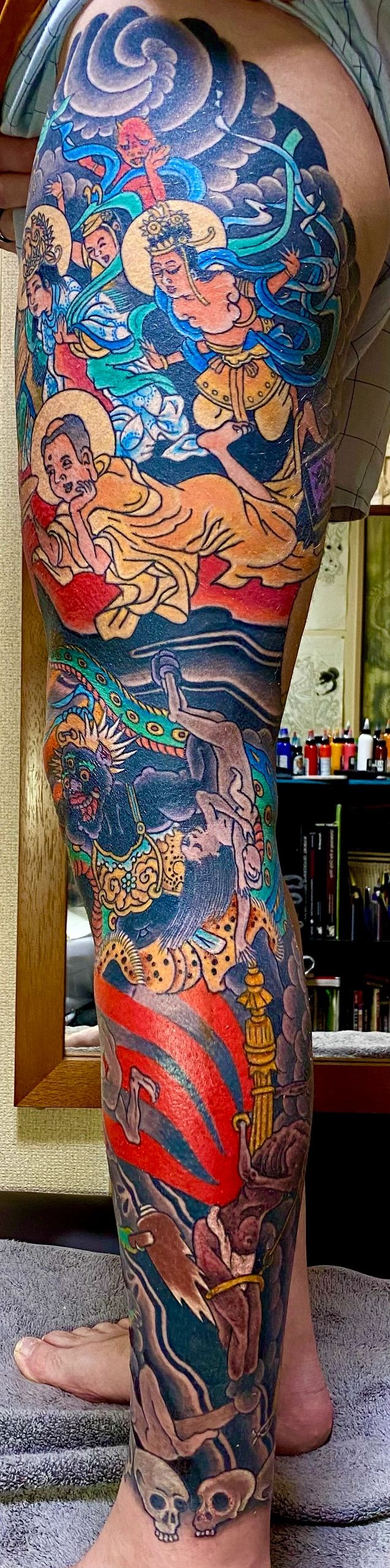
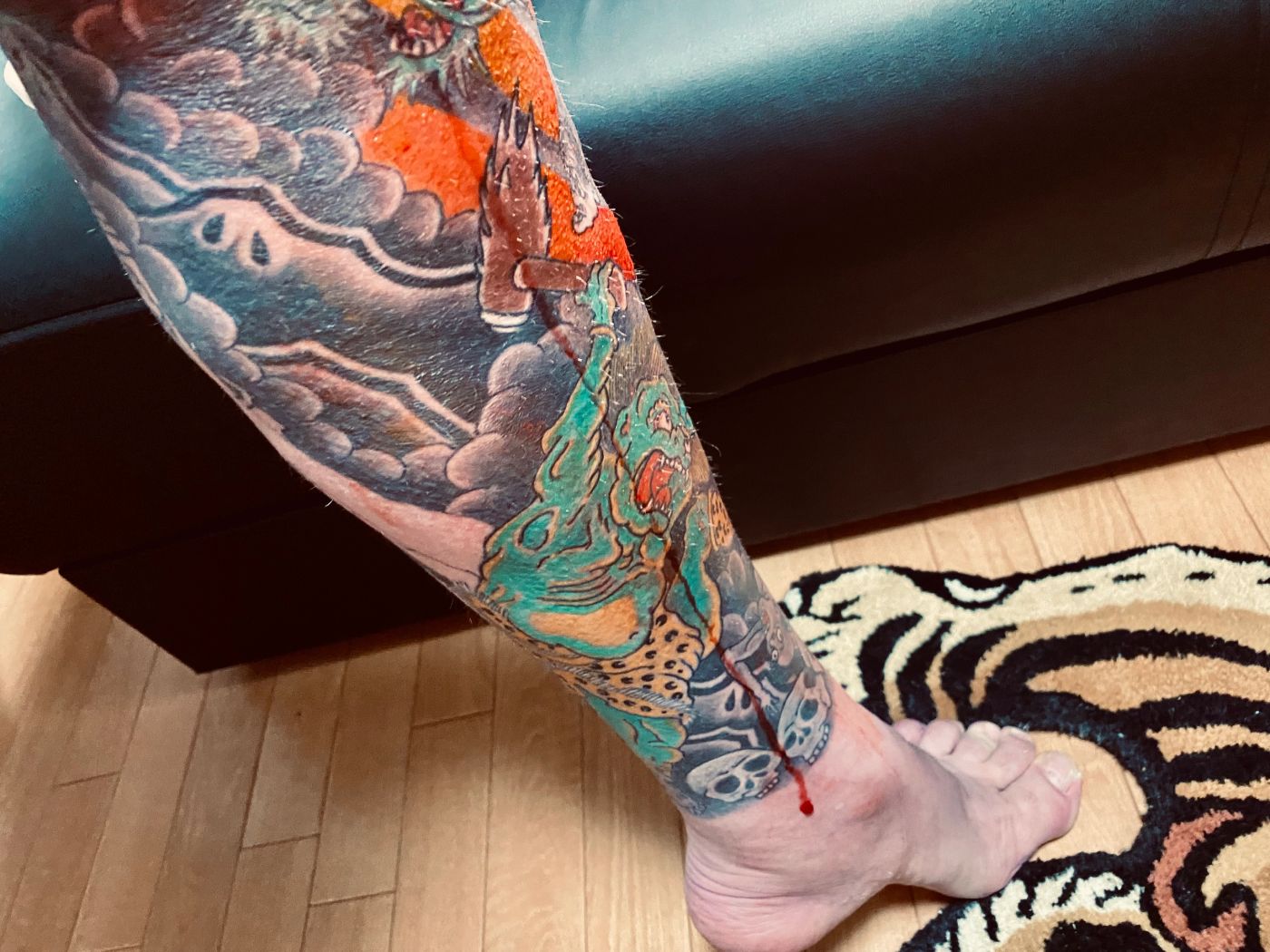
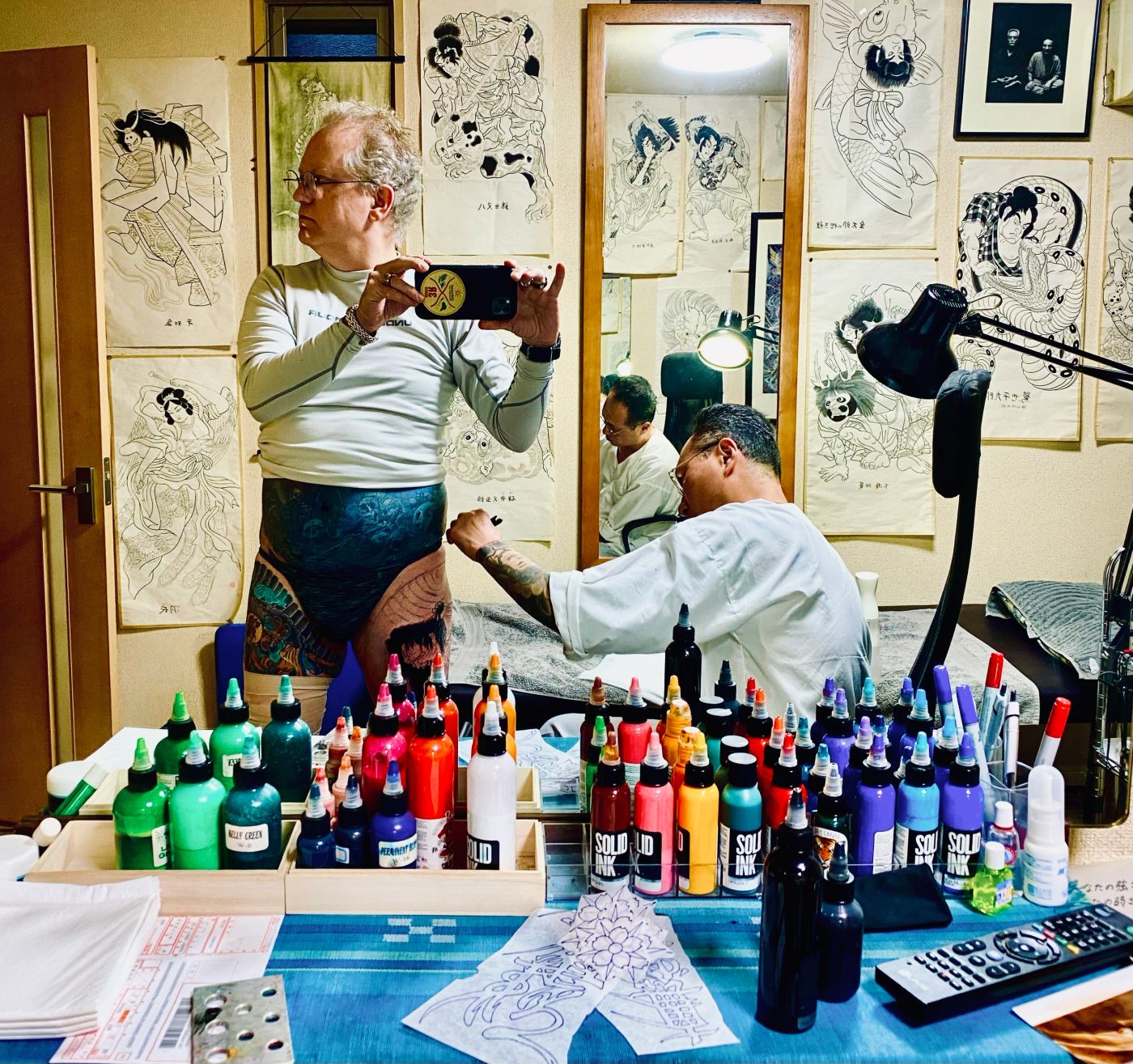
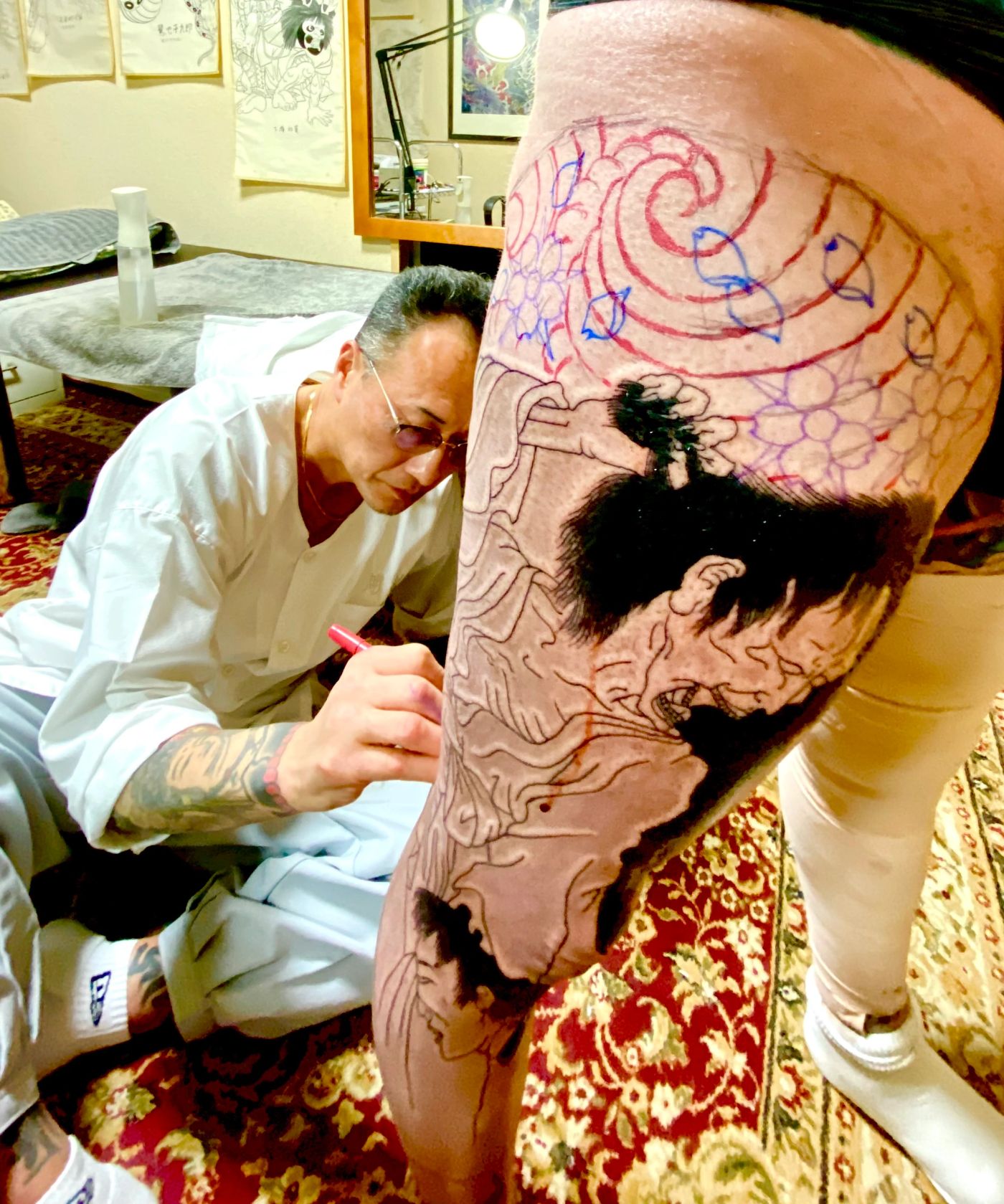
I cleaned both legs with benzoyl peroxide wash and dilute Hibiclens, then headed off to Machida Horiken for completion of the left leg sleeve. Proudly displayed on the coffee table in his little antechamber was the set of master drawing and stencils for the right leg: another Kyosai masterpiece, this time an impishly-grinning female ghost holding (and simultaneously mocking) a severed head. Horiken had added another Kyosai skull to the bottom—an excellent touch. While this piece will be quite different from the one on the left, it nonetheless will be totally Japanese in style and subject and be a harmonious addition to the project.
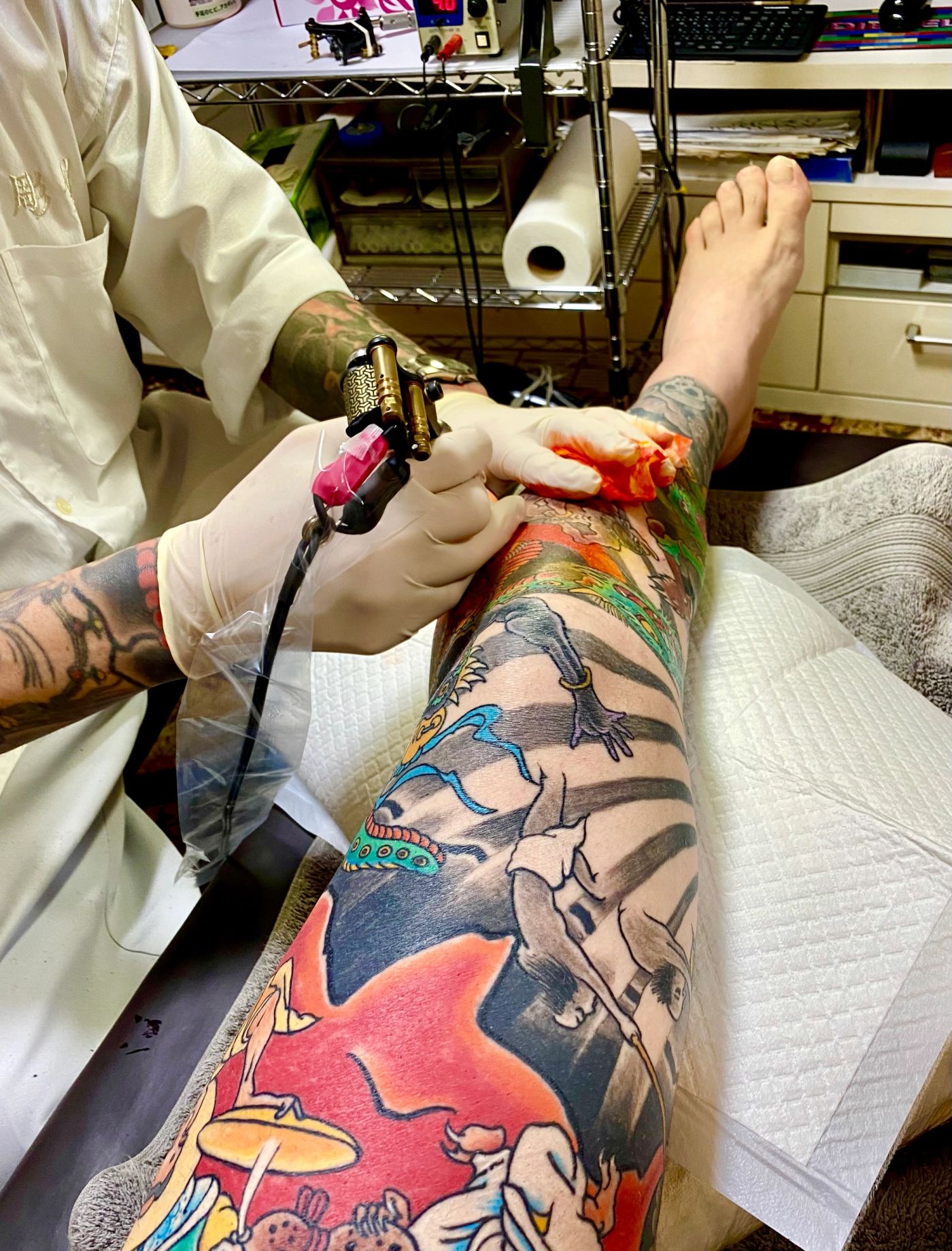
Without Kenalog once again, the work was painful and generated a lot of inflammation. That first day was all kneecap and popliteal fossa and really sucked. But the pain had a purpose and I was thrilled with the final result. By the evening it was a Second Skin wrap; the first leg was done!
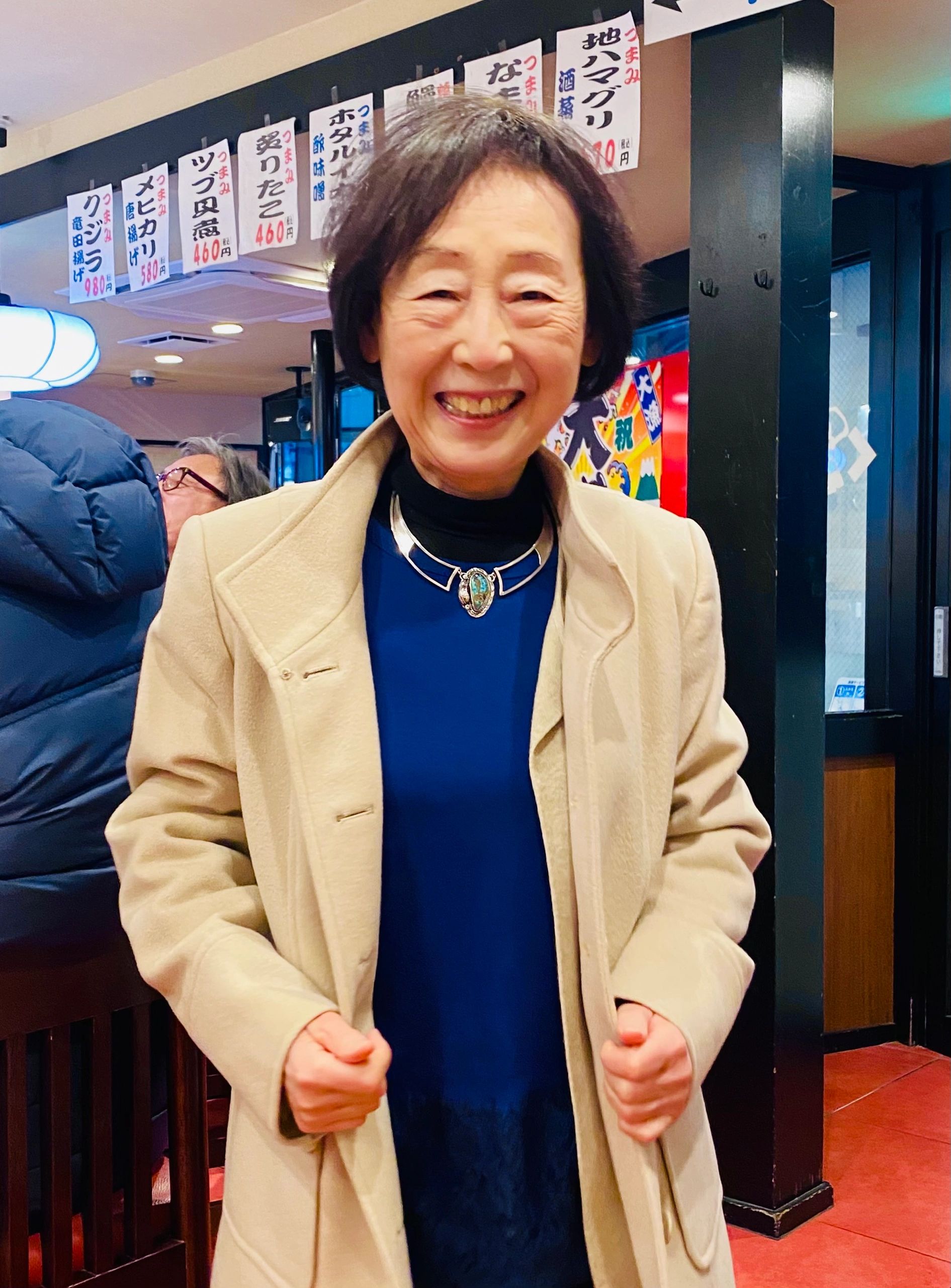
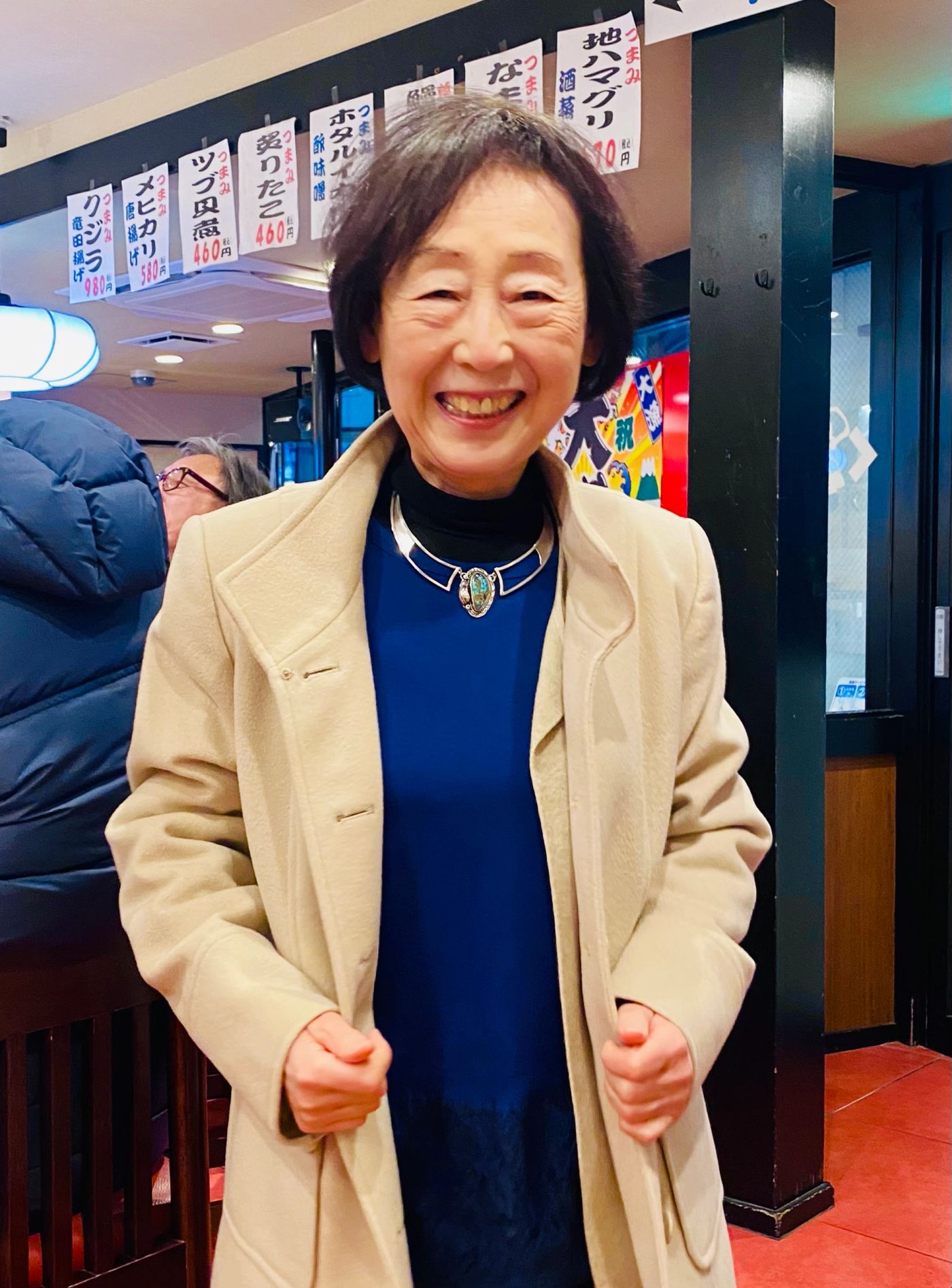
I hobbled back to the center of Machida City and met Humira for dinner at a wonderful, local and inexpensive sushi place. She was proudly wearing the necklace I’d gotten her; I was very pleased to see her enjoying it, as if in a small way it provided her a palpable token of a new lease on life. She was consistently engaging and friendly and unafraid of either me or my tattoos. Her attitude was encouraging to me that Japan will soon more widely accept inking and no longer relegate it to a shady, yakuza-themed dark alley of their cultural heritage.
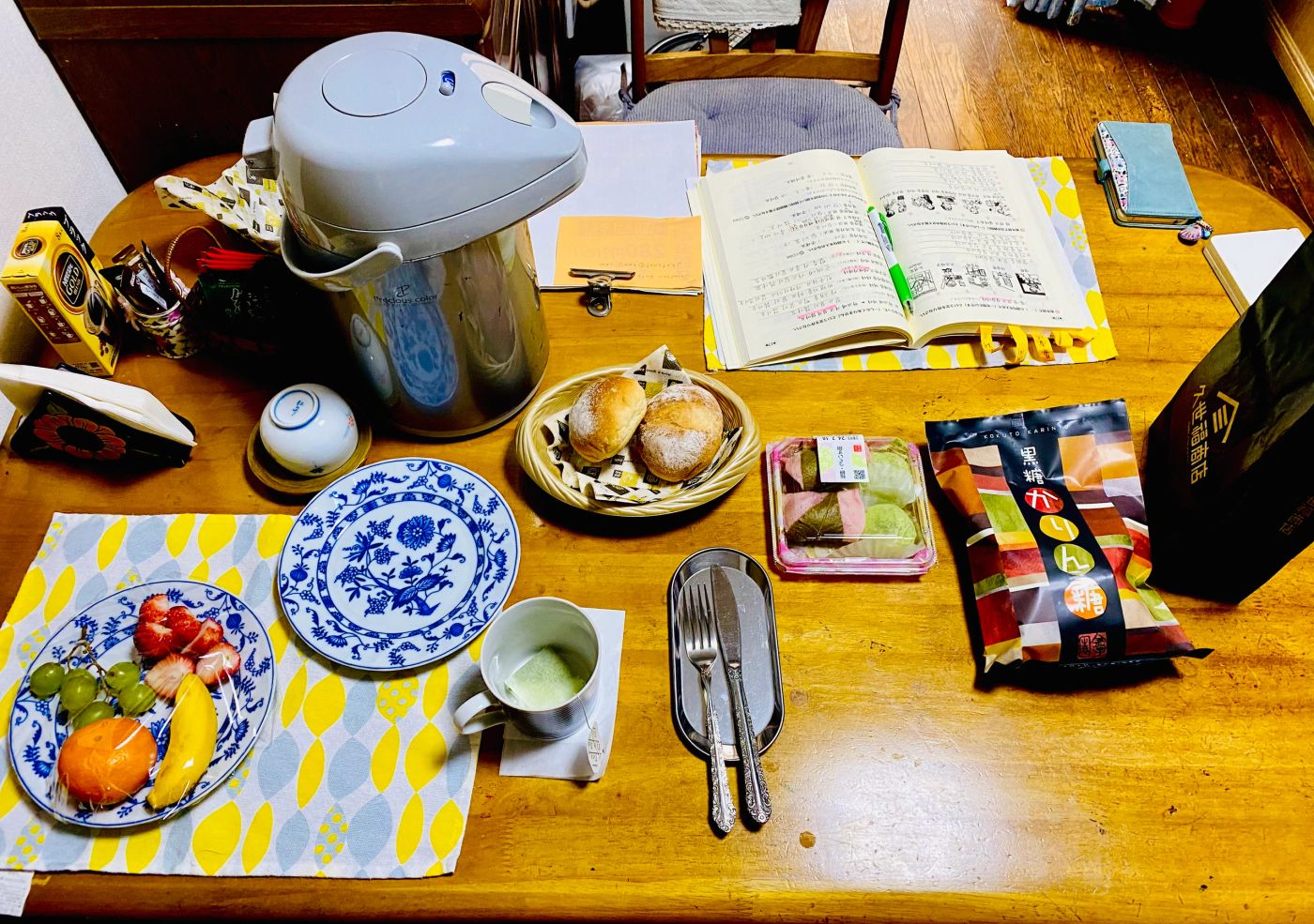
Each morning she went out of her way to cook me a lovely breakfast. Every item was presented with a disclaimer: “please, if you don’t like it just don’t eat it!” But everything was delicious, from the noodles to the fruits and vegetables and dessert.
There was plenty of time to chat on both days, and we had dinner again at a nice restaurant atop the Odakyu Station Department Store. She told me about how she’d been a widow for more than twenty years, gave details about her son, daughter-in-law and grandchildren. We talked about religion and the history of Israel—she’d had almost no knowledge of the conflict and was astonished to learn all the facts. Facts about which the majority of sloganizing college kids these days are quite ignorant.
Horiken worked fast and completed the full outline and some black shading of the right leg on days two and three. Then it was straight back to Haneda for an evening flight home.
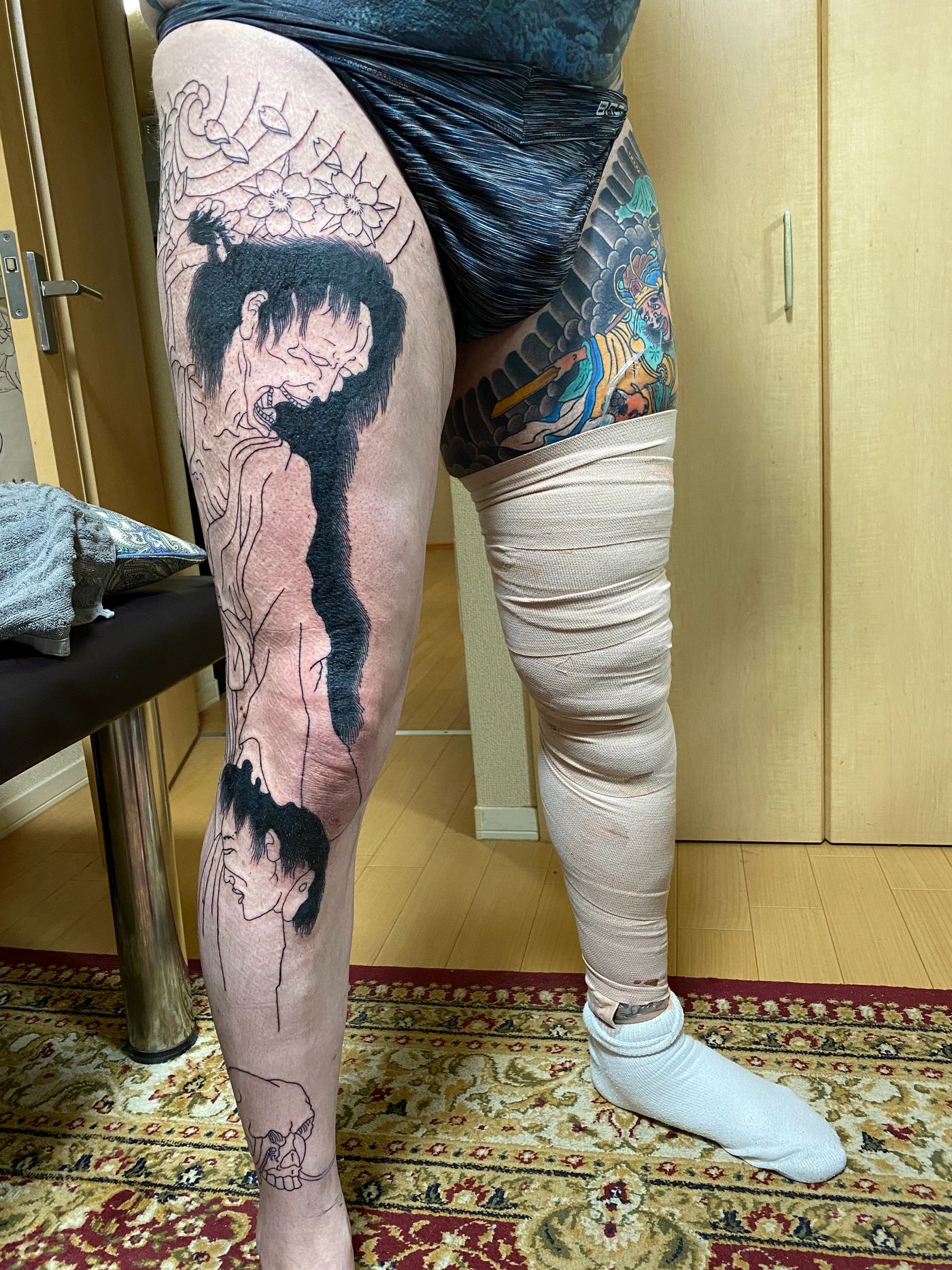
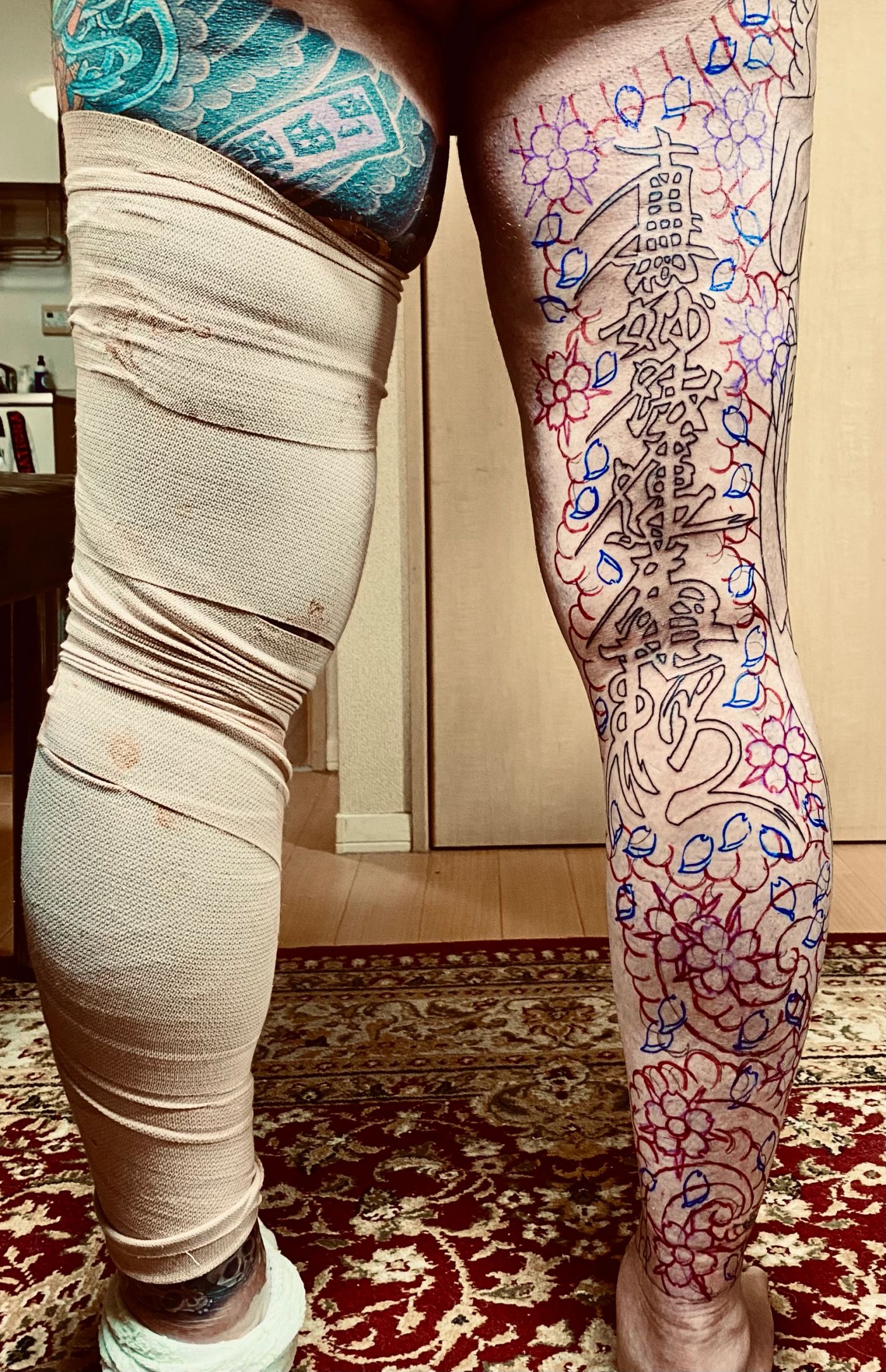
This time around I added ace-wrap covering over the plastic. I think this cuts swelling and provides some support for Second Skin or Saniderm. Pro tip: when you attach those vicious, little metal clips to fasten the wrap, do so in a way you can get a finger underneath and press down the spurs from the inside. This way the tines won’t repeatedly dig into your swollen flesh every time you take a step. The wrap should be as snug as compression hose (which I tried but it’s really not possible to get those on without disturbing the plastic). An added benefit: DVT prophylaxis on a long flight!
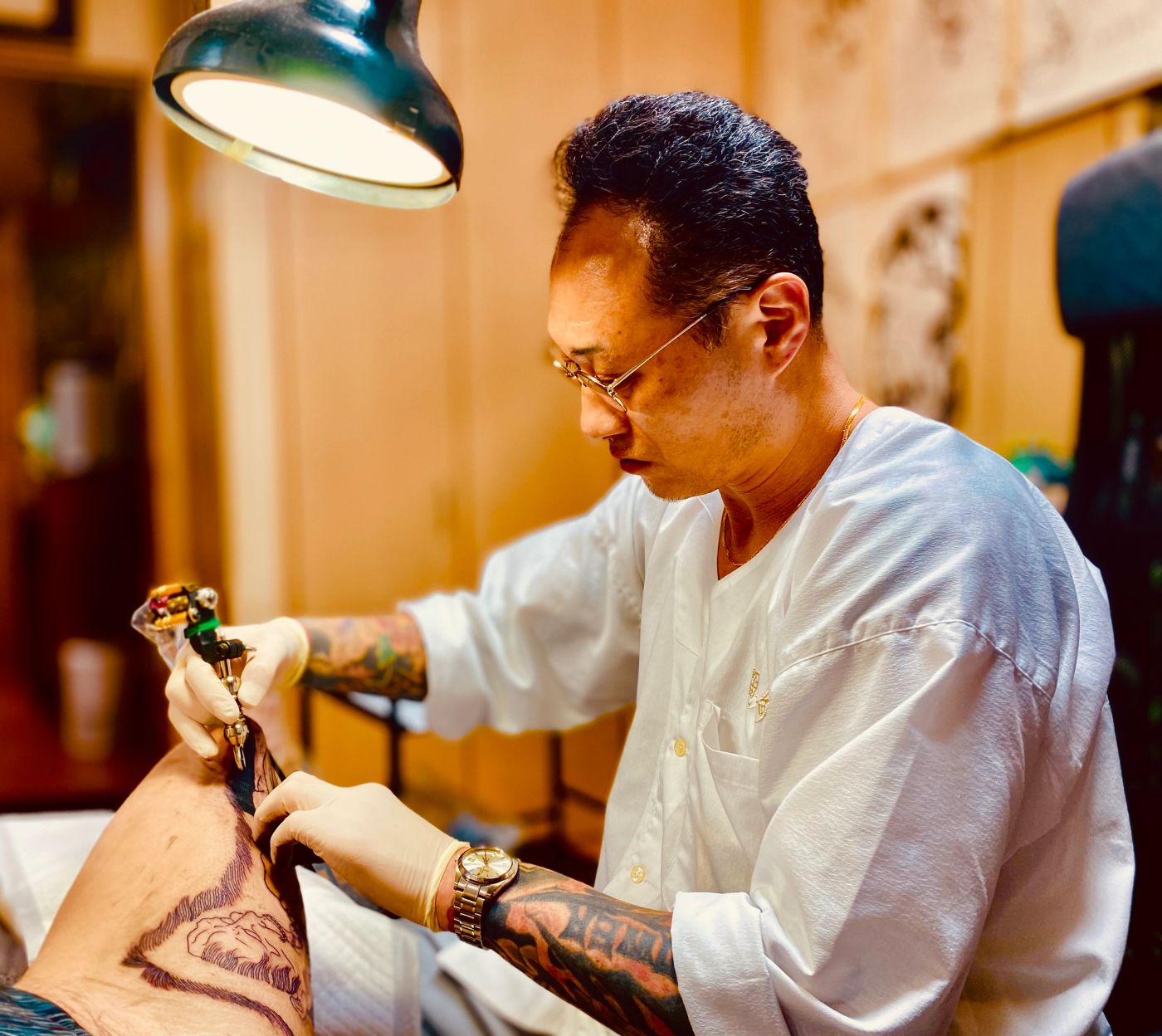
Humira made for an interesting contrast with Machida Horiken: both, of course, equally Japanese, and not all that different in age, nonetheless she doted on me solicitously, making sure the temperature in my bedroom and the bath were just right, giving me extra blankets, showing concern about my bandaged legs, and being certain I’d had enough to eat; meanwhile Horiken the stoic black belt carved away at me with rapacious gusto. Even the frequent (and quite vigorous) wiping of ink felt like a hair-shirt scrubbing of alcohol-doused road-rash. In the end these disparate styles balanced out and I was left, appreciatively and once again, with great memories and even greater artwork on my skin.