
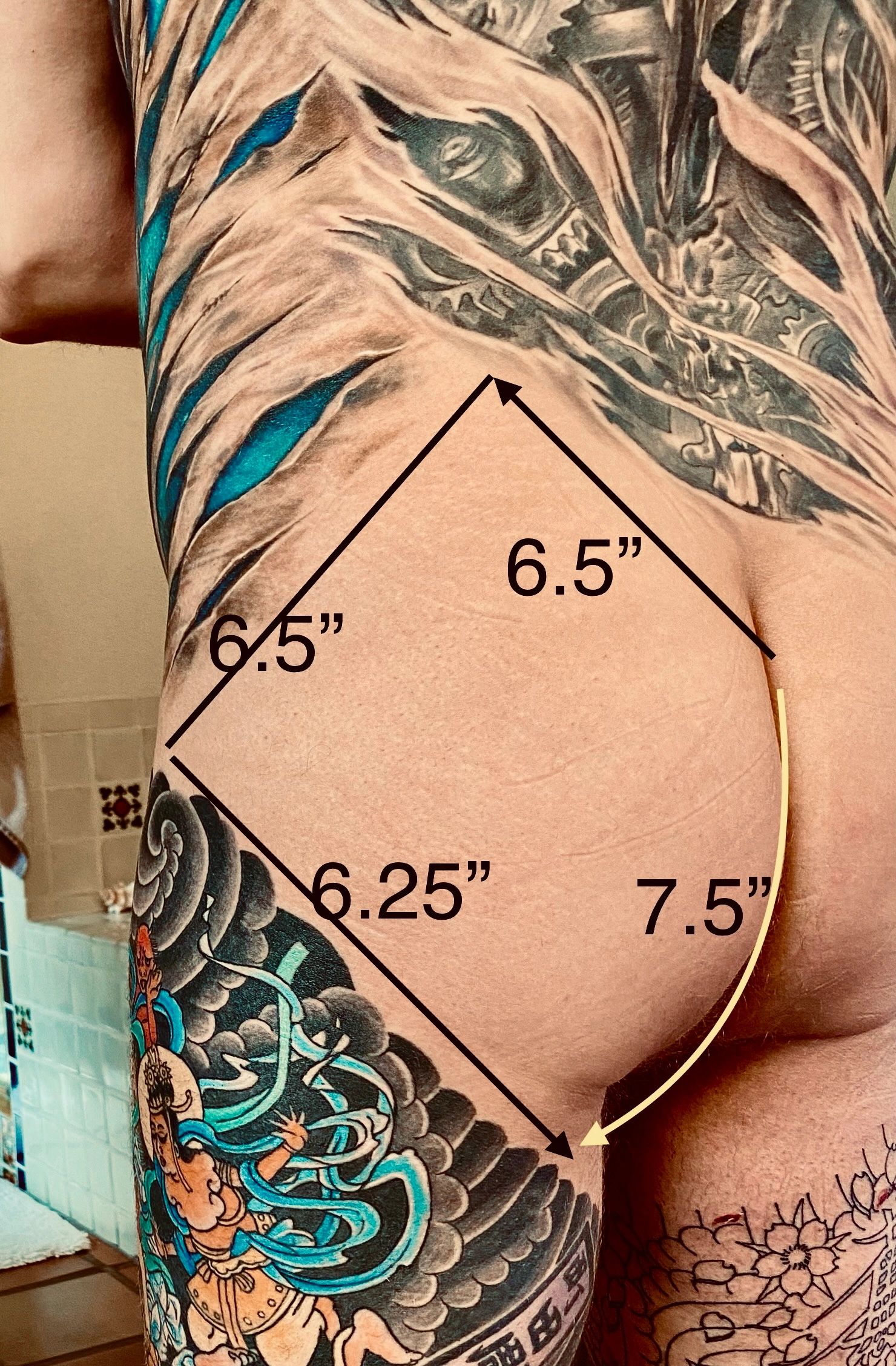
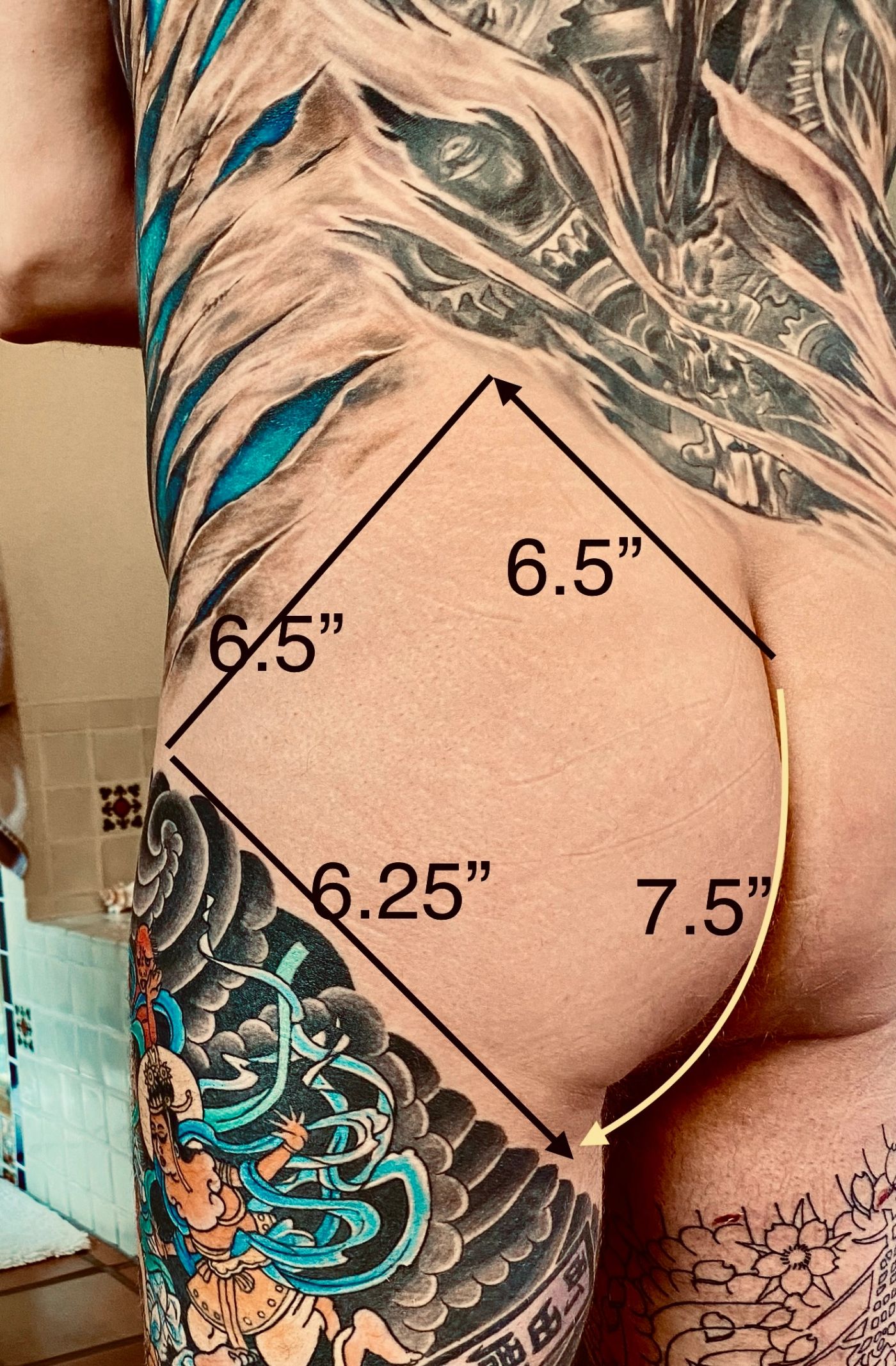
None of my ink to date has had any specific literary reference. My buttocks change that, starting with a scene from one of my favorite novels, ‘Blood Meridian,’ by Cormac McCarthy.
The novel is a nightmarish depiction of violence along the Texas-Mexico border in the 1850s. Loosely based on real characters, the book chronicles the adventures of a gang of outlaws scalping Native Americans for profit. But it’s actually about something bigger: the struggle between good and evil, and how the world really works. The story is exceptionally brutal; at least two attempts to film it have been abandoned, though the novel is considered a masterpiece in American literature.
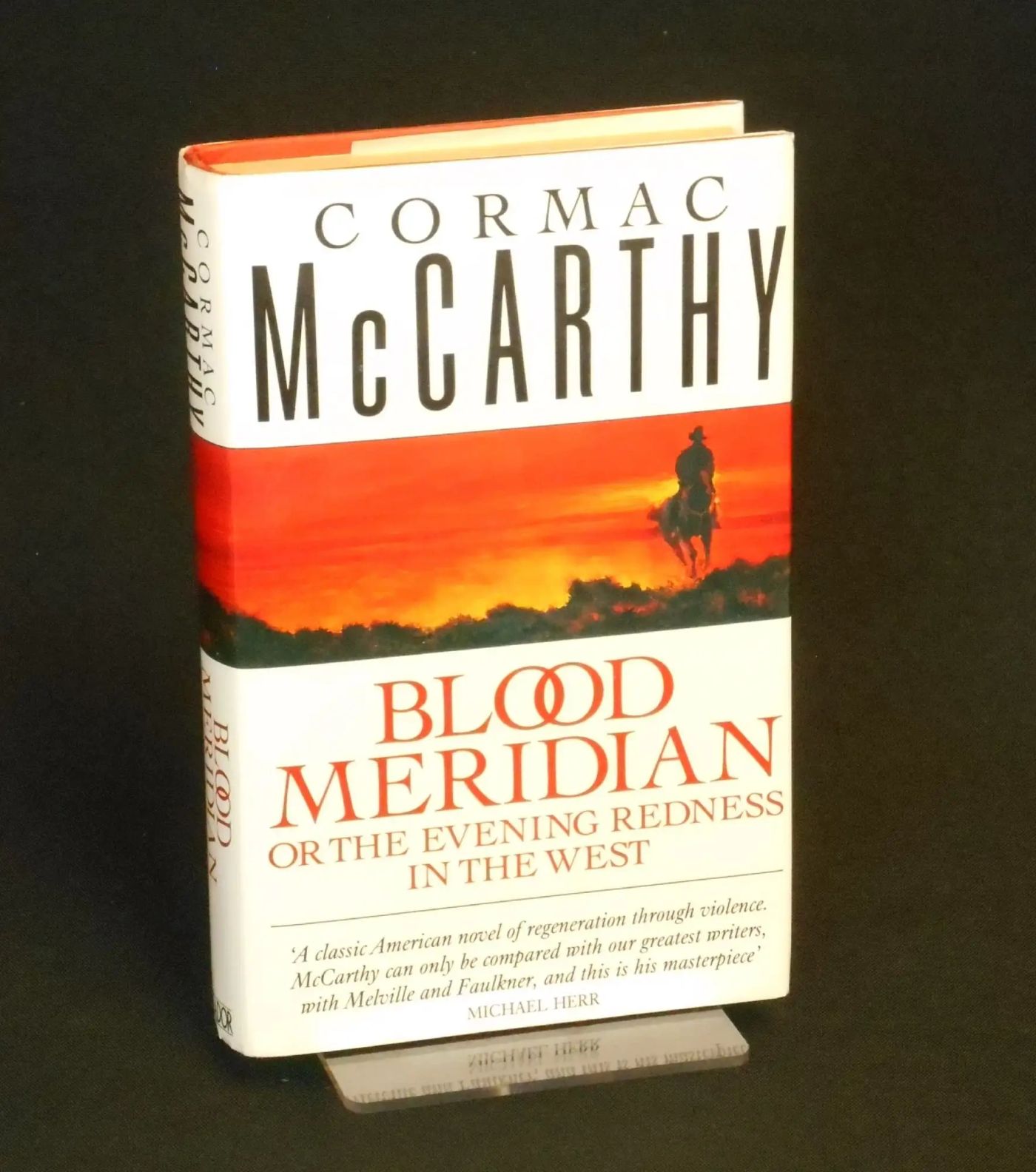
In Lit Hub, the renowned and flamboyant critic Harold Bloom wrote in 2019:
“Cormac McCarthy’s Blood Meridian (1985) seems to me the authentic American apocalyptic novel, more relevant now than when it was written. The fulfilled renown of Moby-Dick and of As I Lay Dying is augmented by Blood Meridian, since Cormac McCarthy is the worthy disciple both of Melville and of Faulkner. I venture that no other living American novelist, not even Pynchon, has given us a book as strong and memorable as Blood Meridian, much as I appreciate his Crying of Lot 49, Gravity’s Rainbow, and Mason & Dixon. McCarthy himself has not matched Blood Meridian, but it is the ultimate Western, not to be surpassed.”
Sadly, both Bloom and McCarthy are now gone.
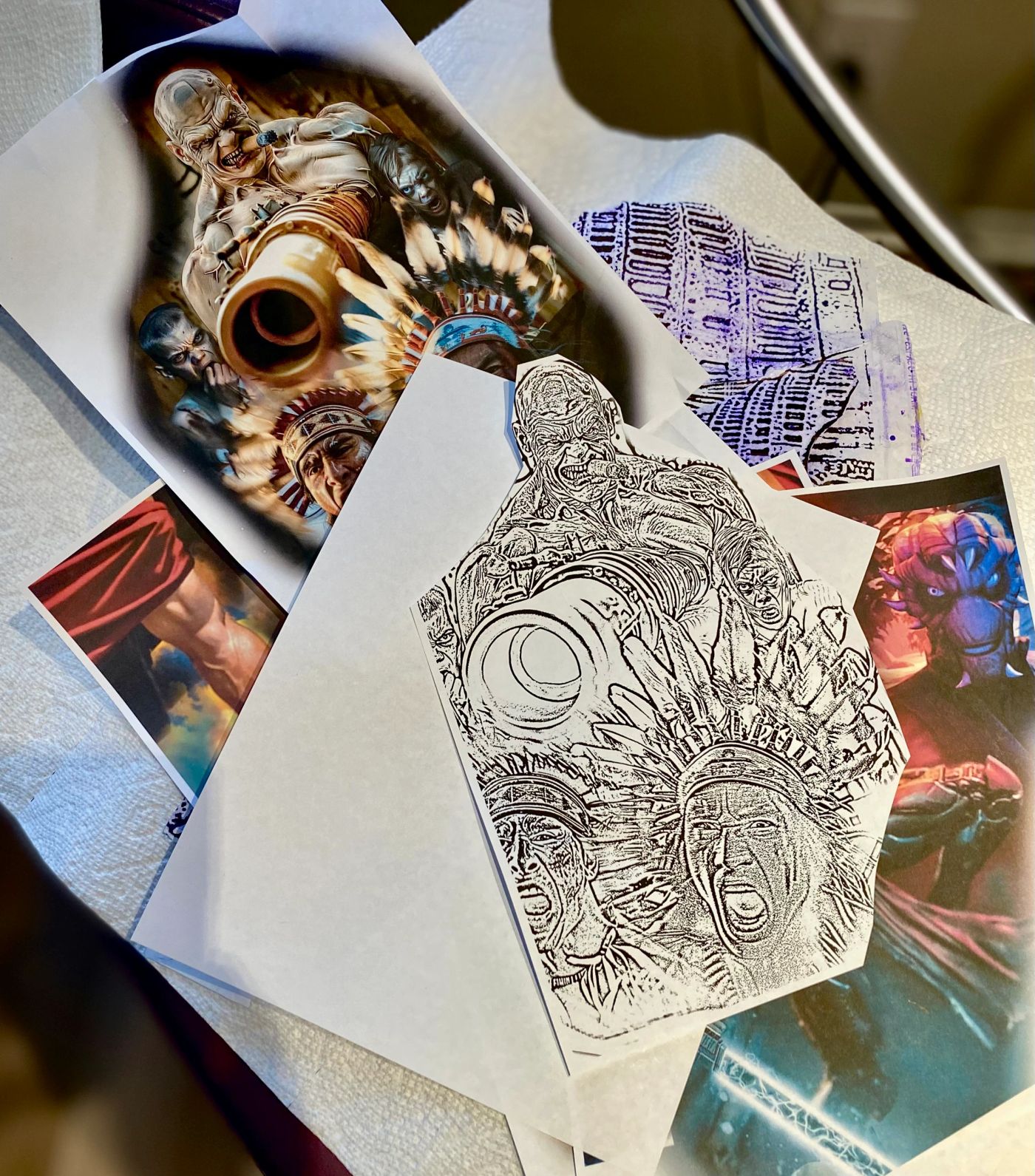
One of my favorite scenes in the novel is when a main character named Judge Holden—an albino, hairless, giant of a man, amoral and a genius of sorts, a villain perhaps unsurpassed in fiction—fends off an attack from a pair of Yuma Indians seeking revenge for a murderous double-cross. (If you think Anton Chigurh, a better-known killer from McCarthy popularized in the movie version of ‘No Country for Old Men,’ is a supremely scary maniac, you haven’t met Judge Holden! He’s perhaps the Devil himself, having been called by Bloom “the most frightening figure in American literature.”)
Holden, who says he never sleeps, knows the late-night attack is coming and awaits it in his chamber along with two young prisoners. He hoists an incredibly heavy howitzer and has a lit cigar poised over the touch-hole as the Indians enter; upon seeing the cannon they fall back over one another in hasty retreat, as the very same cannon was the means of the demise of multiple of their fellow tribesmen. While most of the gang of whites is slaughtered in the attack, Holden and his quarry survive.
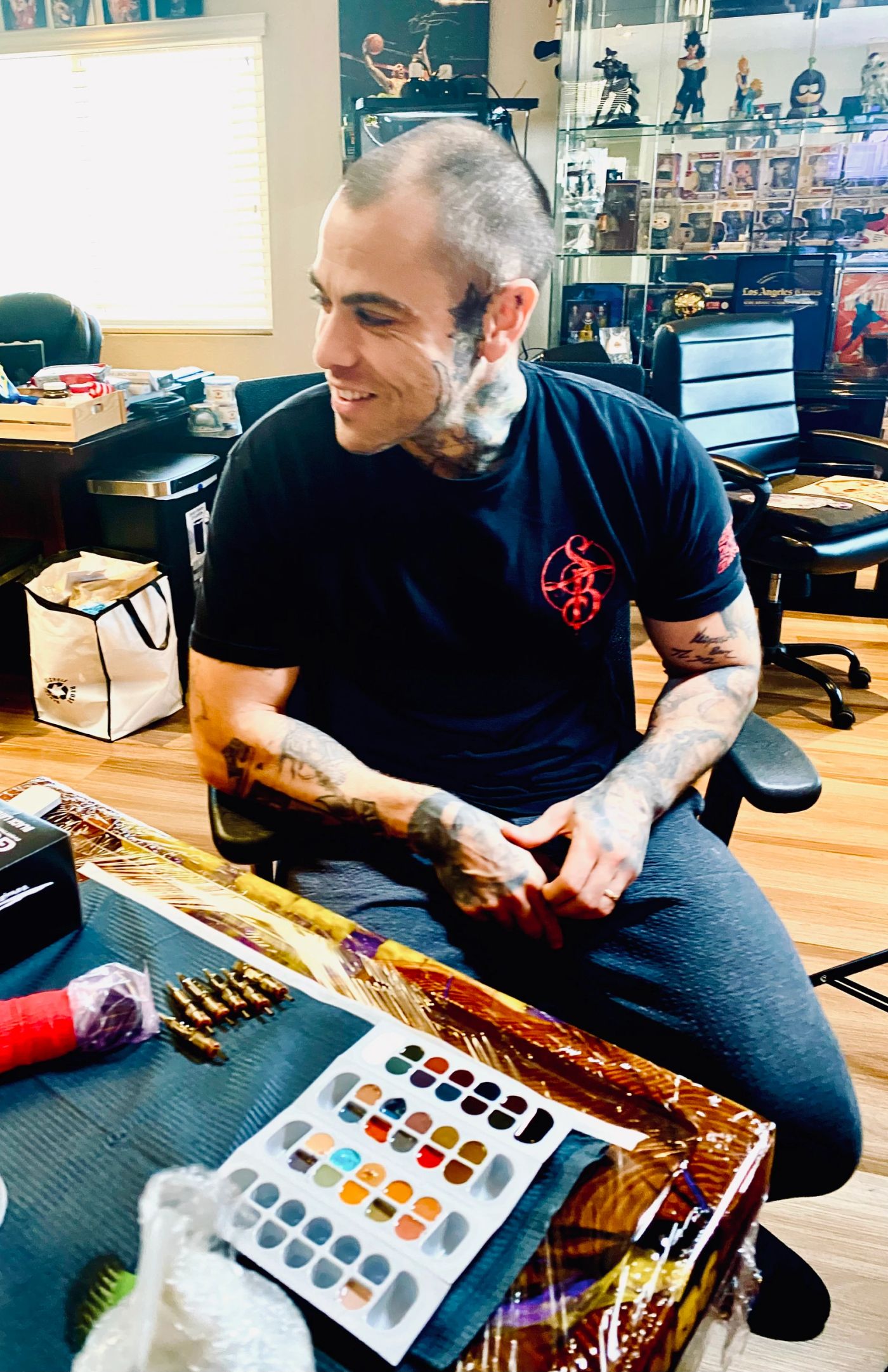
A vivid scene like this needs an artist of exceptional talent, one who can portray the right mix of realism and nightmare in a limited space. Ideally an entire chest or back would be the proper canvas, but I’m running out of room, and so a buttock it had to be. I’d met Steve Butcher at Yomico’s studio in 2022, and since have closely followed and admired his incredible work. In the podcast interview I did with him he agreed to tattoo my ass, which was generous given it’s one of the least favorite places for an artist to work. Steve grew up and attended art school in New Zealand, and now lives south of L.A. I visited his home studio on two trips three weeks apart.
There was disagreement over the reference image and I worried the whole thing would have to be delayed. A friend had drawn a beautiful, graphic-novel style rendering for me, but Steve wanted more photorealism and had an AI guru render it in Midjourney at the very last minute.
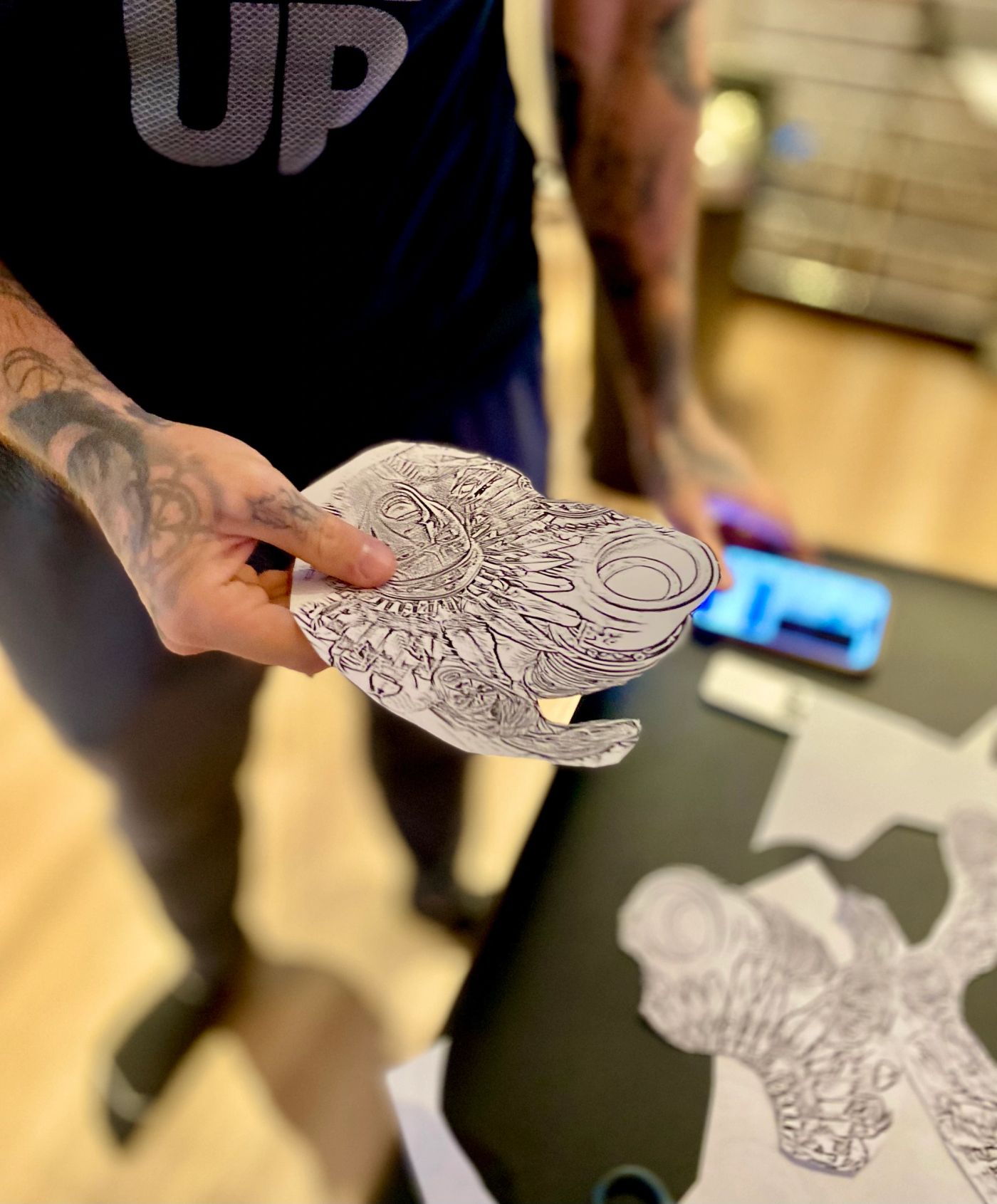
Jaime and Scott accompanied me on the first trip. We stayed in a cute hotel in Huntington Beach. They had a fun weekend shopping and doing a self-guided treasure hunt as I lay like a corpse for ten hours a day, straddled across a curved exam table with my face down, while Steve worked his magic. He stretched my flabby ass-cheek into a suitable stratum with forearm and elbow and inked away, while I, as captive an audience as it gets outside of prison, watched sideways with one eye a marathon of UFC bloodsport. (While I’m no fan of guys nearly killing each other for our entertainment, the ferocity seemed fairly appropriate for the scene unfolding on my tuchus.)
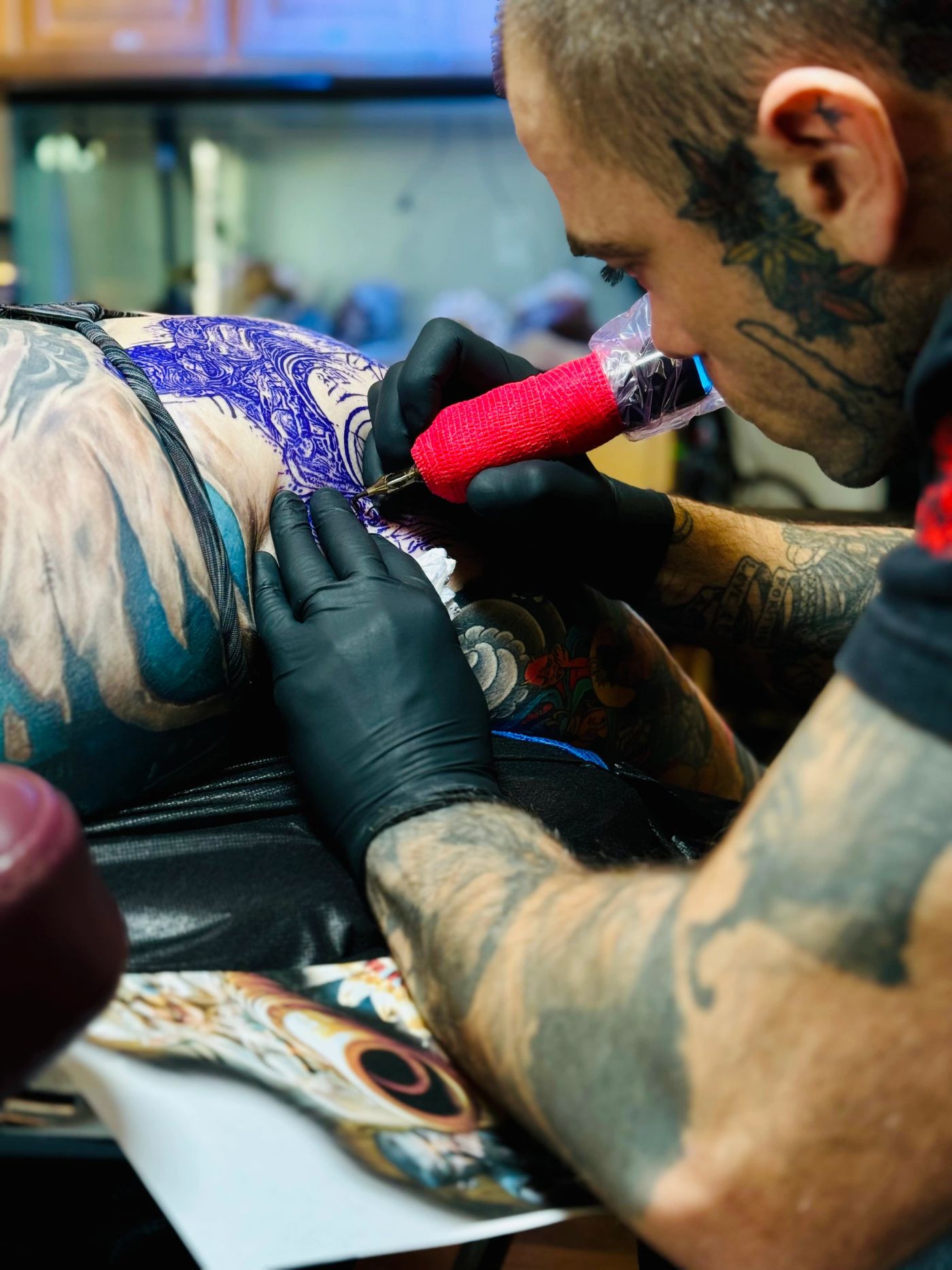
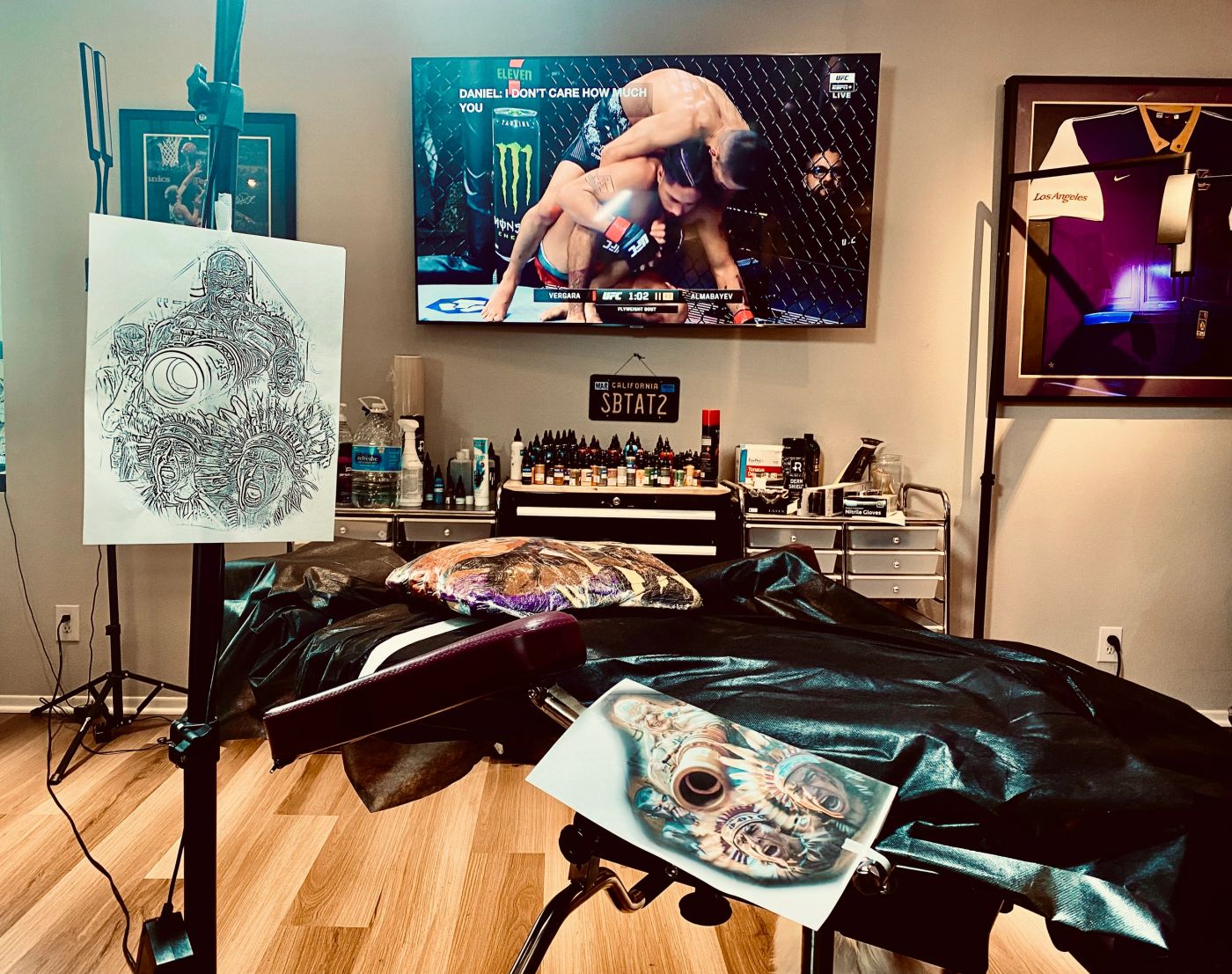
I’d considered the location a ‘special site’ with added infection risk, and so had prepped for weeks with daily triple-washing: Dove liquid followed by dilute chlorhexidine and then Saniderm’s colloidal silver foam soap. You could have served cocktails off my ass, it was so clean!
The pain was minimal, save for when Steve got close-in around the perianal area. Ouch, but nowhere near as bad as the analgesic-free experience on kneecap or shin courtesy of the Samurai himself, Machida Horiken in Tokyo. That voluntary torture makes for really good perspective.
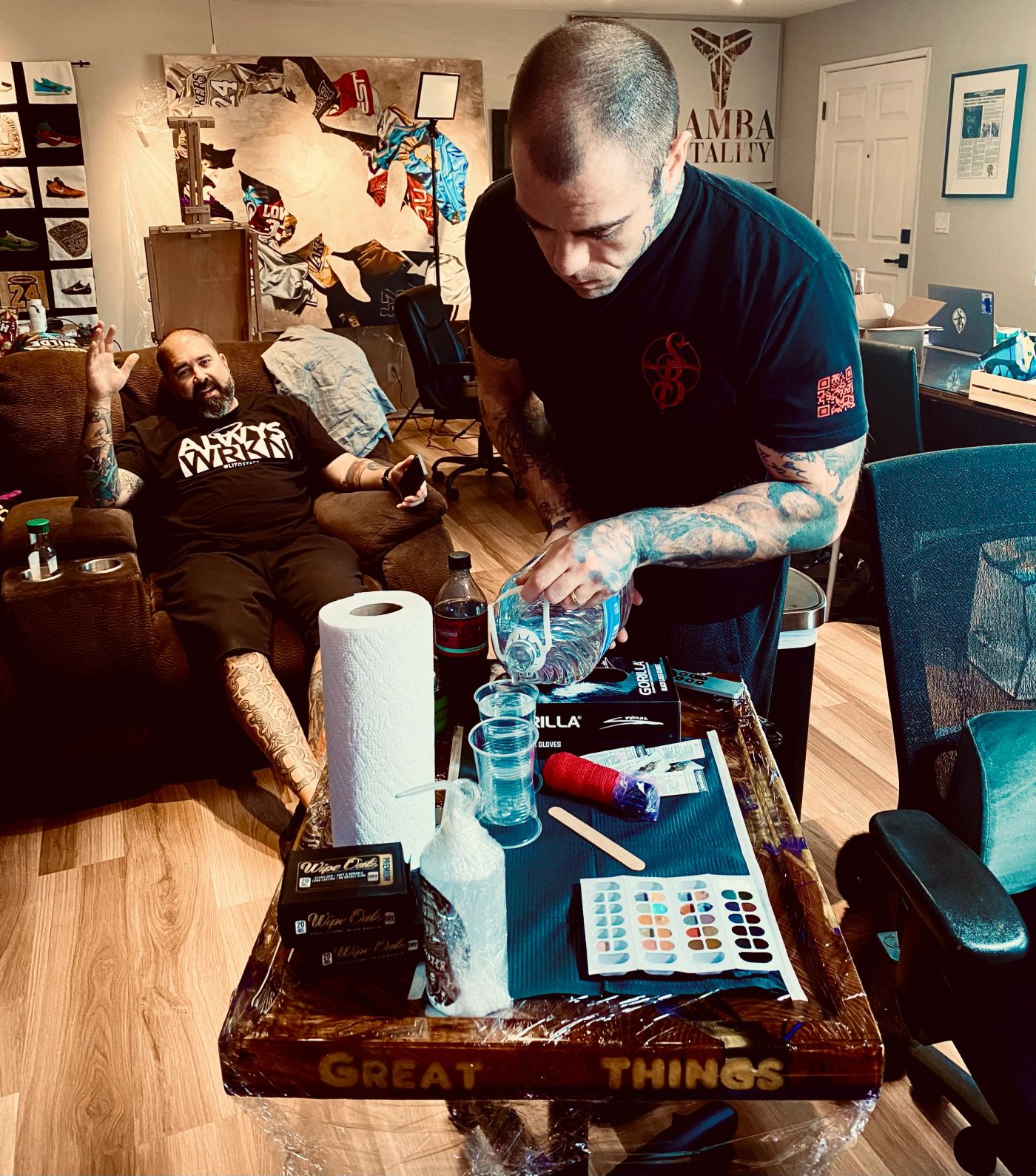

Twenty hours got most of the job done. Steve’s wife served lunch and he ordered dinner both days, and several of his friends hung out and enjoyed the bizarreness of a dermatologist in his late fifties getting his buttock inscribed by a Kiwi. Everyone had a blast, perhaps even Steve’s chameleon, as he and I spied each other out of one eye across the studio.

Healing proceeded quickly over the next three weeks. For the second time I noticed that the red areas stay indurated and itchy by far the longest, taking a full two weeks to recede. It happened before with the large swath of red on my thigh from Japan; I don’t think it represents a true allergy to the pigment itself, though historically red inks have been the most likely to cause allergy (cinnabar or cadmium, now largely abandoned). Perhaps red inks are temporarily irritating or have a component that is truly an allergen but gets metabolized; were it the pigment itself the itch and swelling would not resolve at all.

So the red bits on one Native’s headdress stayed ornery almost all the way to the second session, which was a single day of about five hours. Steve finished the final character and then incorporated the piece into the surroundings with my trademark shredded skin transitions. As a small piece this one took the fewest hours, and so it felt premature to say goodbye to Steve so soon. Hope we meet again!


Had I know the work would be done midafternoon, I’d have tried to get a late flight home. But my return was booked for the next day and I had a hotel reservation, so I stuck with the original plan. The room had no heat: neither I nor the front desk clerk could get it to put out anything but cold air, so they moved me to another room, which had the same problem. I didn’t have the heart to ask the clerk again, and supposedly the mechanic was not in-house because his car had broken down. (What a surprise!)
I enjoyed a dinner of instant Ramen, trail mix and cocktails; it wasn’t all bad as I made some new friends at the bar. In the morning I noticed my skills as a one-man wrecking-crew of hotel linens were still up to snuff.




I wasn’t looking forward to nearly a week of the painful tugging of the plastic bandage over mobile skin. This time I tried Steve’s new favorite wrap, Derm Shield, and it’s completely painless! I still have the initial piece in place, so I can’t comment on longevity or the ease of removal, but so far it’s amazing.
And so I head home with comfortable plastic and yet another dog training pad under my pants and shirt, a diaper, to remind me of what’s in store for most of us. But in the meantime I’m living my life one adventure to the next, and these days almost all of those involve tattooing. What will I do next year, when I run out of canvas?
———
In an earlier post I mentioned that discussion on the conflict in Israel and Gaza would be coming. This blog is as good a setting as any in which to present that. Blood Meridian, as well as No Country for Old Men, tells a tale of good versus evil. In both novels evil triumphs, and does so not because of excess of skill or power but because evil has none of the moral constraints that handicap good.
For as long as humans have been able to think abstractly we’ve wondered about the nature of the world. We’ve believed in gods benevolent, vengeful, or both; and, like Job, continue to ponder why bad things happen to good people. The famous Problem of Evil traditionally has had only two possible solutions: God works in mysterious ways; or there is no benevolent God and the universe is indifferent both to us and our sufferings. I believe McCarthy presents yet another solution: that the world is neither benevolent nor indifferent; rather, it is actually inherently and largely malevolent. Creatures survive through killing; evolution is a game far more violent than UFC. The American West presented by McCarthy is a hellish and persistently dangerous place, where nearly everything and everyone you encounter, and even the weather, are all trying to kill you. In this eternal battle, War is God, as Judge Holden tells us, and accordingly he remains the last one standing among all of the Glanton Gang posse. His opposite in the novel, known only as The Kid, starts off as a feral killer but develops into The Man, a moral being who will still kill if threatened but who carries around a Bible (despite being illiterate). There’s never a question that, once they meet again and The Man repudiates Holden—almost thirty years after the Gang’s barbarous killing spree—the Judge will murder The Man and stand triumphant. The only evidence he needs to prove his point is victory in the ultimate game of warfare. In No Country McCarthy goes to some length to show us how evenly-matched are Chigurh and Moss, in skill, experience, intellect and ingenuity. But just as with Holden, Chigurh is the last man standing.
Evil has an inherent advantage, because it lives by no rules. Holden says “Moral law is an invention of mankind for the disenfranchisement of the powerful in favor of the weak. Historical law subverts it at every turn.” He’s wrong—in our human world of morals and ethics—but the universe external to (some of) us operates largely as he says. Our invention works only when we choose to obey it.
What does any of this have to do with Israel and the Jews? For thousands of years Jews have pondered moral questions and tried to live ethical lives, all while suffering almost continuous persecution. From captivity at the hands of the Egyptians and Assyrians in antiquity, to the destruction of the Second Temple in 70 A.D. and the first Diaspora courtesy of the Romans, to persecution and massacre by Persia in the sixth century, to the Christian Crusades in the Middle Ages, to the Second Diaspora in 1492 when Jews were expelled from Spain, to the Pogroms of Russia and other Slavic countries in the eighteenth and nineteenth centuries, and of course to the mass extermination by the Nazis in the twentieth—from these and many more shameful acts the Jews have suffered but endured.
Modern Israel comprises a mere 0.2% of the Middle East. The majority of its Jewish citizens are Mizrahi Jews—descendants of those expelled in 1948 from Iraq, Syria, Yemen and other Arab countries. Based on relative population of Jews and Arabs, Israel should be more than five times larger that the current size. There is a wealth of historic, archeological and even genetic evidence that the origin of the Jews is situated in and around modern Israel. And yet Arab intransigence towards any Jewish state, no matter how small—an attitude thoroughly rooted in antisemitism—has precipitated multiple wars, caused the death of thousands and the displacement of many more.
No country is perfect. Yet Israel is a modern democracy and has wished for peace from day one—the day of its independence, when five Arab countries simultaneously attacked and the majority of local Arabs refused the offer of Israeli citizenship and left (many to join the fight against Israel).
I’ve watched several of the videos from October 7. In those horrific scenes I see what amorality can accomplish. No fighter jets or tanks were needed to pull off the worst mass-murder of Jews since the Holocaust. All it takes is zealotry and hatred (and weapons from a country like Iran). I now witness how cynical and shamelessly amoral Hamas leaders use their own people as human shields to turn public opinion against Israel. Thanks to useful idiots including the demonstrators at Berkeley, Harvard, MIT and perhaps the majority of college campuses, the Hamas strategy is paying off: American support for Israel is now a political issue, as the progressive wing of the Democratic Party has begun influencing national policy. People forget how a Jew was one of the founders of the NAACP; how Jews were murdered in the South while defending the rights of Black Americans. The far right has always been antisemitic—that’s nothing new—but now they finally share common ground with the far left in hatred of Israel and the Jews, despite American Jews’ history of supporting minority rights and consistently voting for the Democratic Party. Israel may soon be fighting wars on two fronts, and support from her most important ally is in jeapardy. It is truly an existential crisis, and one not fundamentally caused by Israeli misbehavior: keep in mind there were many Arab pogroms against Jews in what is now Israel for a full century before founding of the country or displacement of a single Palestinian.
Martin Luther King famously said “the arc of the moral universe is long, but it bends toward justice.” Would Judge Holden agree? Or would he point to Iran, China, North Korea, and Russia—or Hamas and Hizbollah—as example of what kind of people will inherit the earth?