When I first got the idea for leg sleeves in Japan I didn't know it would be an uphill battle to secure an artist. I had a litany of messages back and forth with one who uses traditional tebori needles, which was terrific, but shuns traditional scheduling practices, which was not; emailed and had a translator call two others who are either largely retired or shun foreigners; and looked through dozens of Instagram pages, seeing really good stuff but not the sort of traditional work for which I was looking.
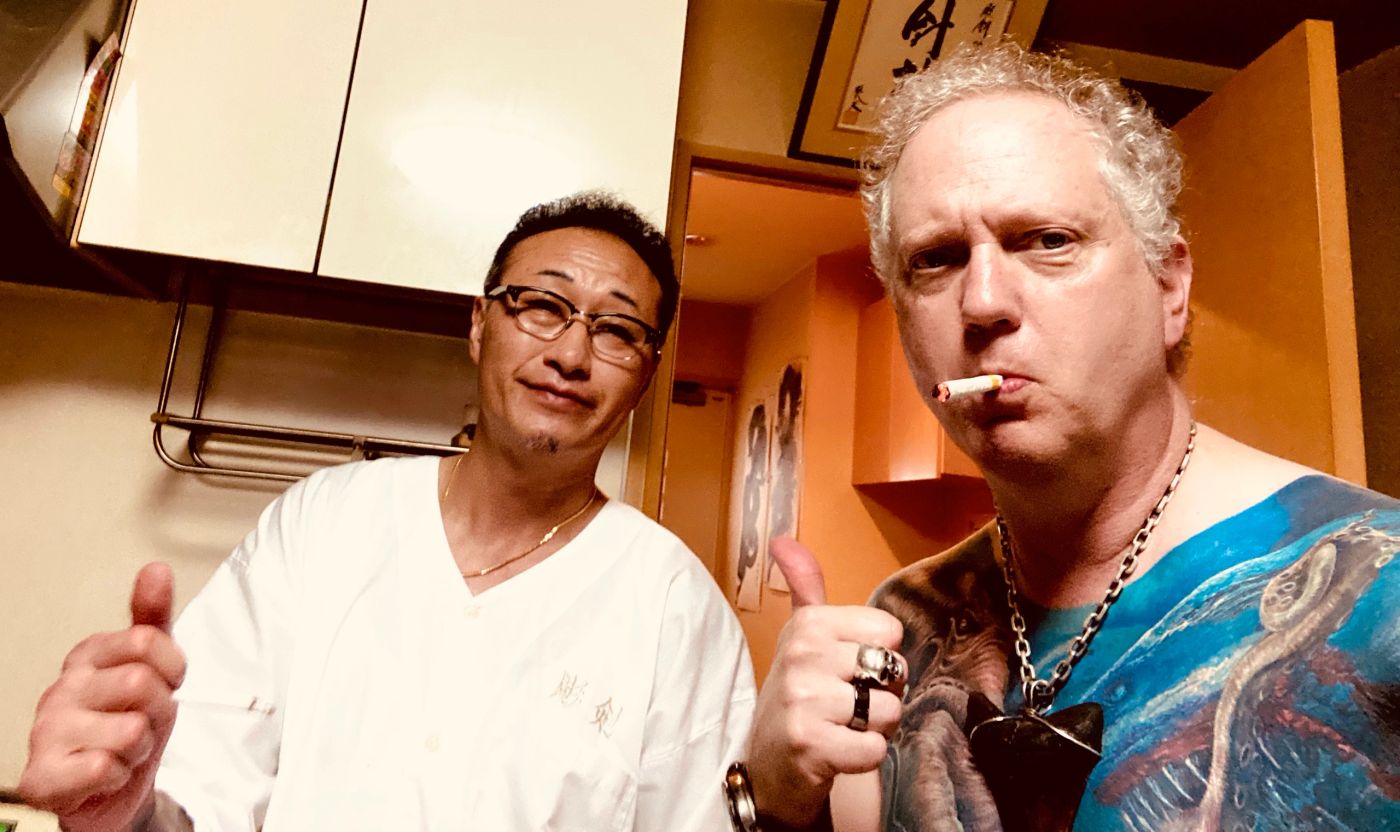
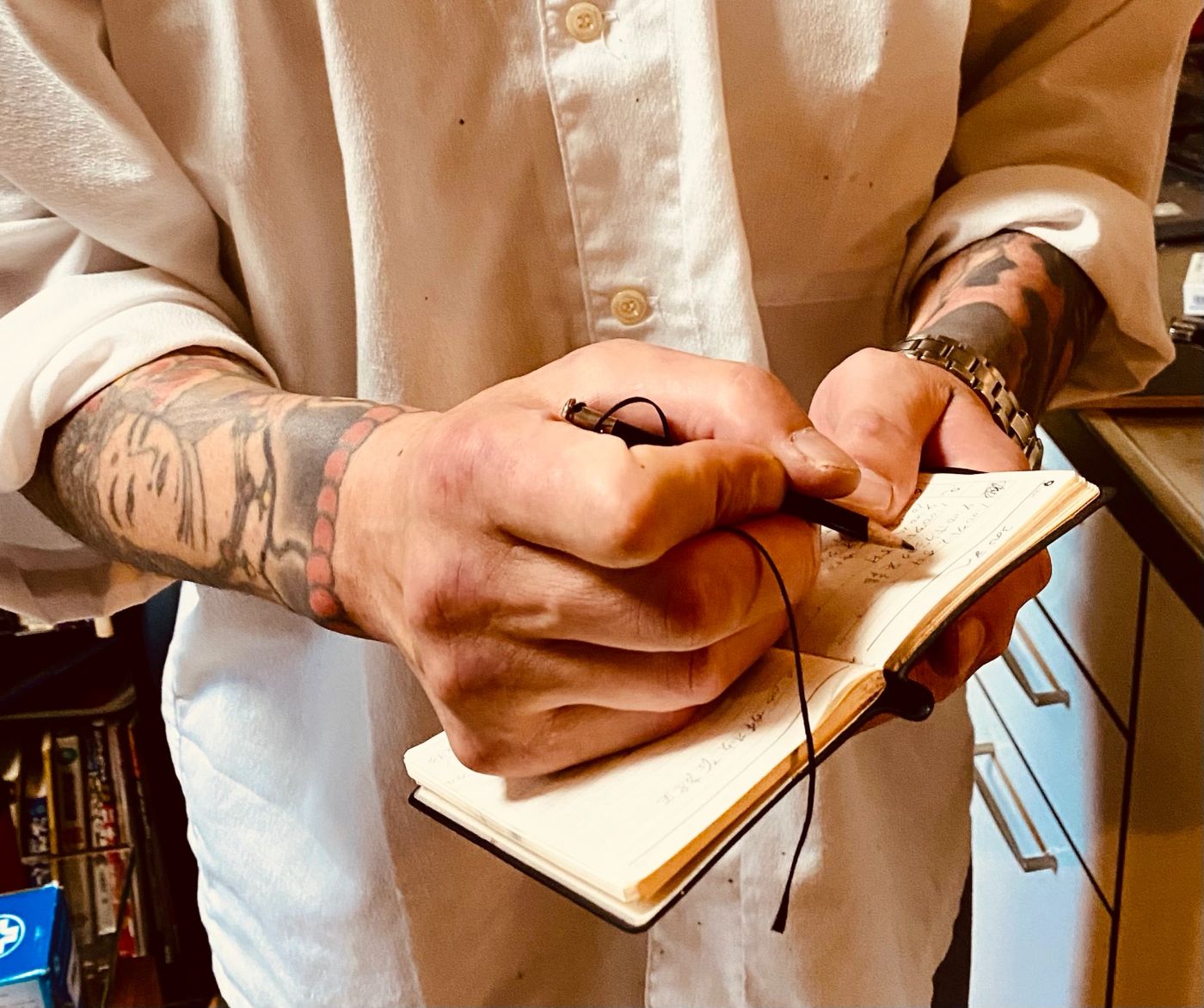
And then I read a piece in Gain Magazine (yes, as in 'no pain, no gain'). The site is a treasure-trove of Japanese tattoo artists and features both biographies and well-photographed examples of their very impressive works. It was there that I found Tokyo's workhorse traditional tattooist, Machida Horiken, who has been plugging away over the past twenty-five years in a tiny, unmarked studio on a quiet residential street--and doing so with both great artistry and professionalism twelve hours a day, seven days a week. The man is all-business: in a different era he'd have made a fearsome samurai. (Actually, he's a blackbelt.) So we chatted a bit by Google Translate and then I sent him some Yen and got on the books--a real book, in fact, made out of paper and about the size of a small deck of cards. But I didn't know this little detail till we met.
I got off the plane in Haneda Airport on a muggy day in September. An oppressive summer was hanging on and on, to the dismay of the locals; I wasn't used to the humidity and was sweating like a pig. I had no idea where to find the rental car company, and neither did the friendly gal at the Help Desk, nor the cab driver who tried to drop me off a mile before the car place. But no matter—I got there eventually and made a beeline to Machida City in Southwest Tokyo and the modest studio of Machida Horiken. Fortunately I had a Google photo of the house, verified by my translator as being the place, else I'd never have found it. Major road signs have enough English on them and the Nav worked well, so at least getting from the airport to his neighborhood wasn't bad, wrong-side driving notwithstanding.
I was eager to locate the studio in advance of my first session the following day. He’d been very clear that I was not to be late, and seemed a serious and committed artist from his terse but completely sufficient description of how this was going to play out: I would provide him with a general description of the work I wanted, send a cash deposit in Yen, and then my input was finished. There would be no back-and-forth with the artist, as I was used to with my previous ones, no deliberations or changes or suggestions from me. He would find the reference images, make the plan, and get it all done. He was calling the shots, and all I needed to do was show up and hand over a little more Yen.
So I stopped in the day before the work was to start, all jet-lagged and sweaty, took off my shoes in a tiny vestibule and unpacked some cash and gifts--rum, tequila, chili-dusted pistachios, and a couple of old, Navajo silver pieces. Sensei had a client and so I made it fast and took off. I knew come the next day there'd be plenty of time for more pleasantries--if language permitted.
I'd gotten stiffed for meals on the planes and was famished as well as jet-lagged and sleep-deprived. After checking in at my surprisingly inexpensive hotel--with a lengthy discussion of how 'limited parking' actually meant only the first of five nights would I be permitted to keep my car on-site--I found the local train station and struggled with the ticket machine. Turns out it's quite easy--most have a toggle for an English menu--but I was somewhat incapacitated and while getting a ticket didn't notice my money belt tipping over and spilling quite a good bit of Yen onto the floor. A nice little lady chased me halfway across the enormous station and up an escalator to hand it all back to me, and I salute her honesty and public service thoroughly! I took an Express right into Shinjuku--this was the neon splendor I'd seen on TV and the movies, a bit like Vegas but minus the whacked out junkies, pickpockets and squirrely dudes handing out piles of hooker business cards. This was the modern, upscale version of Asia that I'd gotten a taste of in South Korea more than a decade earlier.
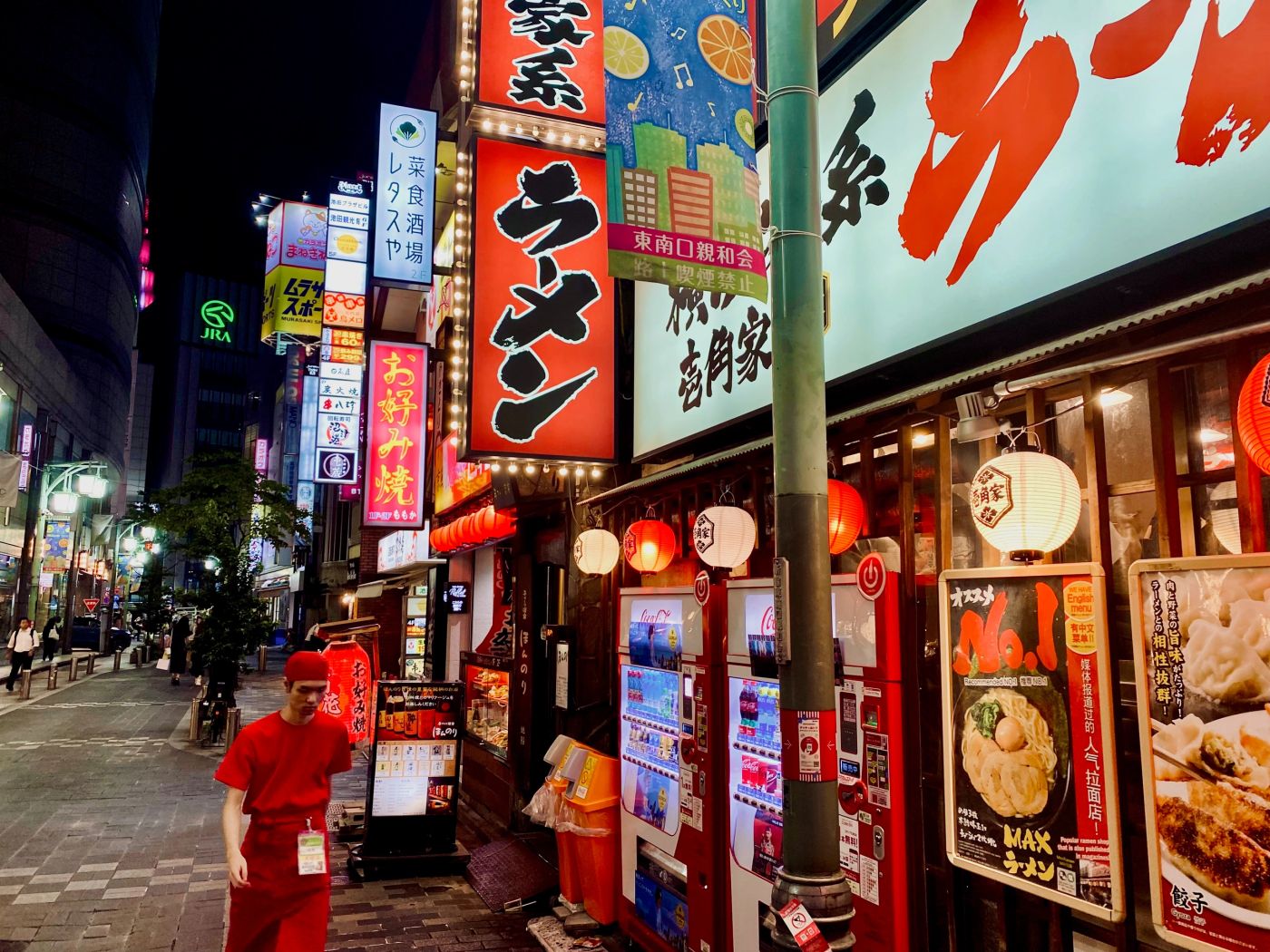
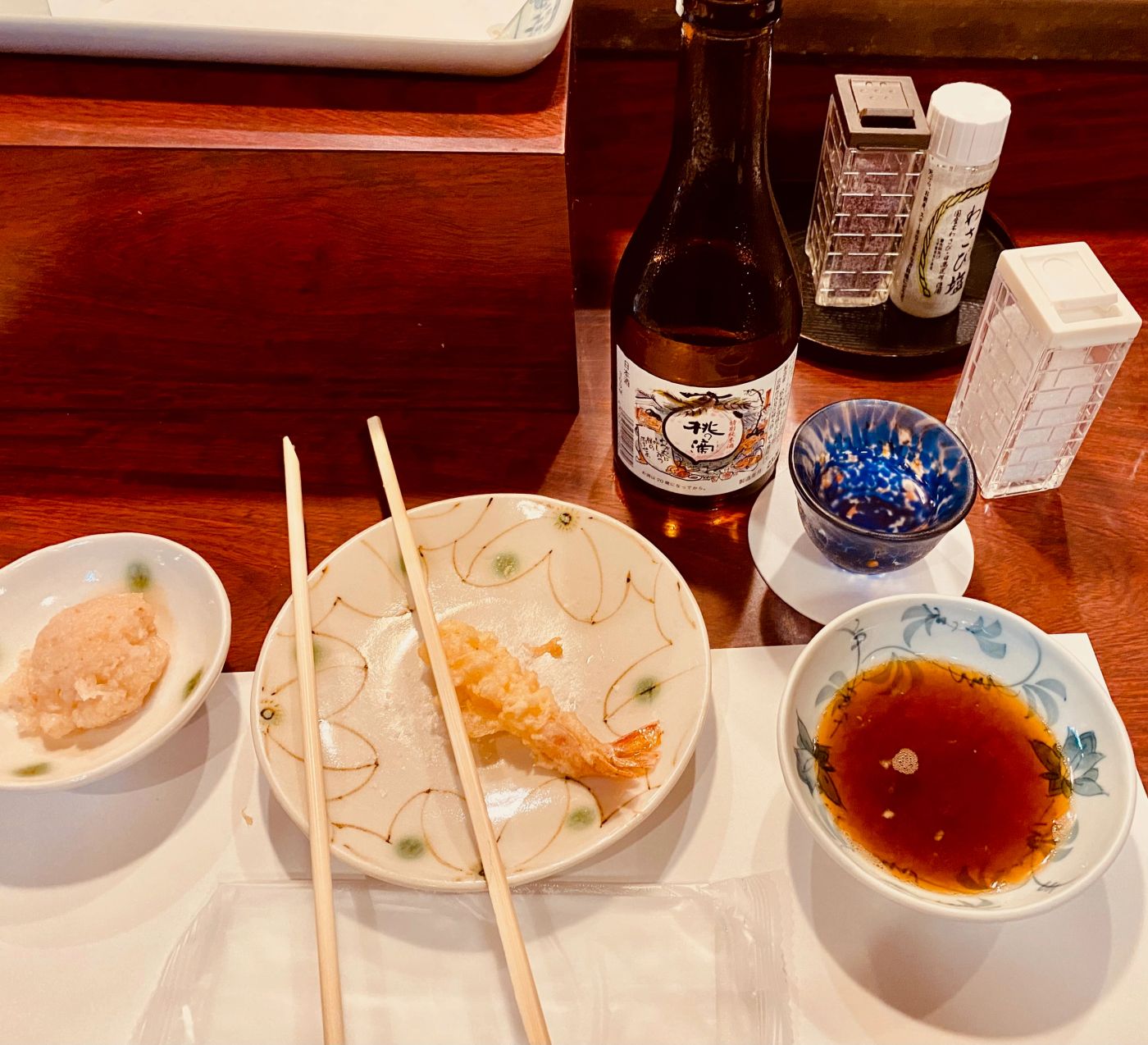
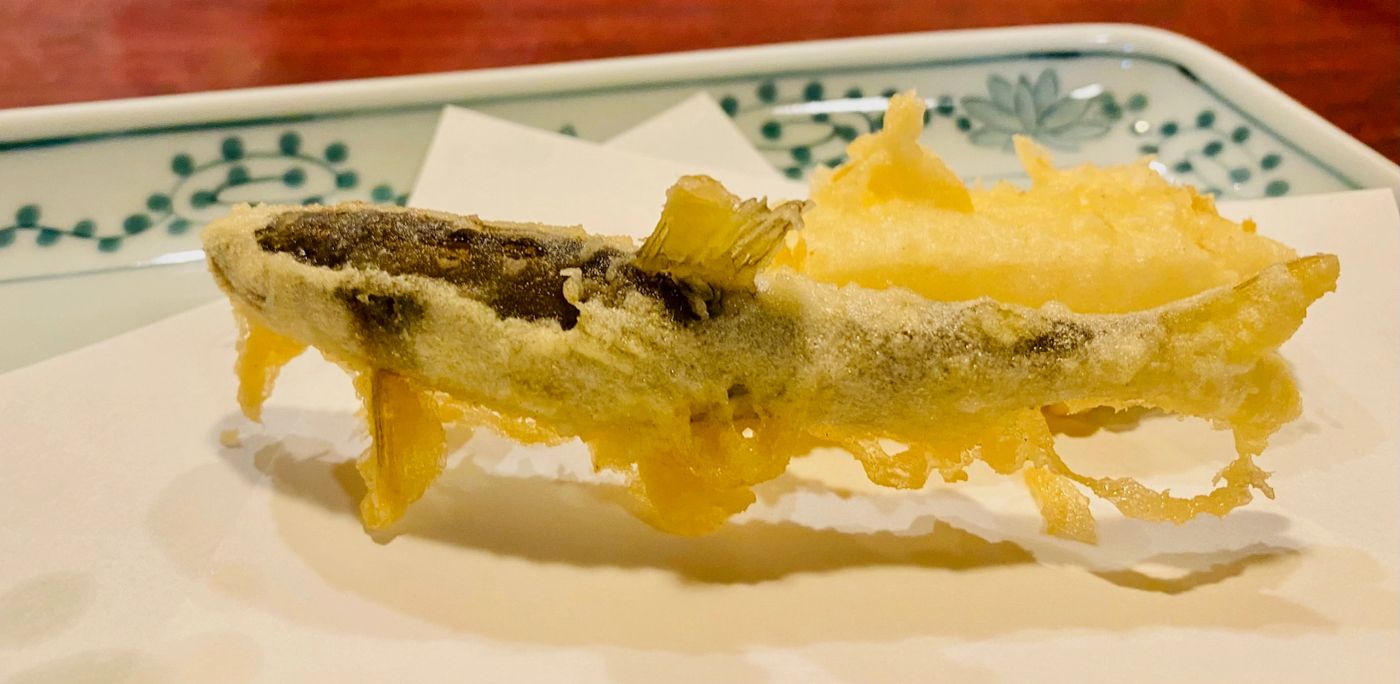
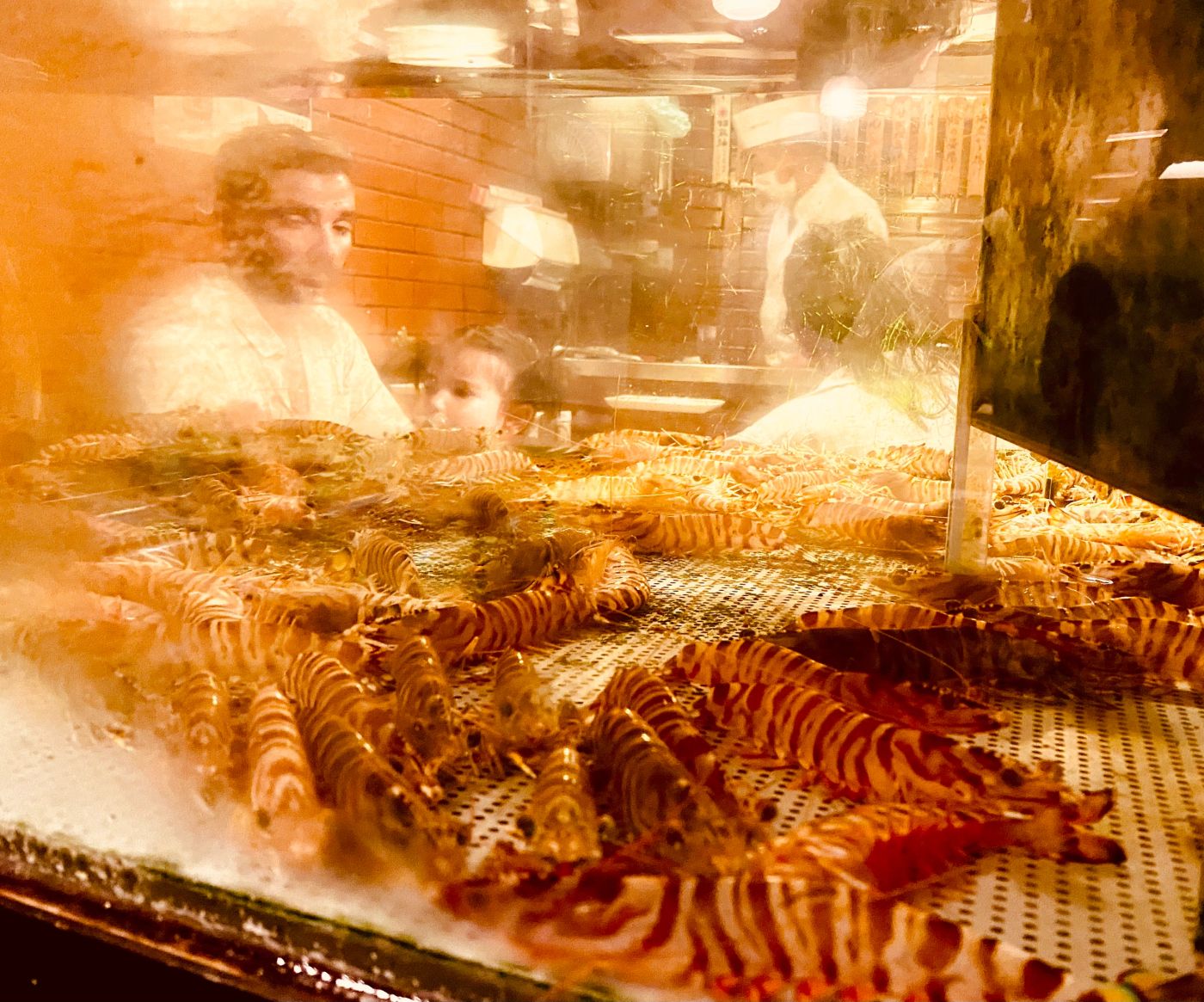
I had some trouble finding the restaurant I'd selected on Trip Advisor--the app gets you close, but the name won't be recognizable even with translation and the place could be down a flight of stairs or up two or tucked in an alley around the corner. Most of the time on subsequent nights I never found the one I was looking for; but it never mattered. Every meal was amazing. I scored this first night and had a life-altering tempura feast along with sake and beer that I could easily pay for thanks to the nice little gal in Machida Station. Cheers to you!
After the meal I was determined to rock Tokyo with my lousy efforts at Karaoke. I made some new friends in a tiny bar and had a blast, screeching out largely unrecognizable versions of Iggy Pop, The Rolling Stones, The Who, and The Eagles. Thank God most of these cool folks in the bar didn't speak English.
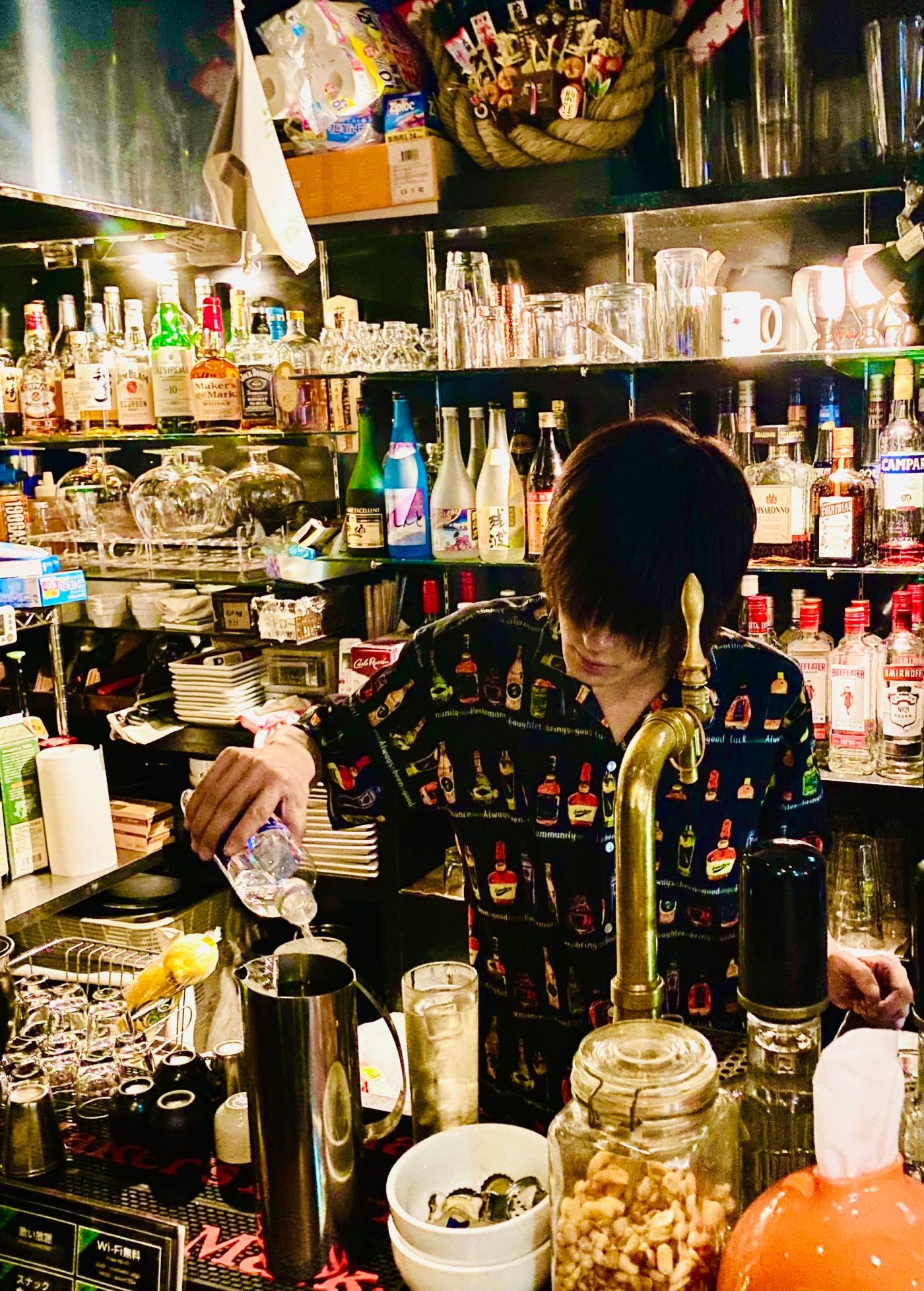
The next day we began in Machida City. Japan is very strict with drugs; even with a prescription you cannot bring in medications like Ritalin, and narcotics require special permission and paperwork. So it was cold turkey for me! Not even a Tylenol for each of the four days. In retrospect I'm not sure how much the drug cocktails actually help--a good attitude and distraction is really all it takes. Even behind the knees!
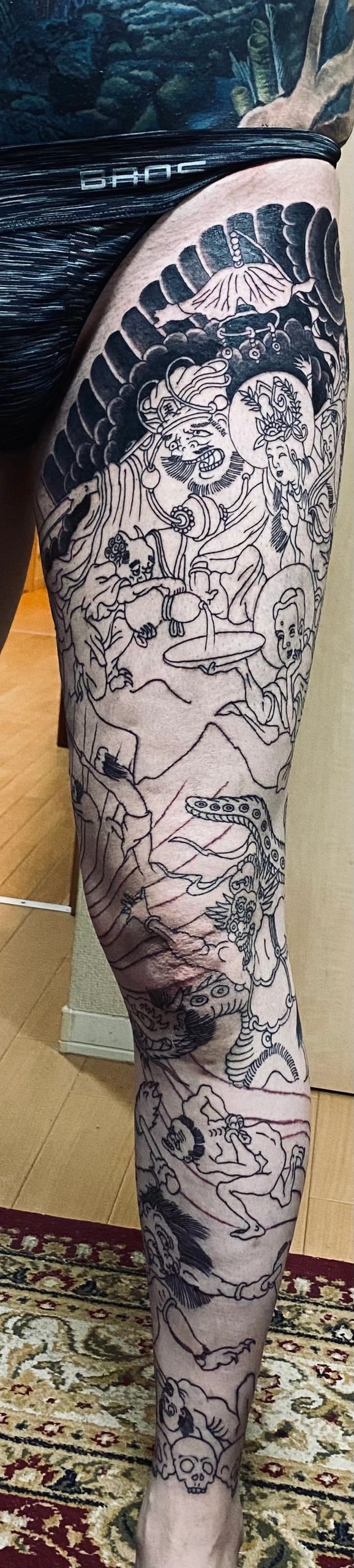
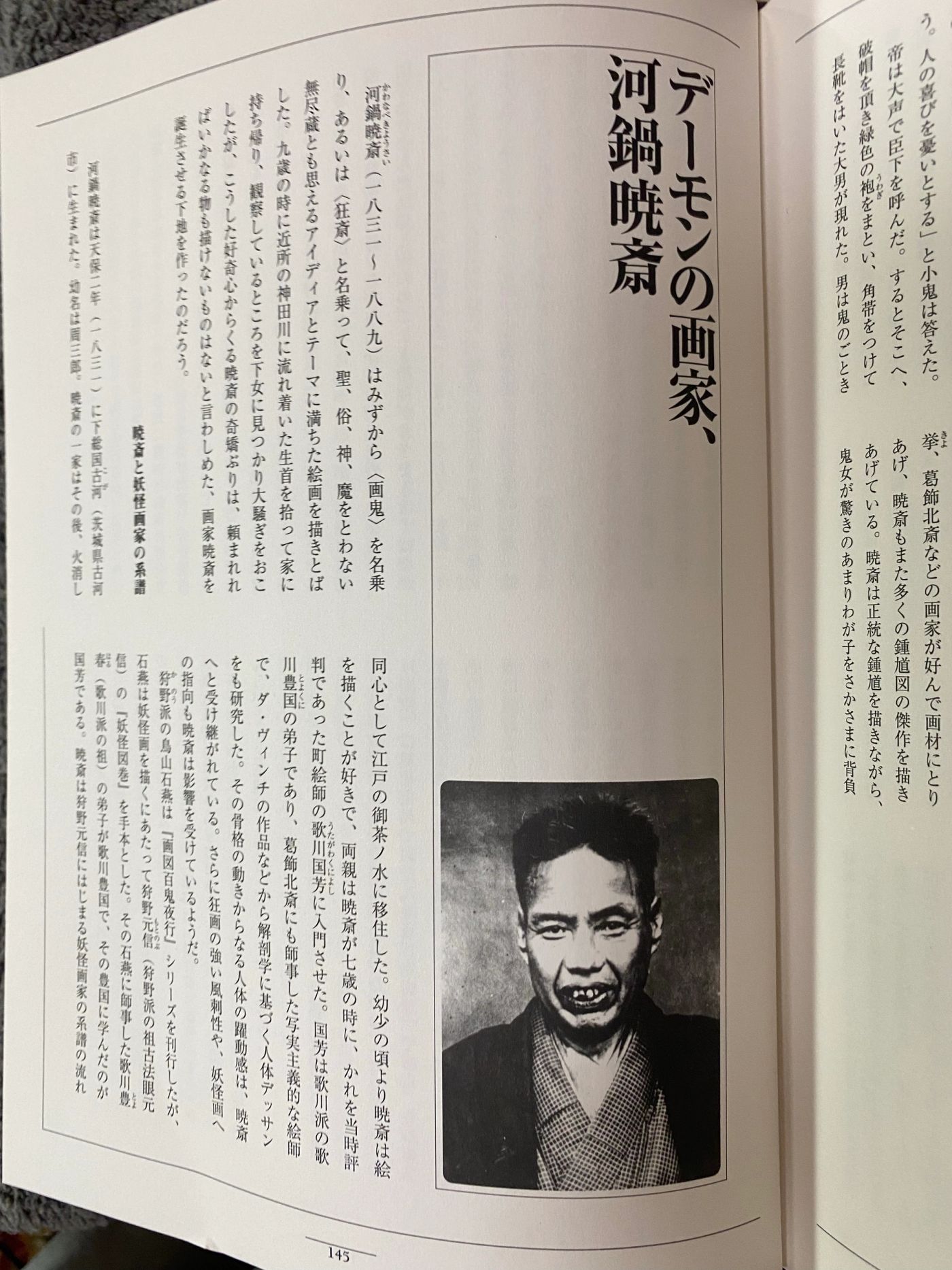
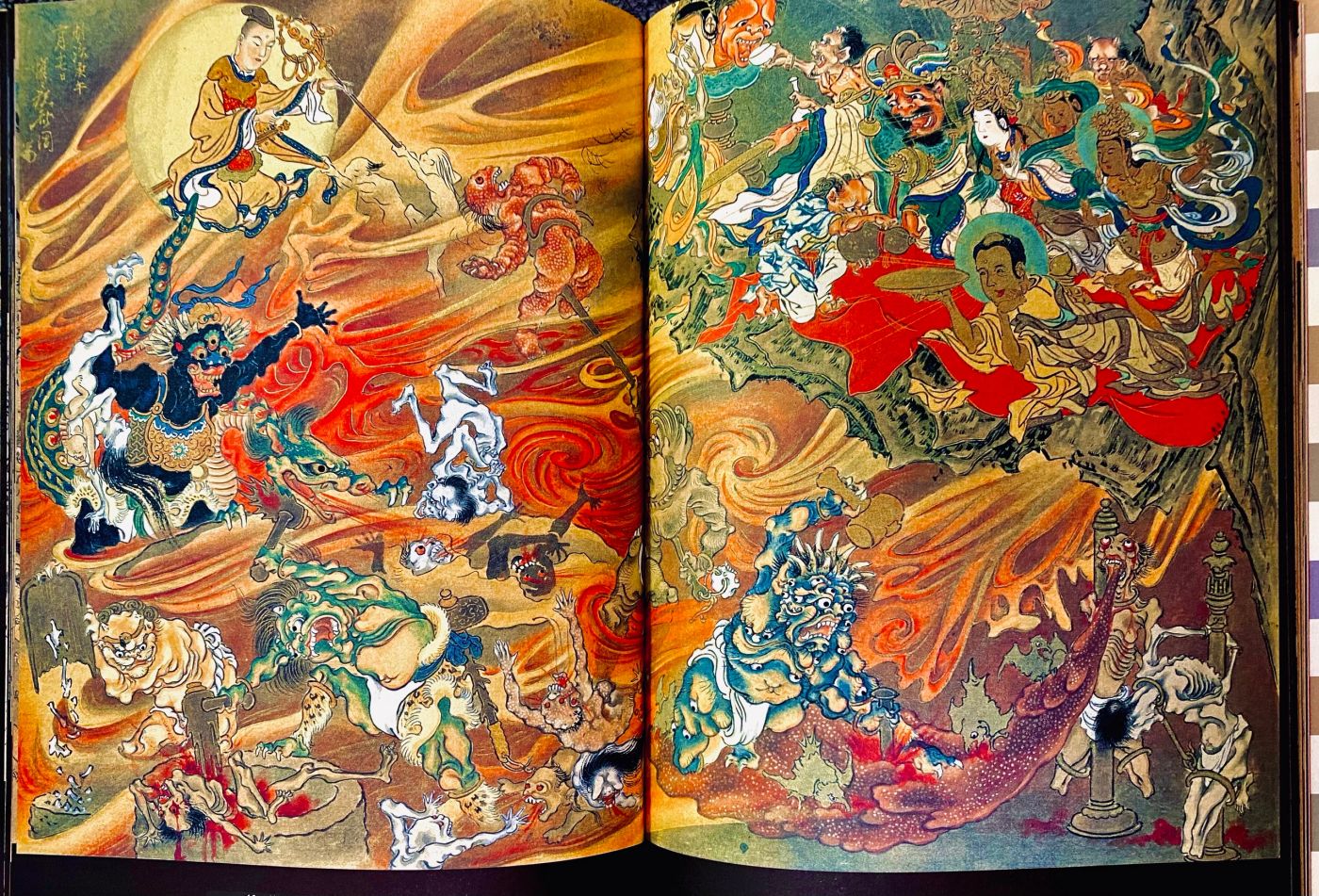
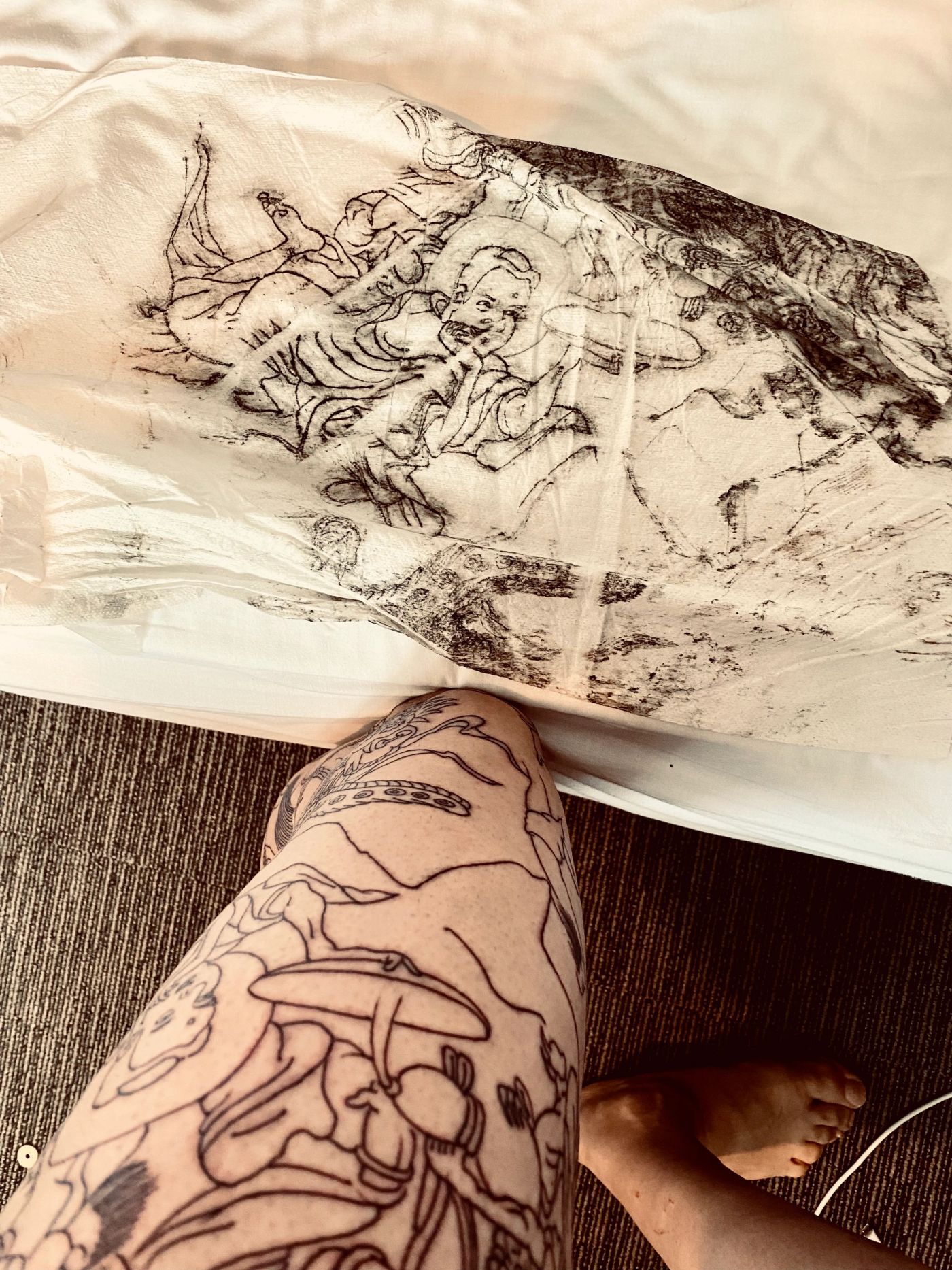
Sensei started with the template. He'd chosen a perfect image from a wild and talented late-Edo/early-Meiji artist, way too fond of sake and satire, by the name of Kawanabe Kyosai, who as a child gained some notoriety for bringing home a severed head he'd found by the Kanda River. Kyosai had a fixation on Yokai and other demons; the image chosen for my work was aptly titled 'Hell and Paradise Tour Map.' It's terrific: vivid, richly imagined, and full of chaos and gory details. Even in rough translation, evidently I'd gotten my point across. Sensei was going to deliver.
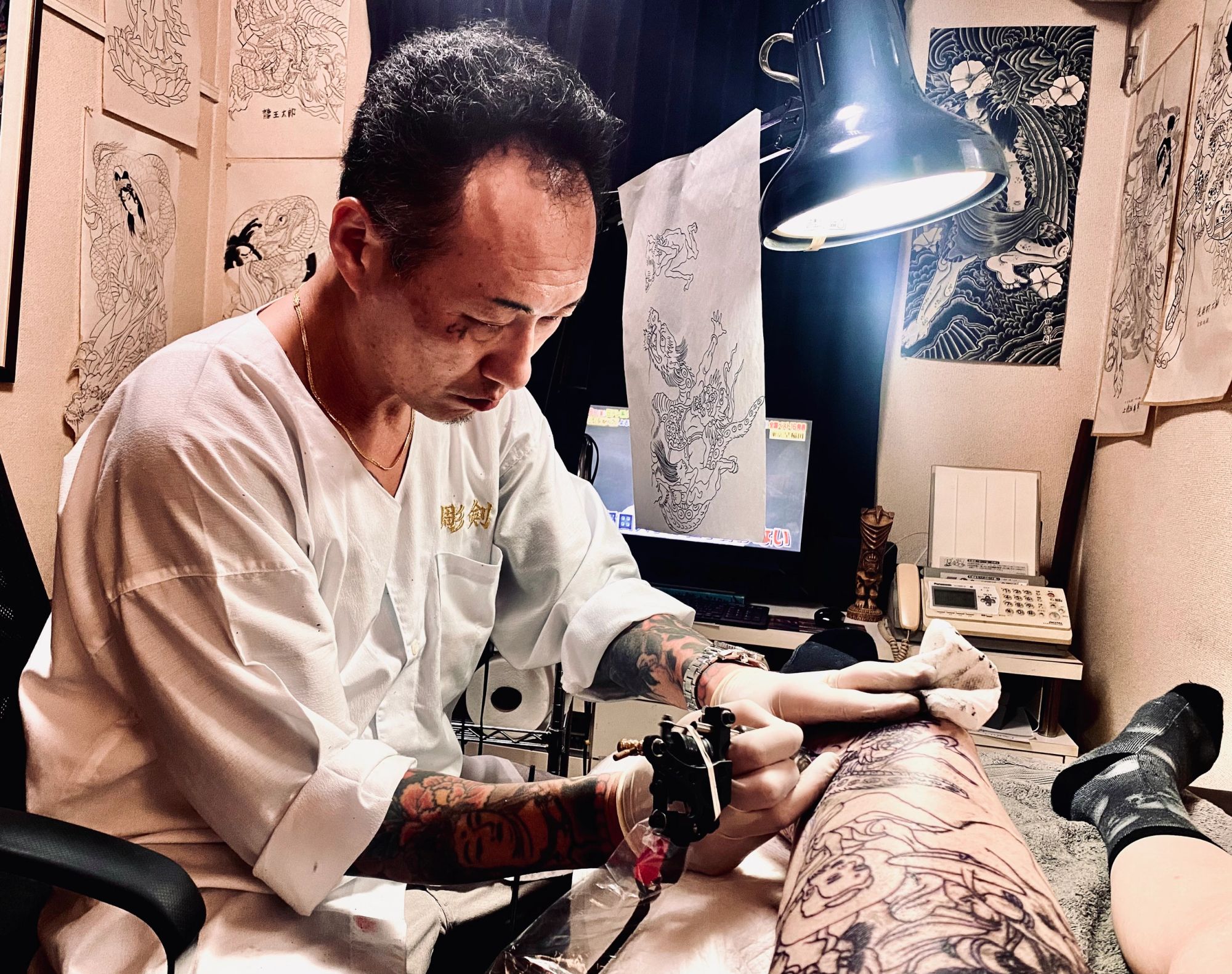
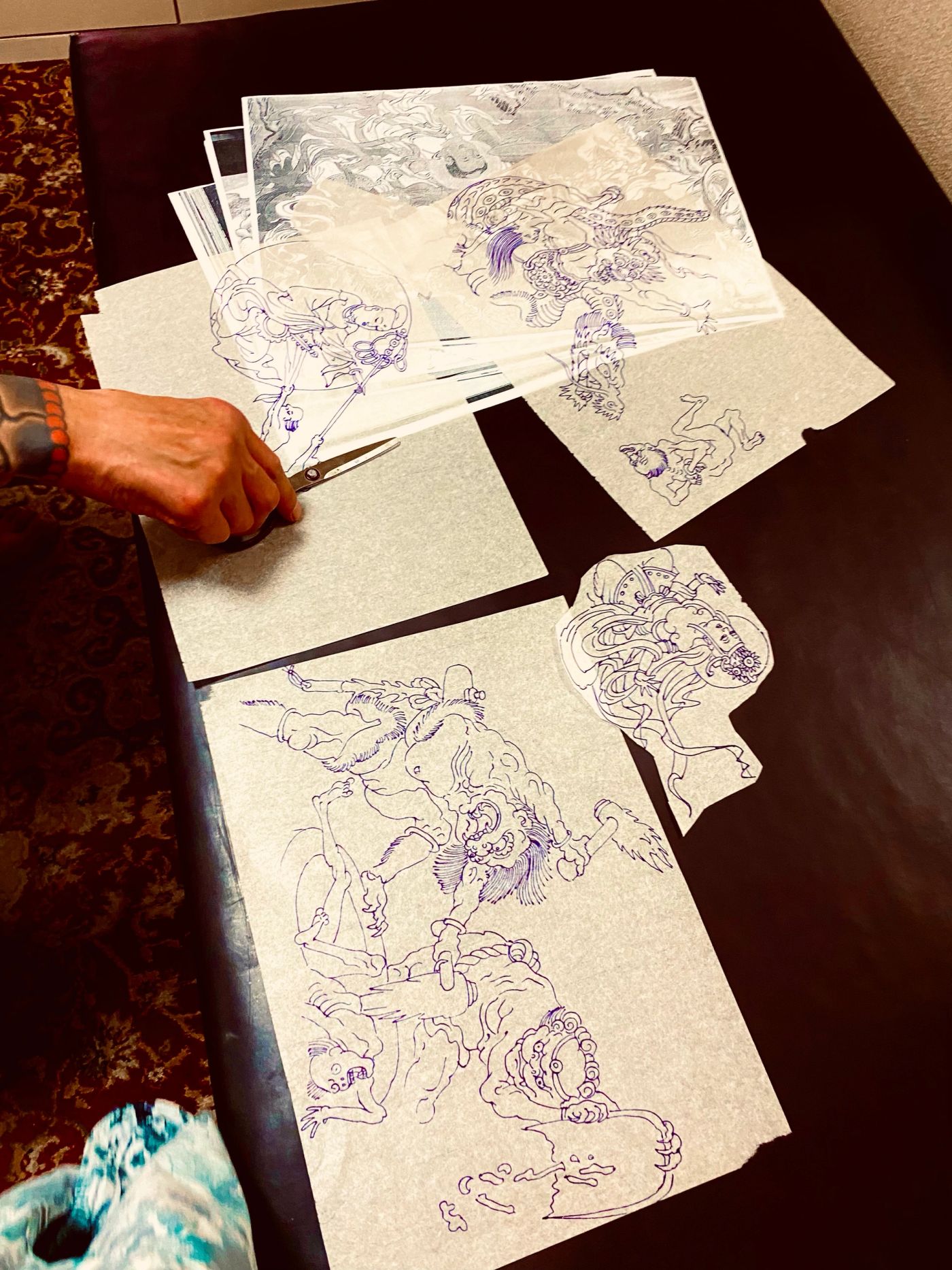
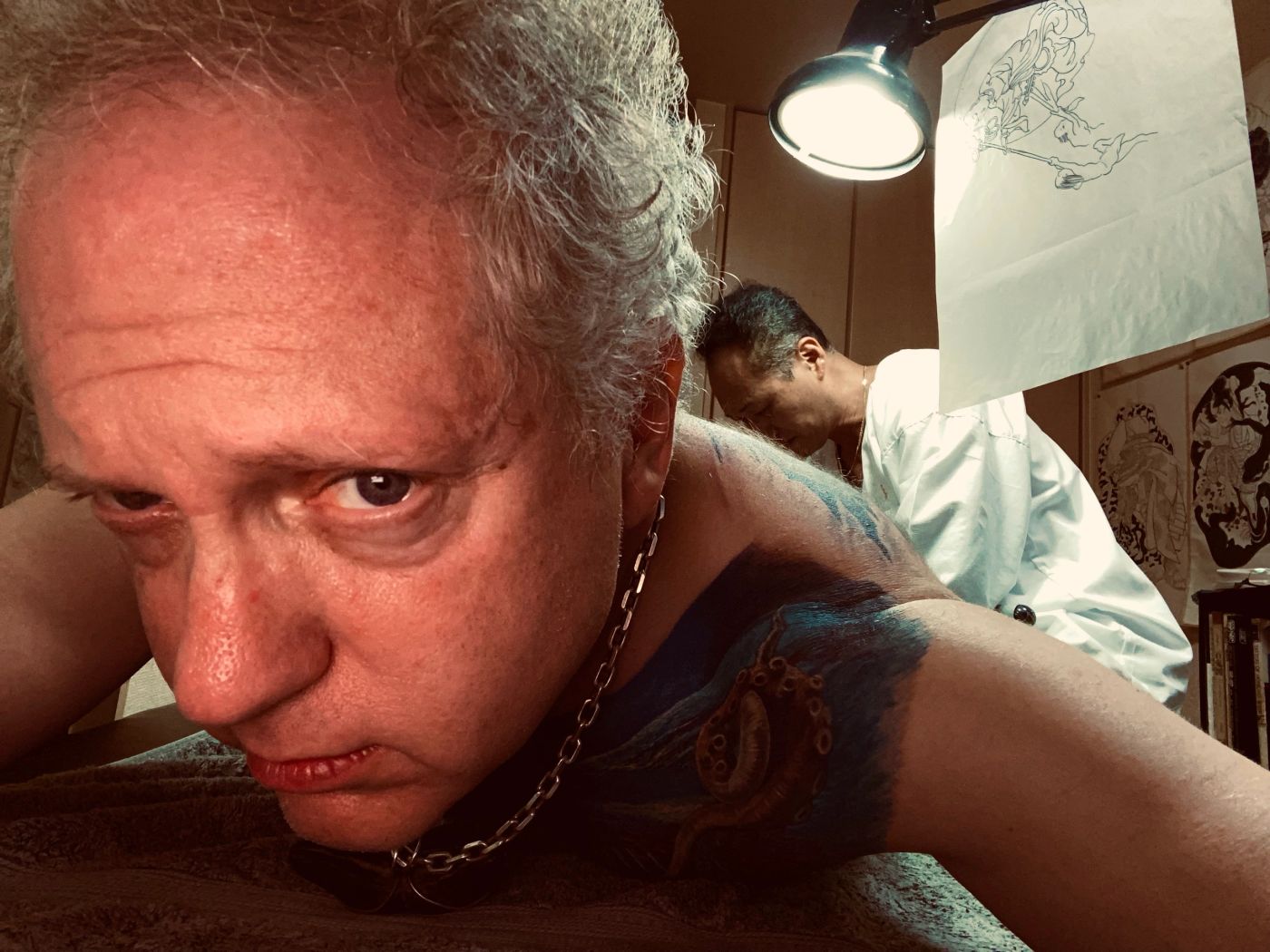
And he was ready to rock and roll: all business, stoic and meticulous, he brought out the stencils, fully printed and many cut out in advance. We would start with the black ink. And no ordinary ink at that.
The black ink is for calligraphy and made from the soot of burning rapeseed oil. It comes from only one prefecture and arrives looking something like a bar of high-end dark chocolate. From there it's ground and melted in tap water in a little pot on a stove. OK.... That was something new! I suppose it was a little disconcerting for something about to be injected all over my leg to be prepared in this fashion, but this is all about trust, right? Sensei seemed totally on-the-ball. It was reassuring as well to consider that with three clients a day, seven days a week for twenty five years, and with many customers quite likely being in the Yakuza, if there were a nasty surprise with this ink my artist would almost certainly be six feet under a rice paddy for many, many years by now. So off we went!
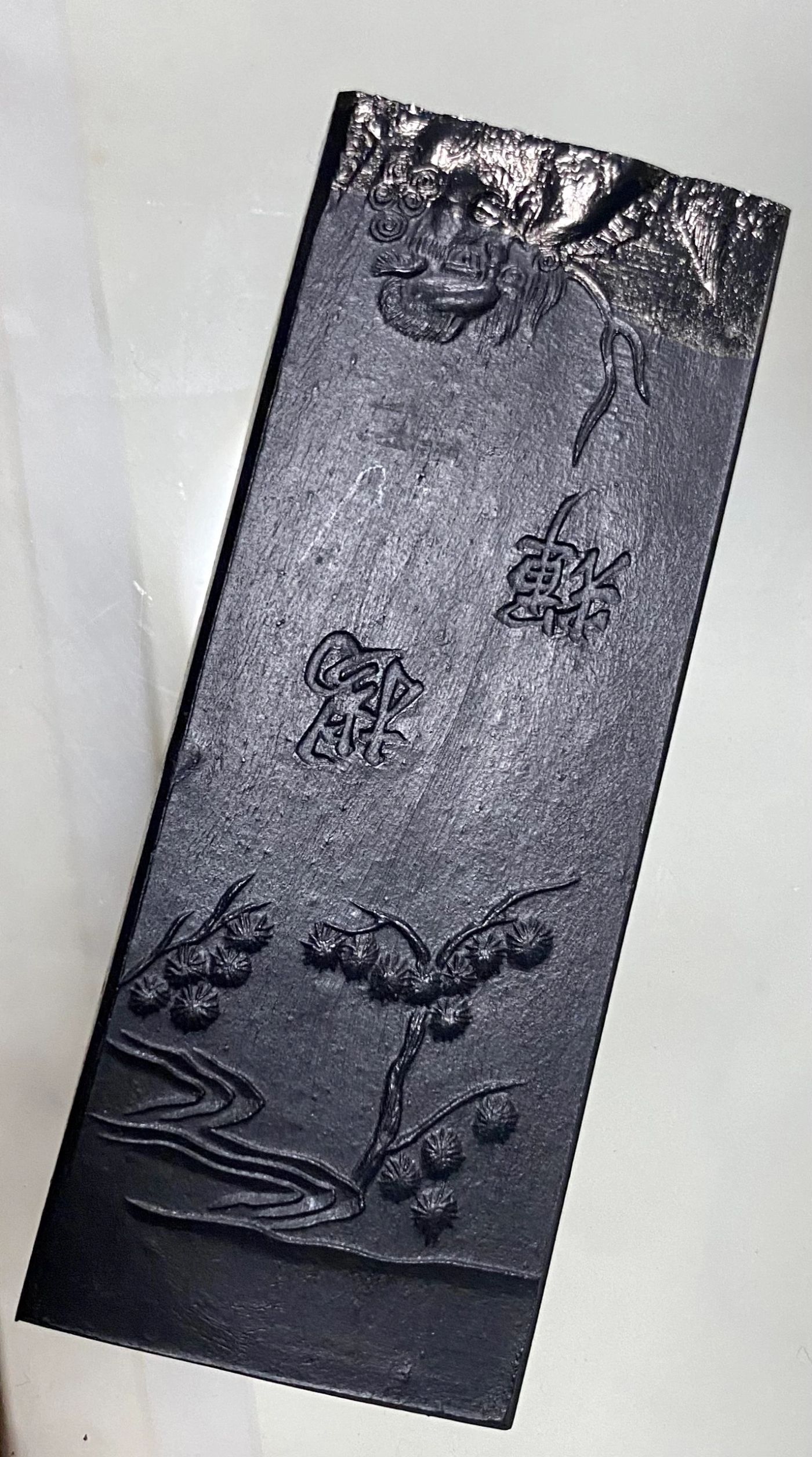
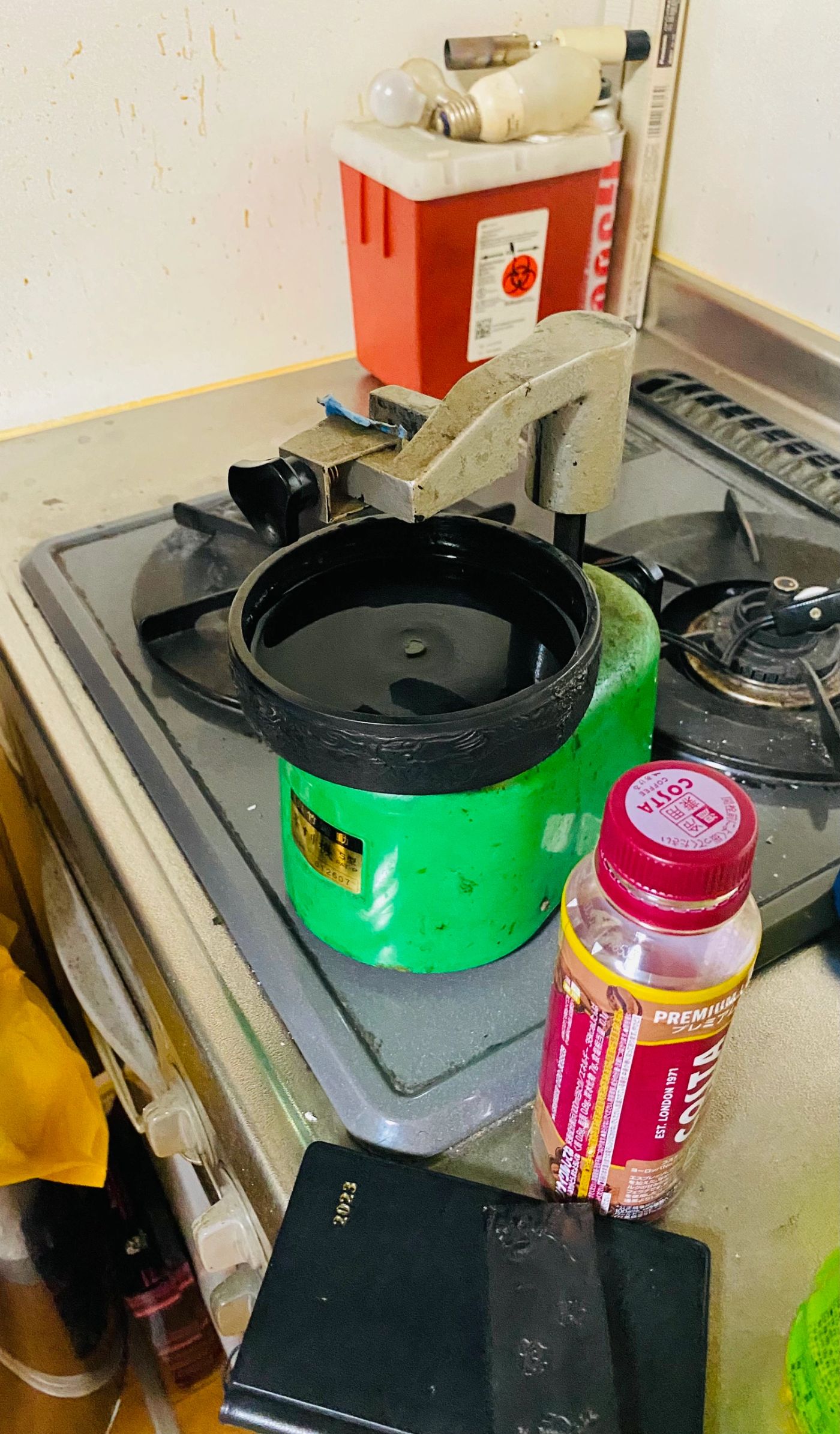
He doesn't use tebori needles. I was a little disappointed not to get the full, traditional experience, but this artist is very traditional in all other ways: in his thought and practice and work ethic and, in the end, only the final product is what would matter to me. And so an old-fashioned, corded electric needle was my new friend. It was very neat to see how methodical he is: every motion is planned, concise and perfectly executed.
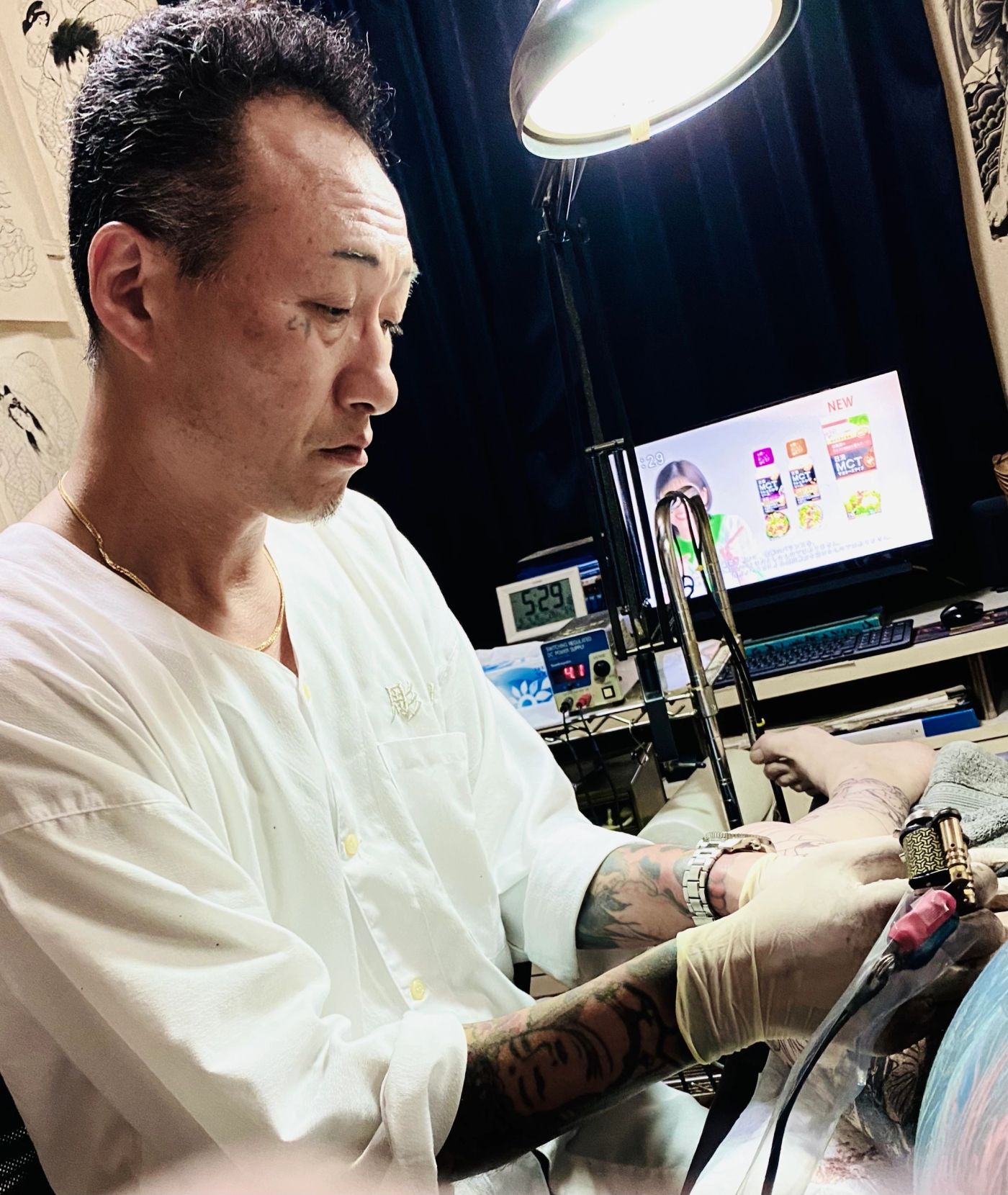
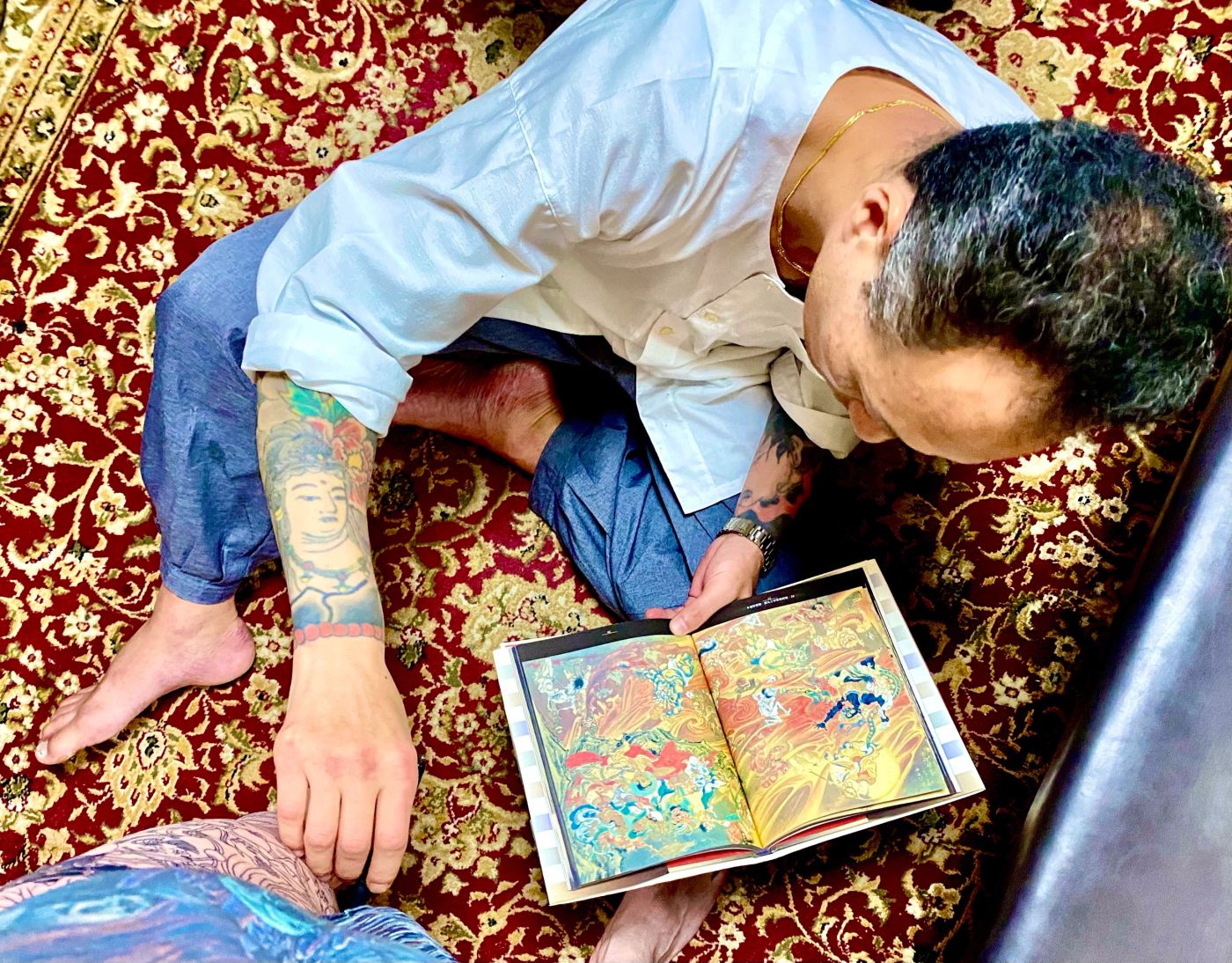
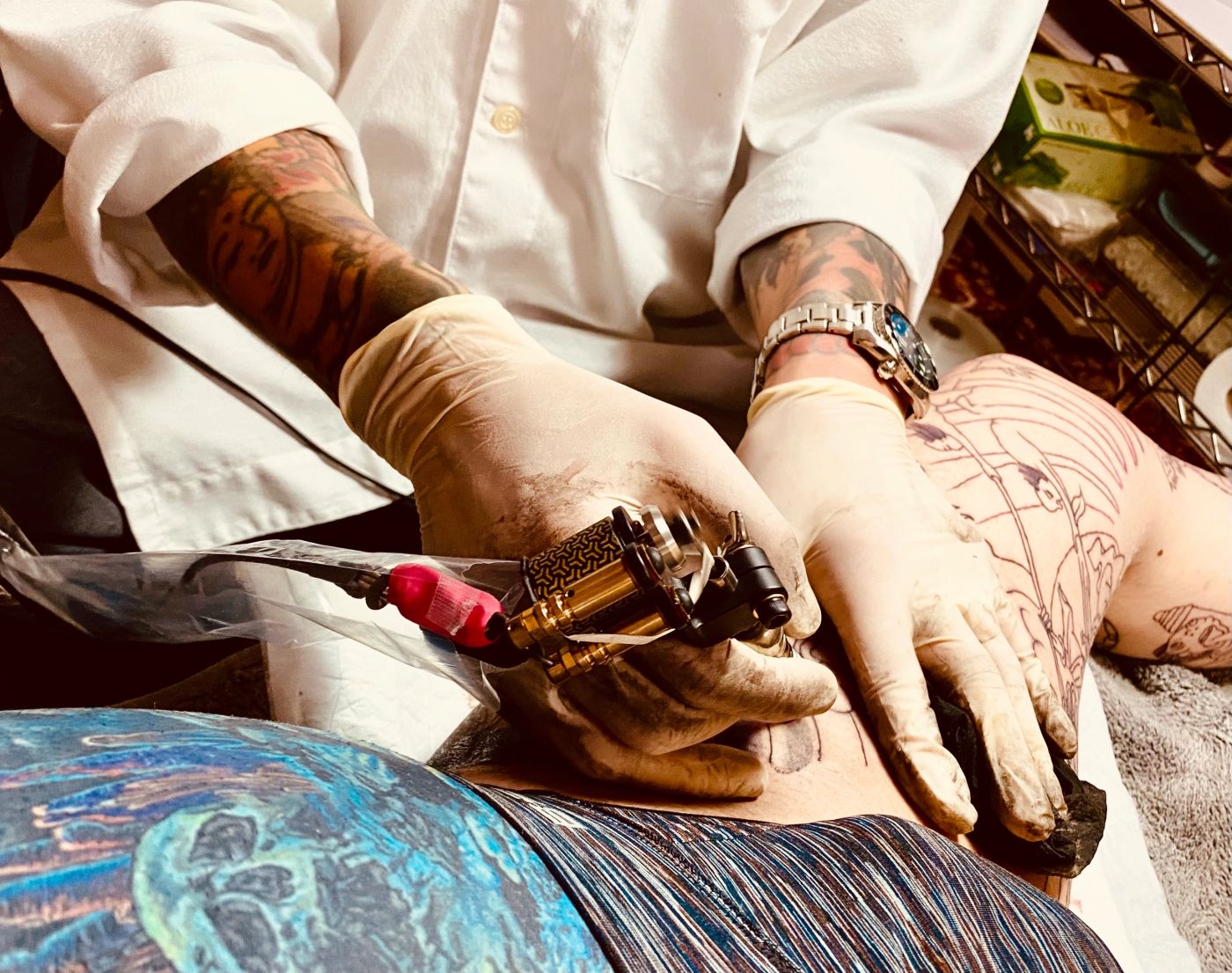
He worked fast on that first day and accomplished quite a bit. Every hour or so he would make a motion for smoking and we would take a cig break in his little antechamber. Google Translate got a lot of mileage in that tiny room.
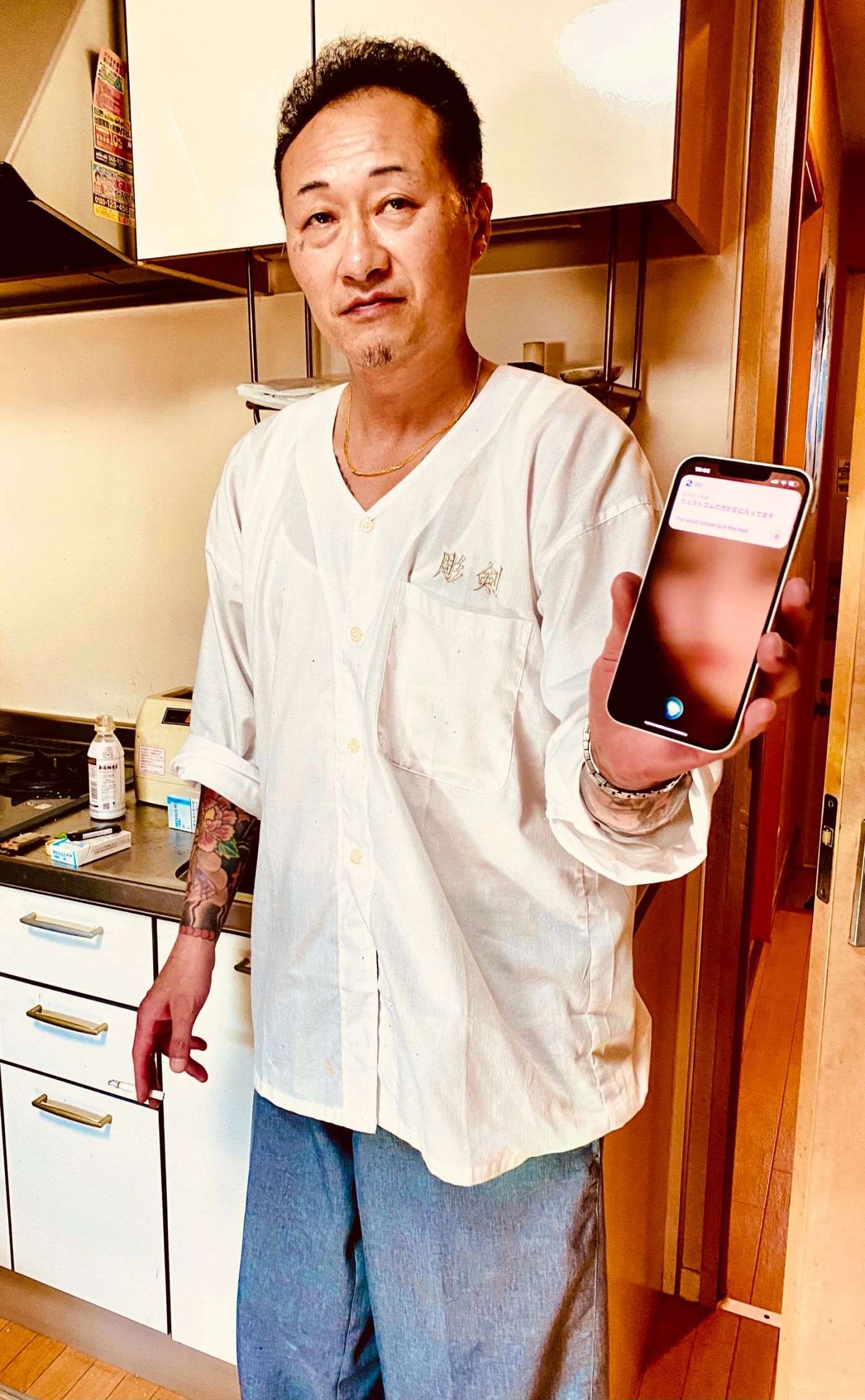
At the end of the session he didn't seem interested in the sort of interim wrap I'd been used to on other projects. I didn't want to offend, and so afterwards I scoured convenience stores for appropriate overnight covering. I highly recommend trying to ask for adult diapers in a 7-Eleven in Tokyo with Google Translate. Please leave any and all ego at home if you do.
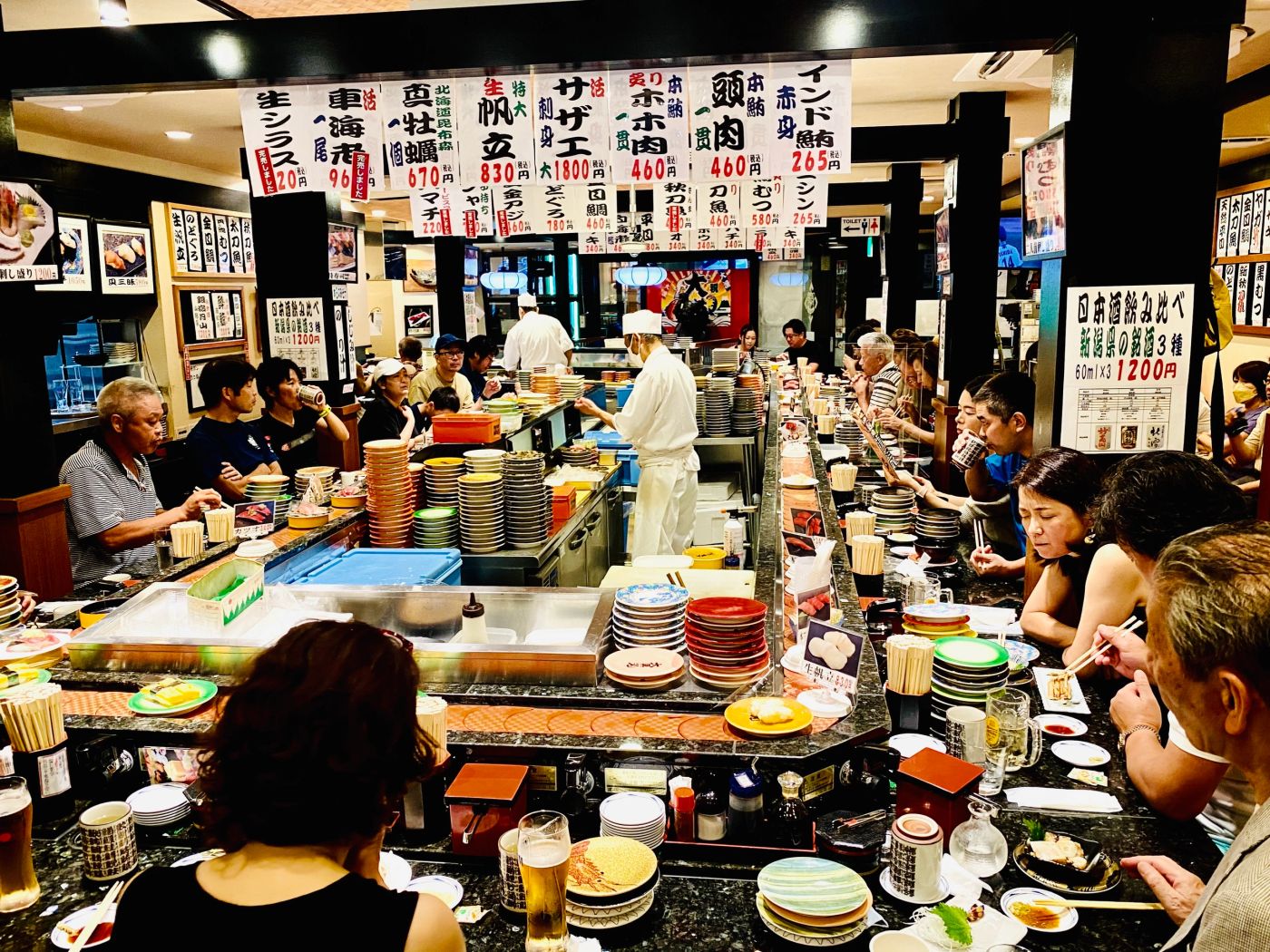
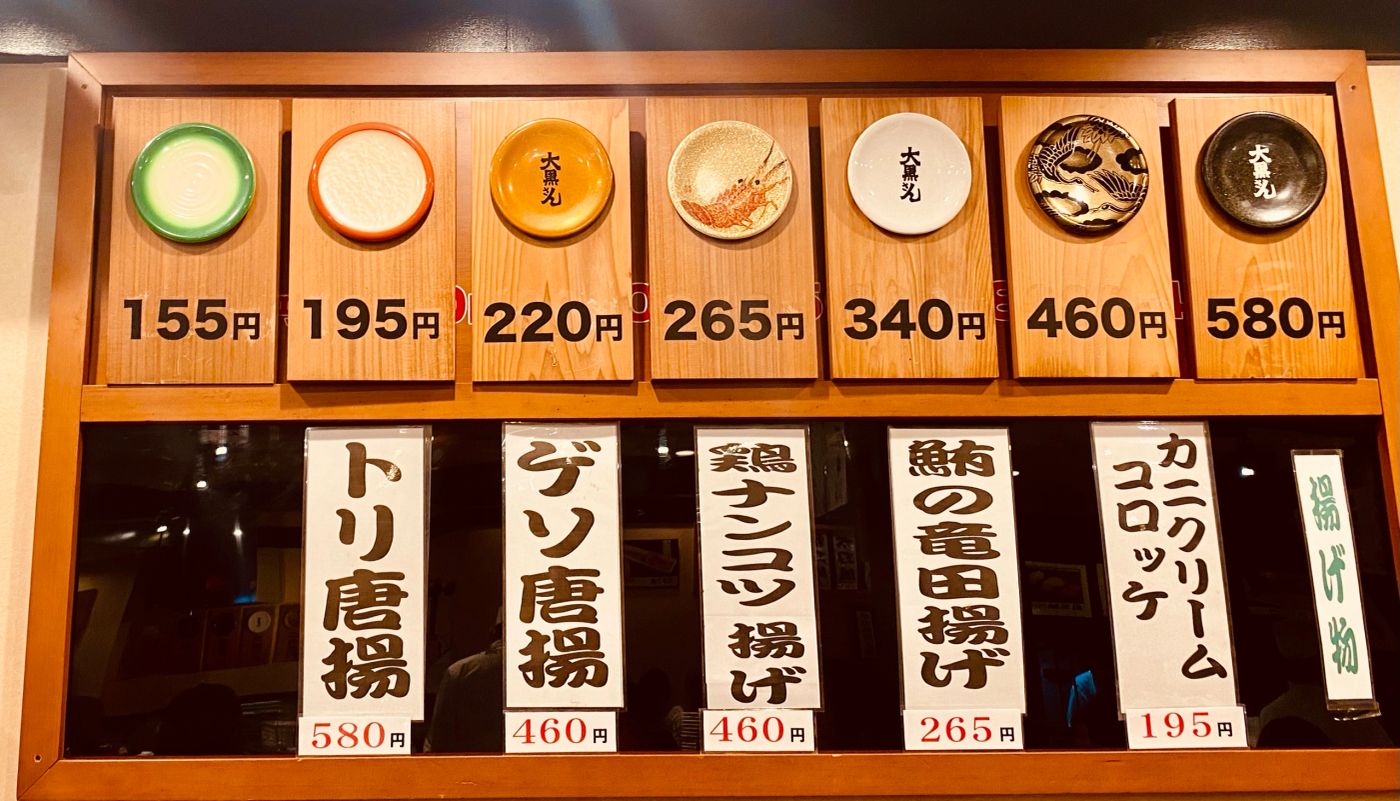
I had a tremendous and efficient sushi dinner in Machida. Inexpensive and authentic--just haul your color-coded dishes off the conveyor belt, eat, and let the staff count up your plates at the end.
I wrapped myself in paper towels and plastic wrap and called it a night. It was clear the next morning this ink was something different: despite my usual prep of intramuscular steroid and antihistamine there was still a lot of swelling. Thick gobs like crude oil tumbled down my leg in the shower. Had I met my match?
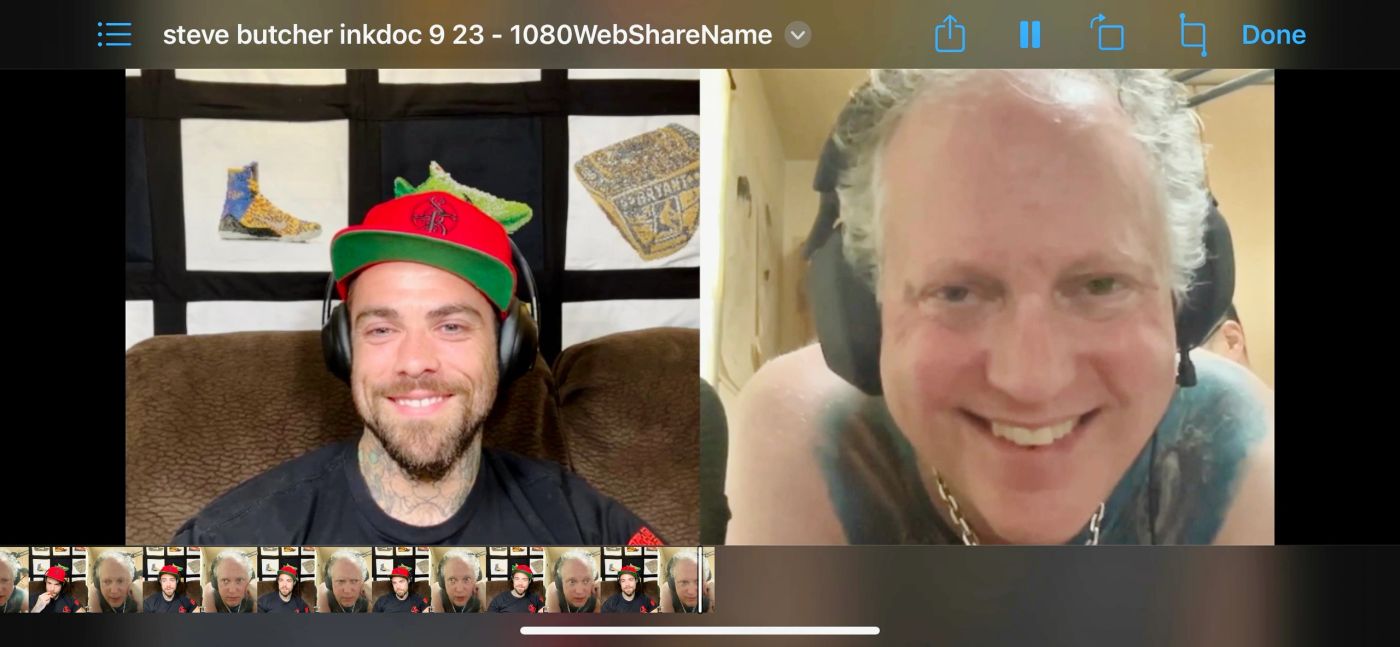
Day Two was a piece of cake, thanks to total distraction courtesy of my friend Steve Butcher, who'd graciously agreed to do an Inkdoc Podcast interview while I was getting needled. Steve stayed up late in LA, what with the fourteen-hour time difference, and we had a really fun chat over the web while Sensei motored through more of my leg.
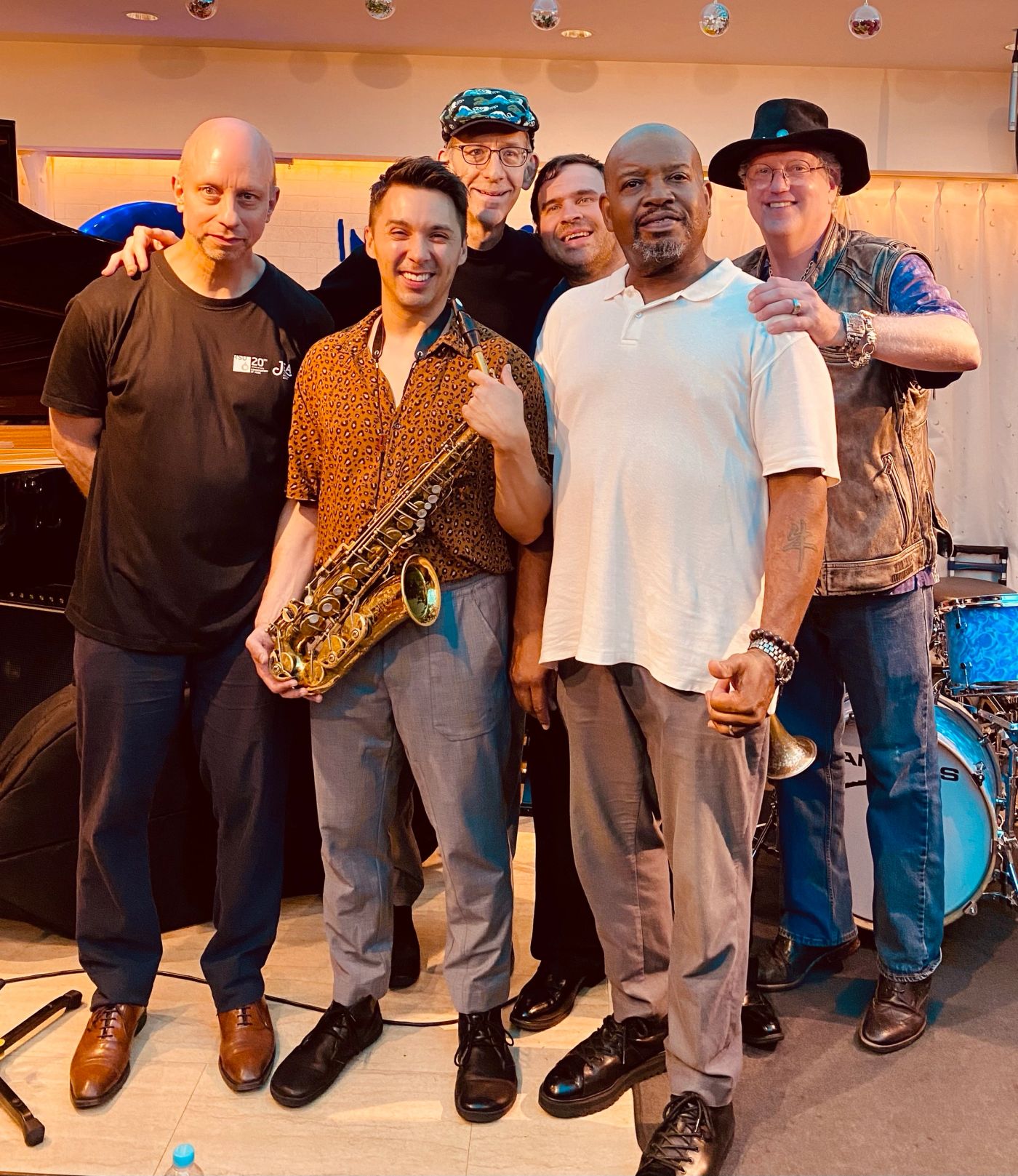
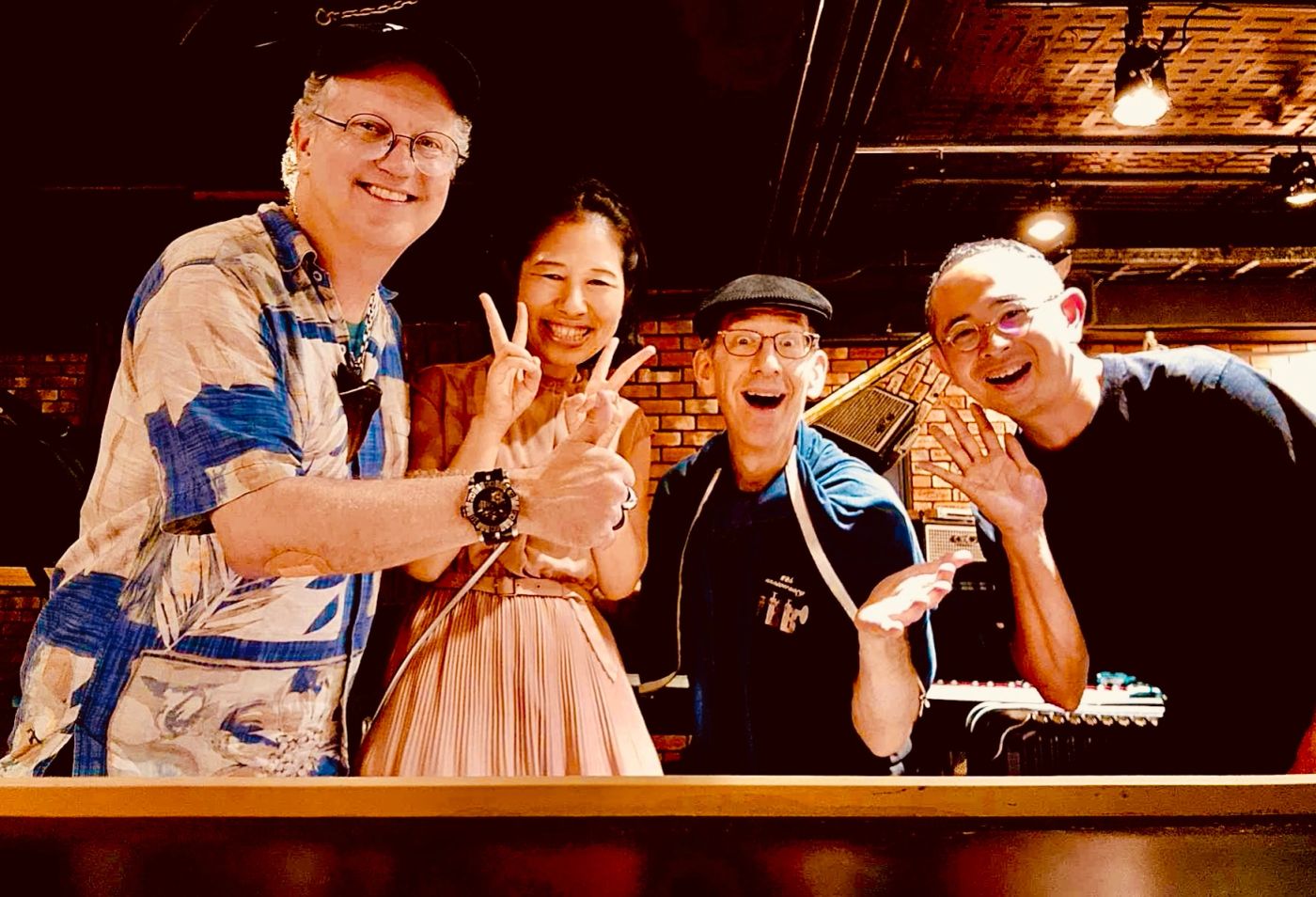
That night I met up with my old college friend, Jonathan Katz, who's lived in Tokyo more than thirty years. He's a gifted musician and composer and I was treated to the first of two performances by him--the first with a top-notch Jazz ensemble at an intimate little club in Machida.
Day Three we had an earthquake. No big deal--Japan has at least one every day. It was small, and kinda fun, and hard to get bent out of shape over with the escalating pain. Just count me out for anything over a 5 on the Richter scale.
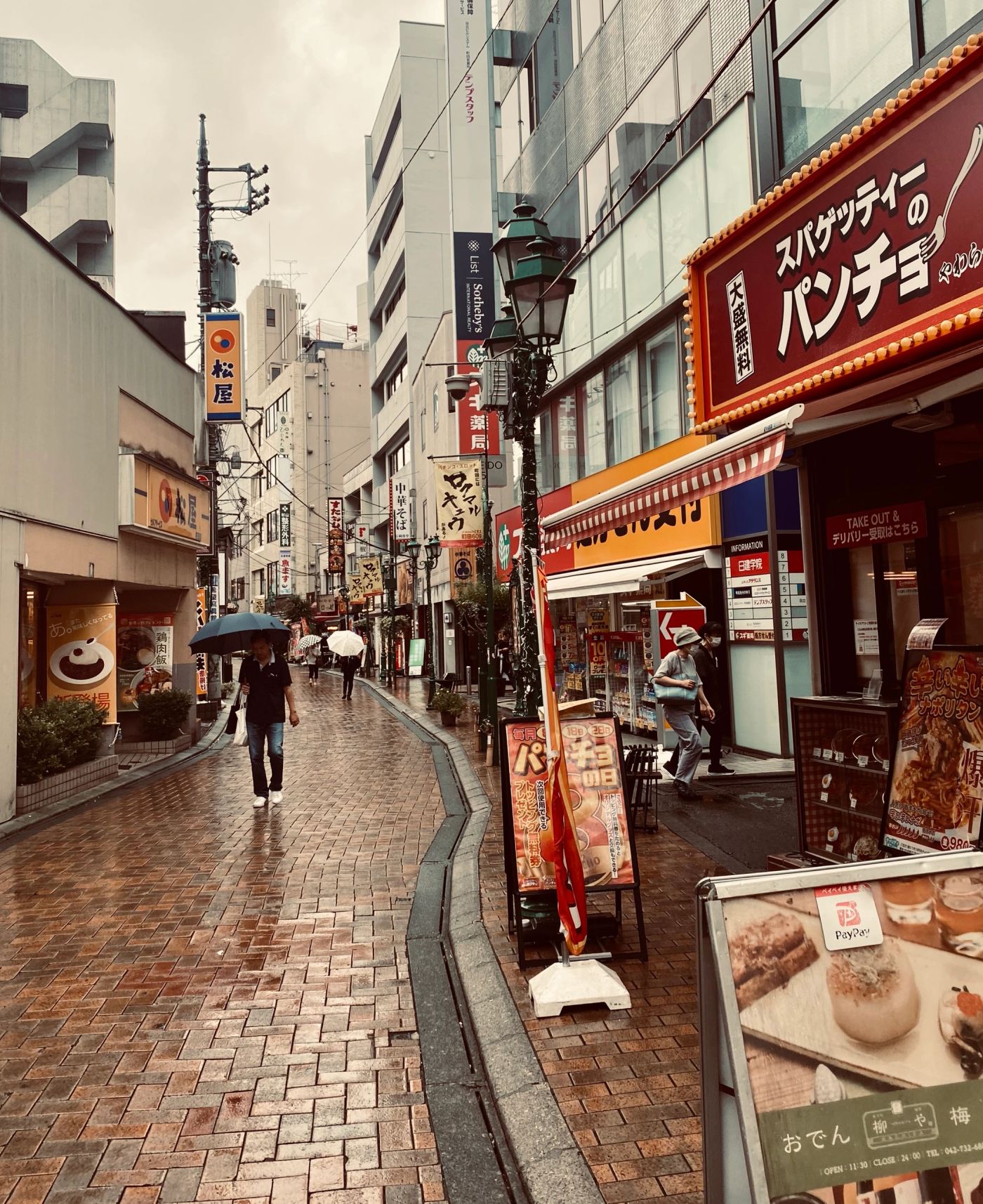
My dress shoes were no match for the rain--I slipped and fell on a slick patch of concrete. As I was going down all I could think of was "Dear God, not the left leg!" I had visions of limping into Sensei's studio with a fucking cast on my fresh ink. (At least he could have signed it with calligraphy ink.) Fortunately it was just a scraped elbow and then a new pair of waterproof sneakers were just a stone's-throw away, Translation Fail be damned.
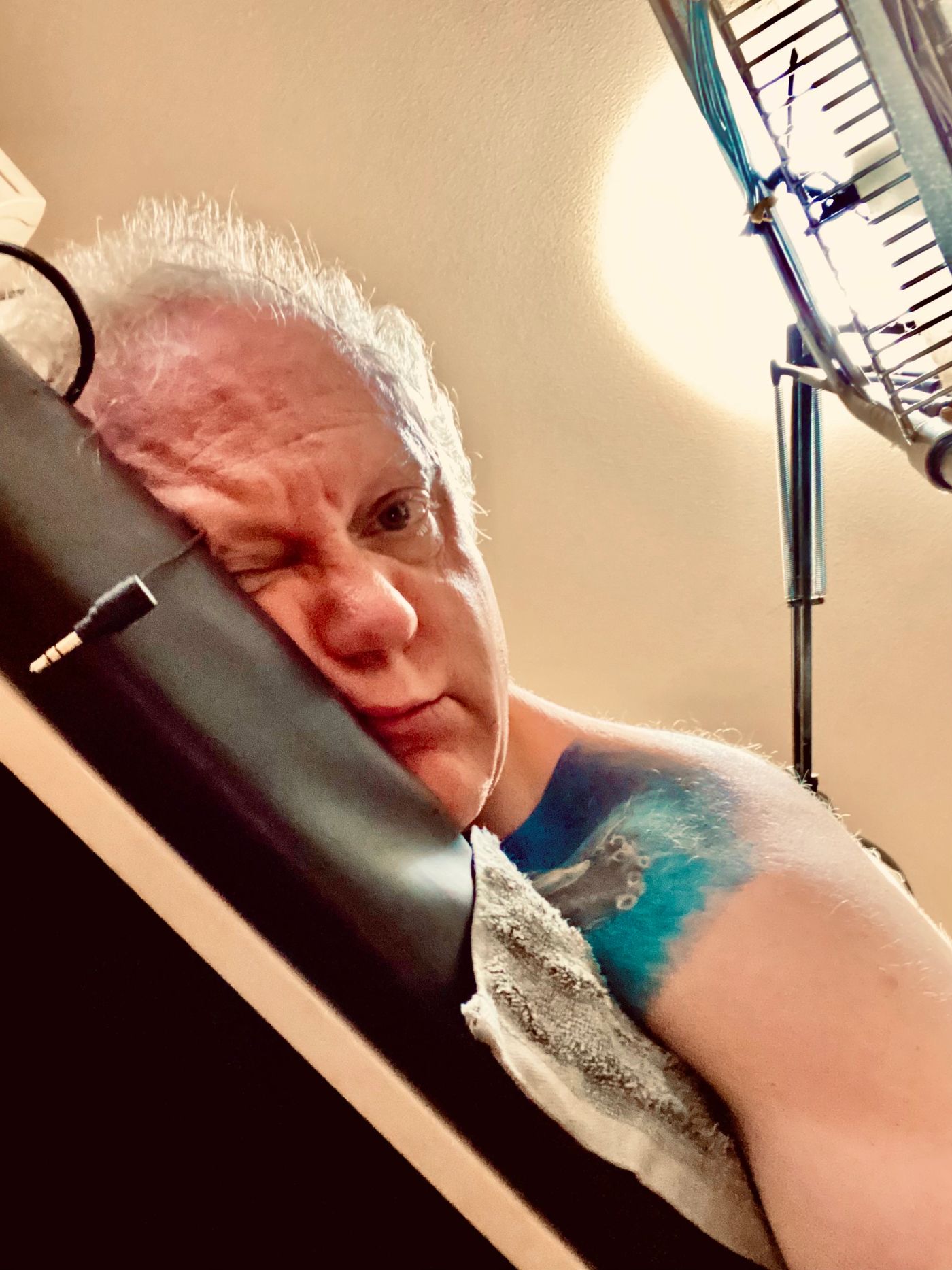
The discomfort was starting to get worse as he worked over areas already reeling from the Labrea Tar Pit crude oil ink. Ouch. (In the end the ink is quite lovely and likely superior to anything else I've seen or used.)
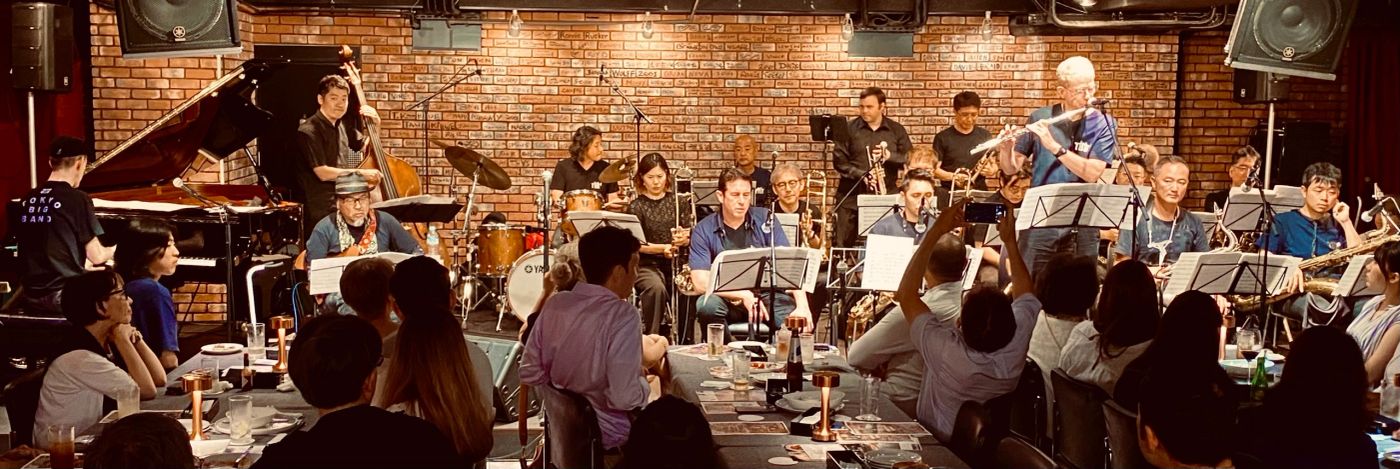
I went out again that night to the swank Akasaka section for another perfomance--this time I saw the Tokyo Big Band, jewel of the Jon Katz network, which blew me away with modern and clever takes on American, European and Latin standards.
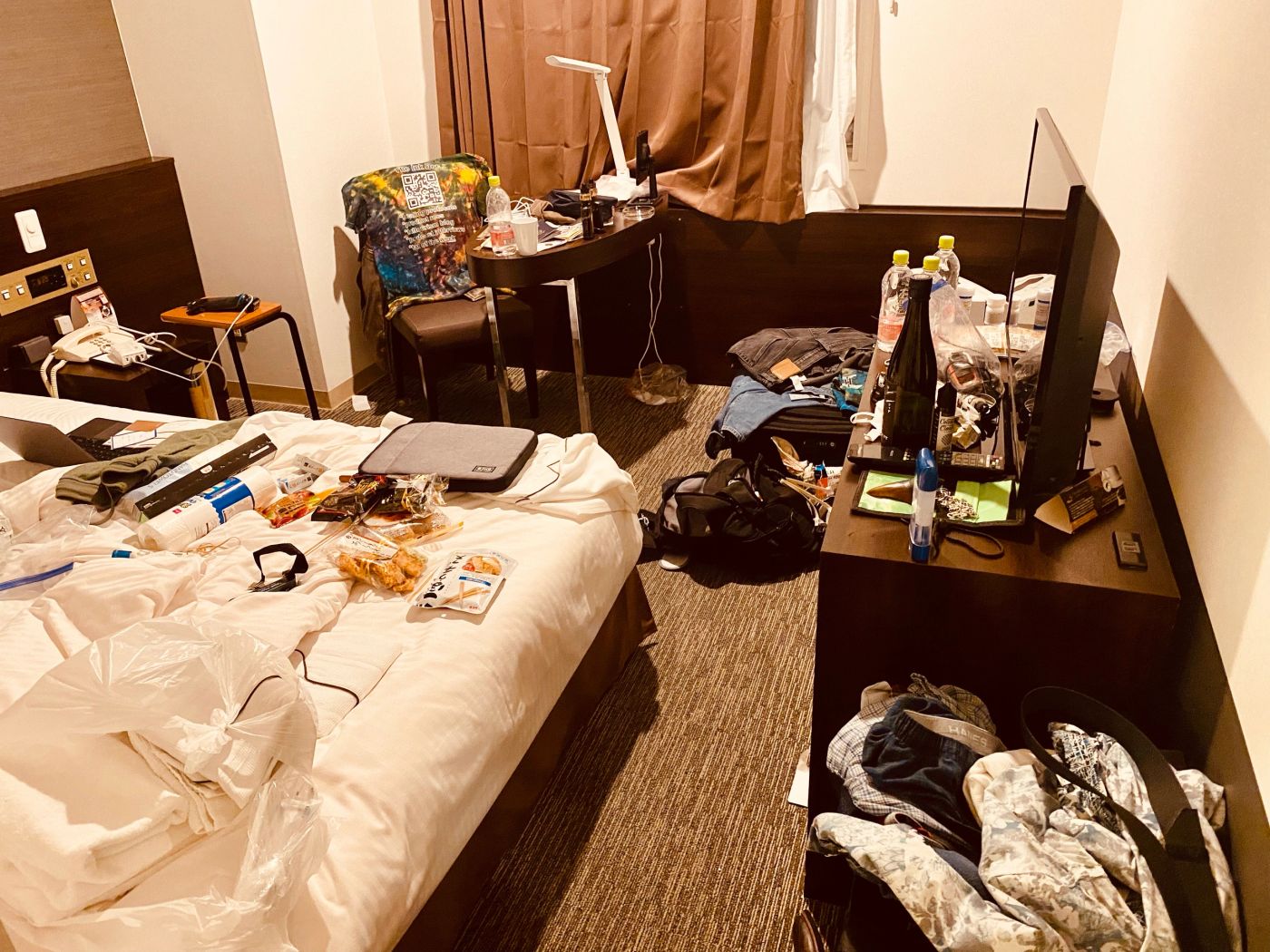
Day Four. My room was starting to look like a crack house. Clothes, cables, e-cig paraphernalia, a pound of loose Japanese coins, sake and beer bottles, bloody bandages and about a dozen bathrobes strewn everywhere. (I'd kept the maids at bay the whole time, and they dutifully delivered fresh linens and bathrobes daily.)
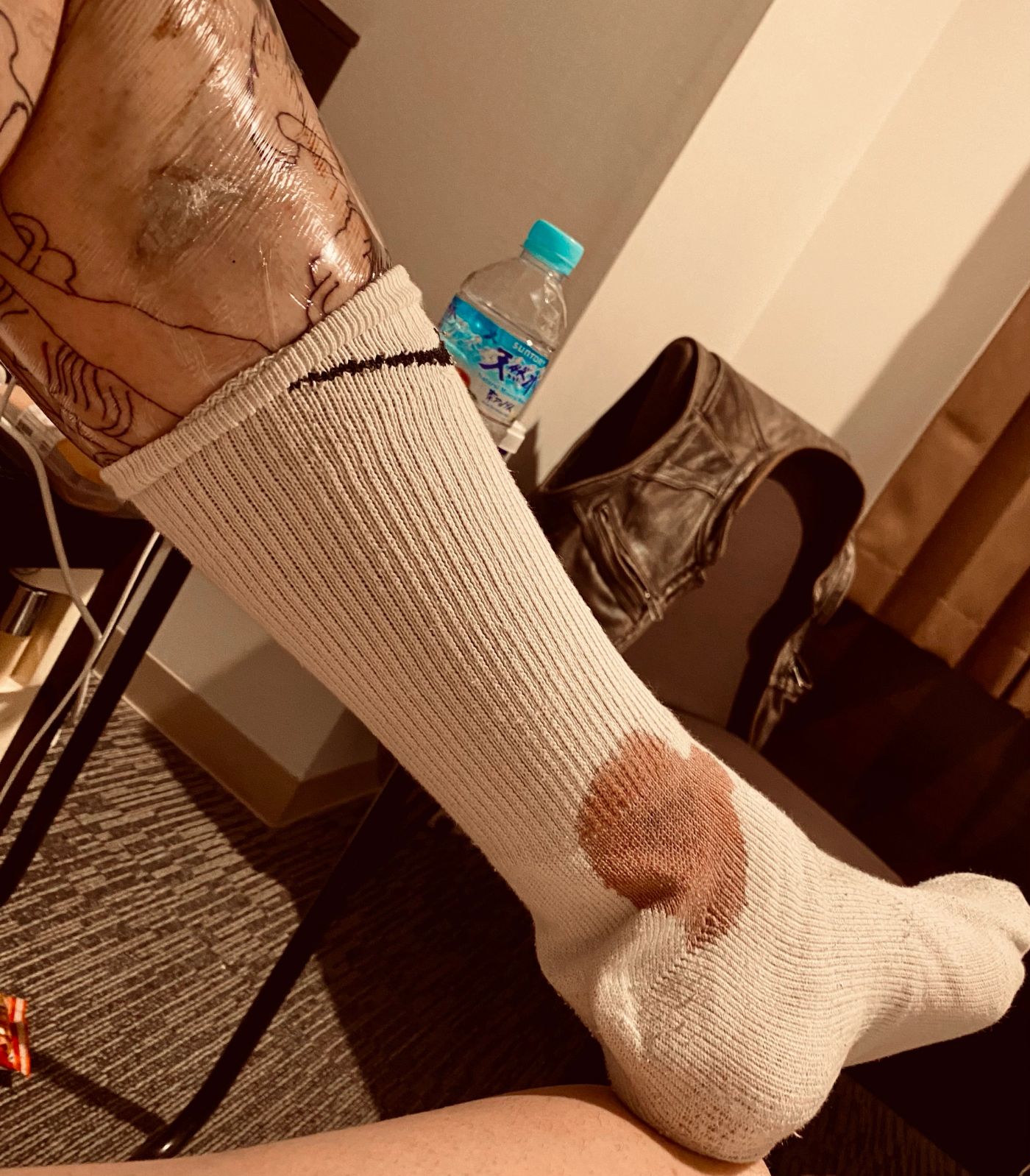
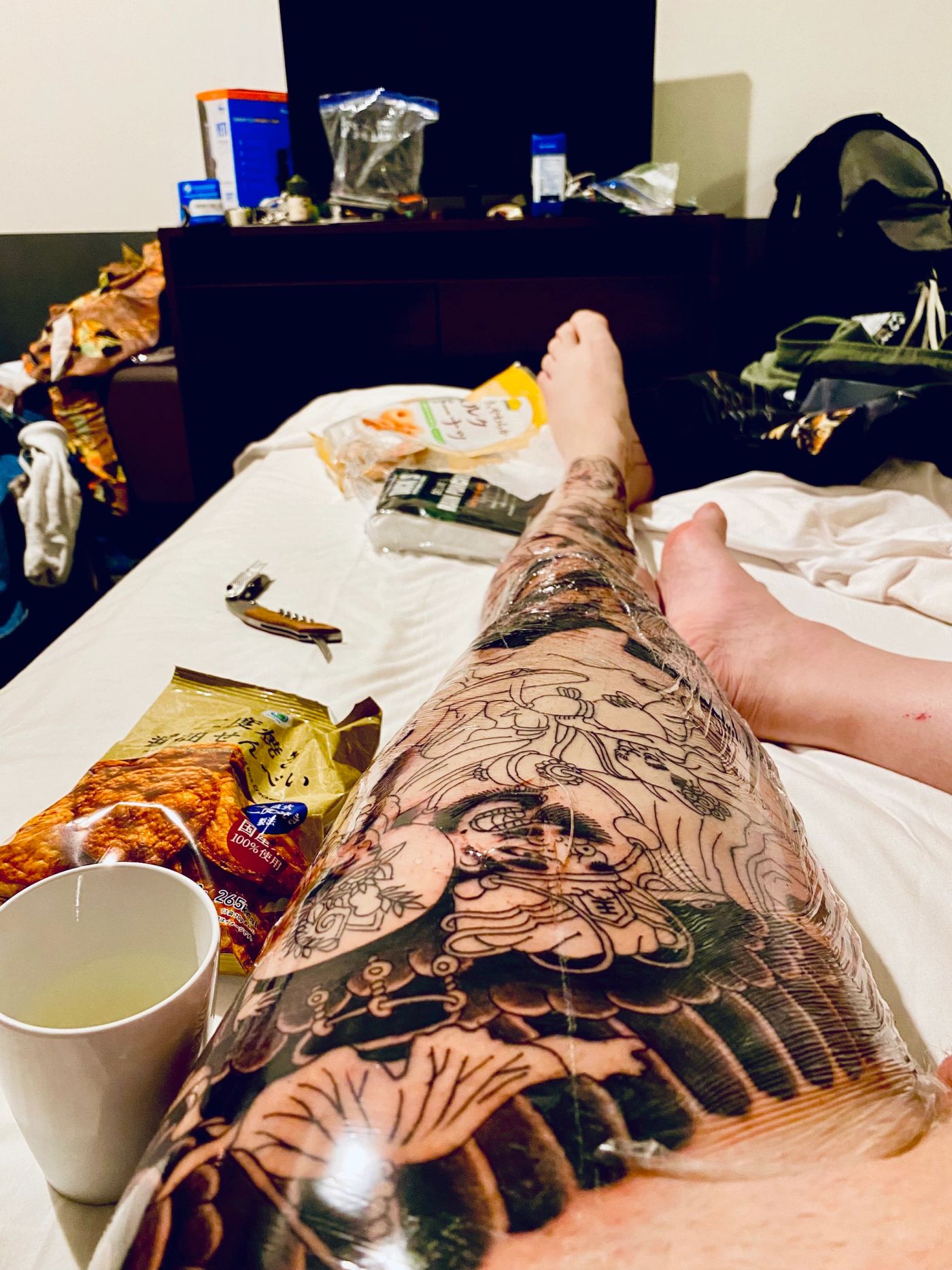
Inking was rough, but this was the last day of the session and nothing was going to stop me. My leg was on fire from start to finish, but I'd given up and given in to the pain. It's all in the mind, right?! I twisted Sensei's arm into giving me the full Saniderm treatment. I showed him the ad for the product in which I am featured as expert witness, so how could he say no?
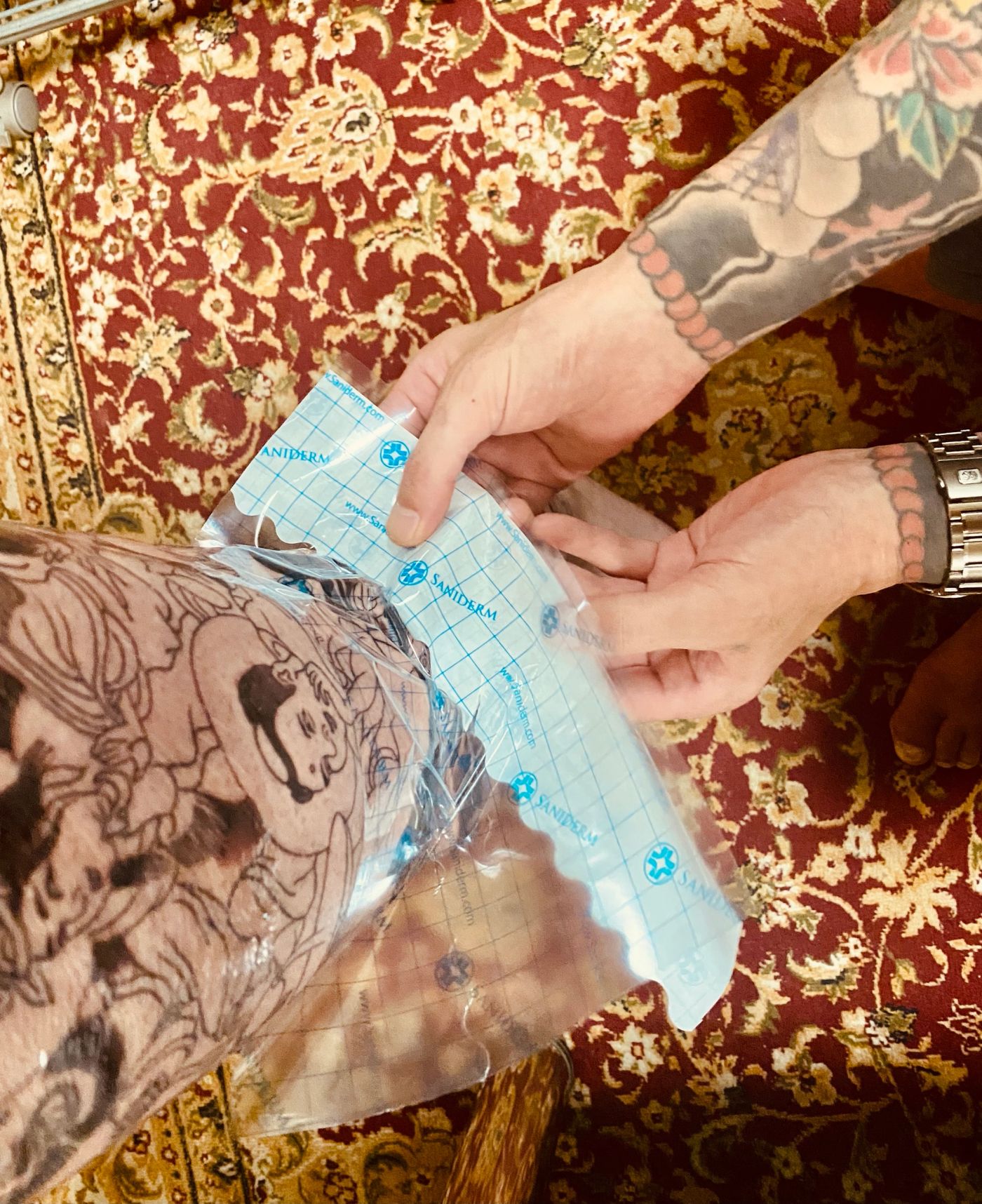
This was new stuff for Machida Horiken, but he was up to the task! I was thoroughly swaddled in breathable plastic and hobbled around Tokyo fully protected on my last night in the big city.
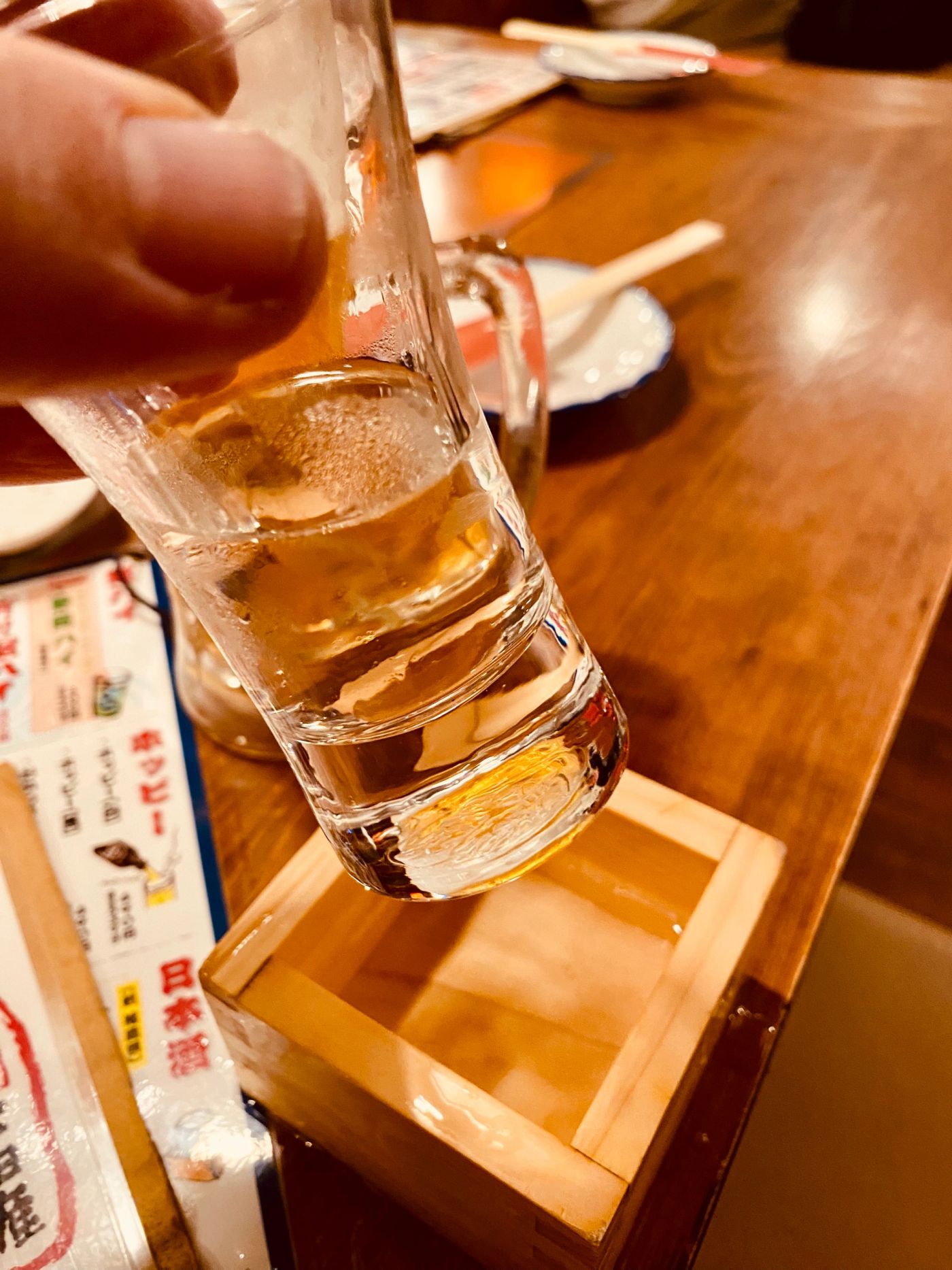
I had a whole lot of sake and beer at my final dinner in Tokyo. Of course I couldn't find the first (or second) restaurant I'd planned to visit, and I was getting a little frazzled with hunger and pain, but I did find a terrific little spot anyway (as always) and was treated to a friendly and delicious evening, the highlight of which was a devilishly inventive sake overpour into a slowly-leaking wooden box. Pure genius. Meanwhile one of the waiters announced he was about to go to LA, and asked me where he could buy some weed. I told him not to worry at all about it.
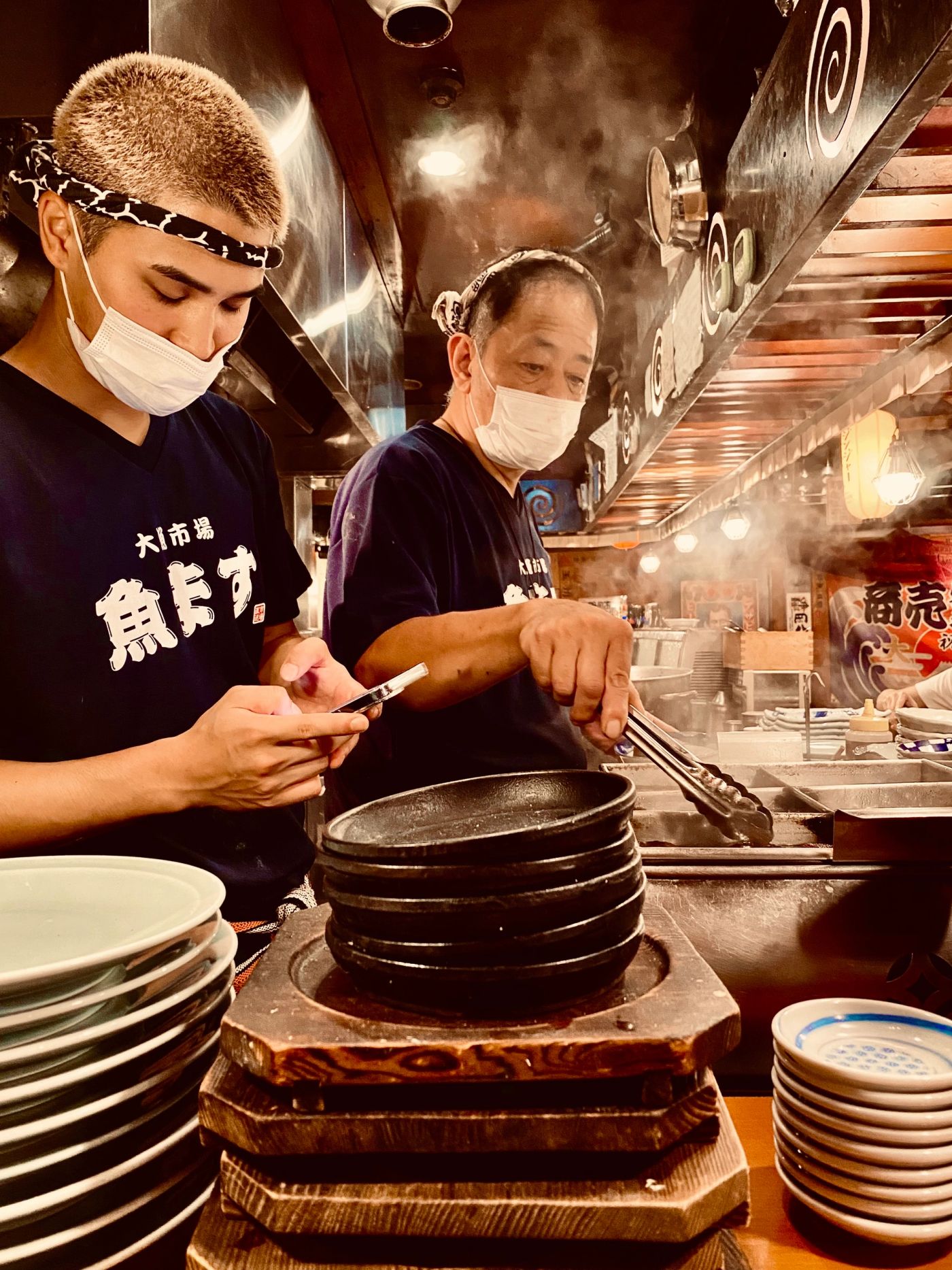
I felt better after the meal. As I limped slowly towards my stifling and wrecked hotel room I reflected back on this first, incredible visit. I felt for all the young folks glued to their phones, and couldn't help but contrast them with Sensei and his little scheduling book and magically viscous calligraphy ink. These kids are plodding along with stagnant wages and minuscule apartments; they have virtual girlfriends and are producing fewer and fewer children of their own. Do they know who they are? Are they going to be on their phones every waking minute until they perish?
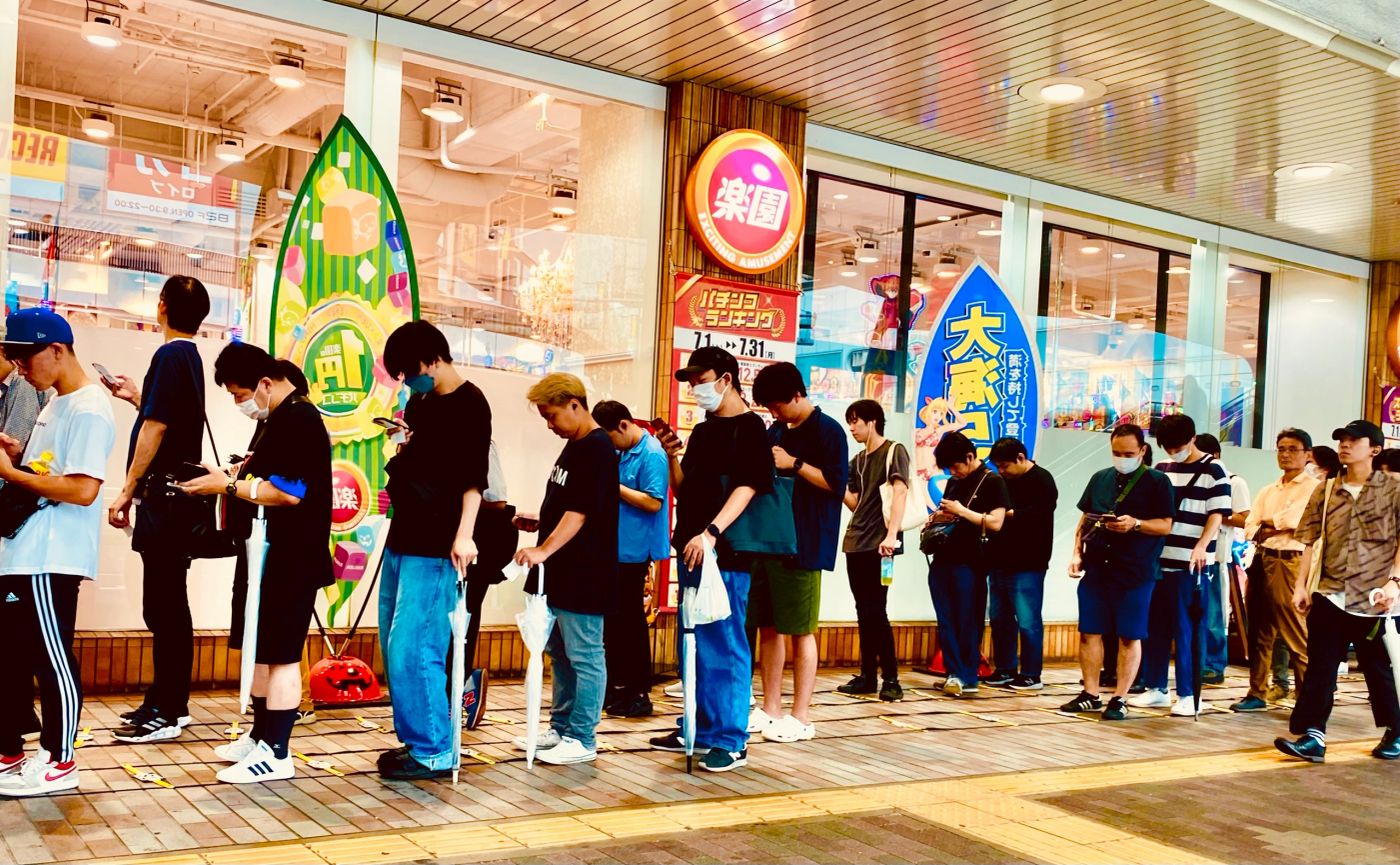
Are they truly better off than the hunched-over, osteoporotic old-guard who sit and read a newspaper or just plain think on the trains and can remember the hardships of war and occupation?
I hobbled into a convenience store like a drunk and scoured my pockets for loose change to cover the 128 Yen for a small pack of soy chips. I had several thousand dollars and Yen in an envelope in my Harley jacket, which was nestled atop an expensively garish Robert Graham shirt. Who was I fooling, and why did I do that? Did I get off pretending to be on Skid Row, enjoying all the Beatnik benefits but none of the actual costs? How hard is it to be a Bad Boy in a country where people don't even jaywalk in the middle of the night?