Everybody’s seen them. A Black Mirror’ episode, a ‘Twilight Zone’ or a schlock horror flick: some poor soul gets a hand or a set of eyes transplanted from who knows where, and of course it turns out the goods were courtesy a demon, a psycho serial killer or other maniac. And then the recipient starts to see really weird shit or strangles somebody with that nasty hand, like the hilariously possessed one in ‘Evil Dead’ that assaults its owner with plates and knives till, sufficiently offended, the owner cuts off his own. “You’re going down!” shouts Sam Raimi, to our substantial delight.
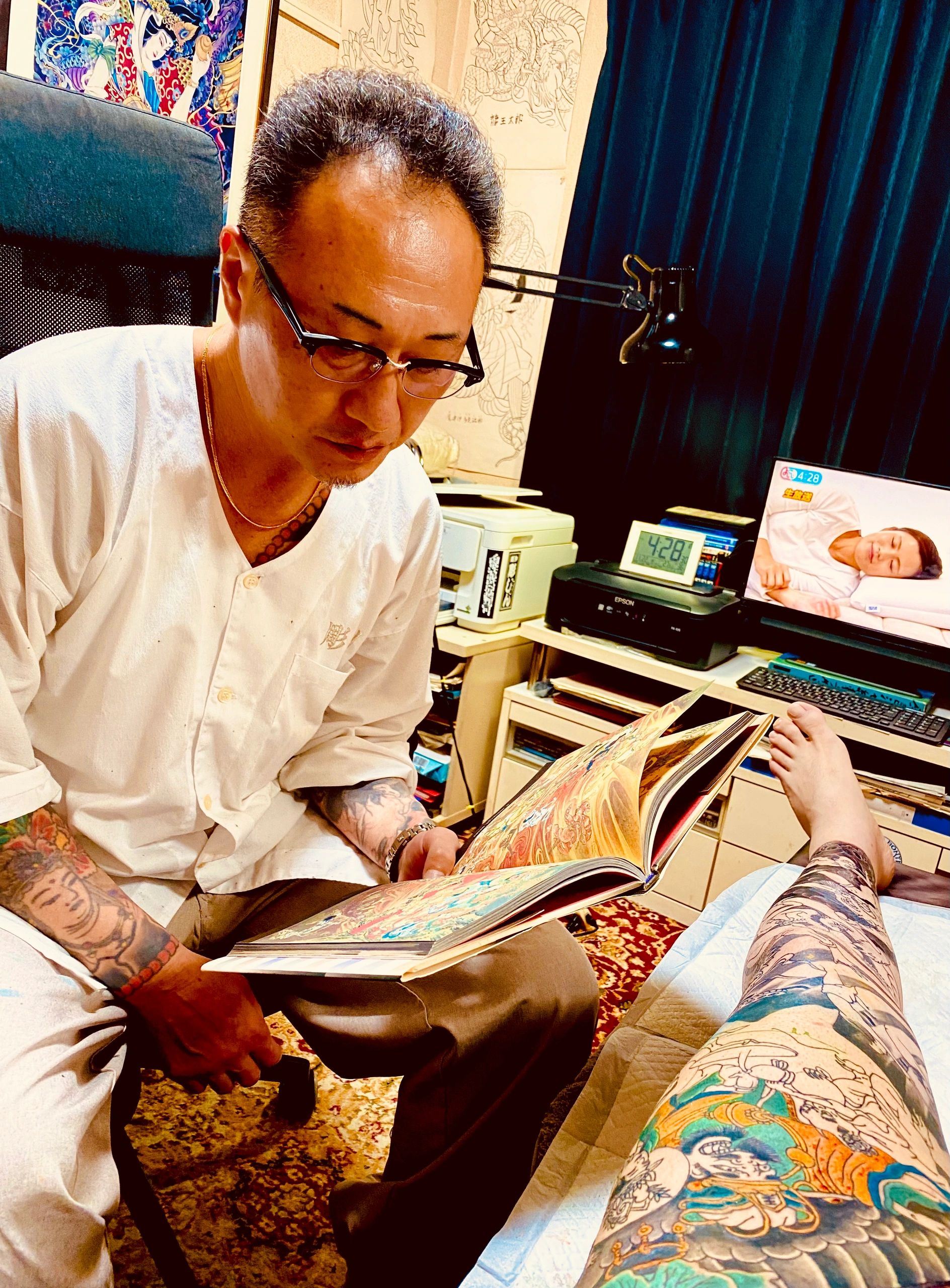
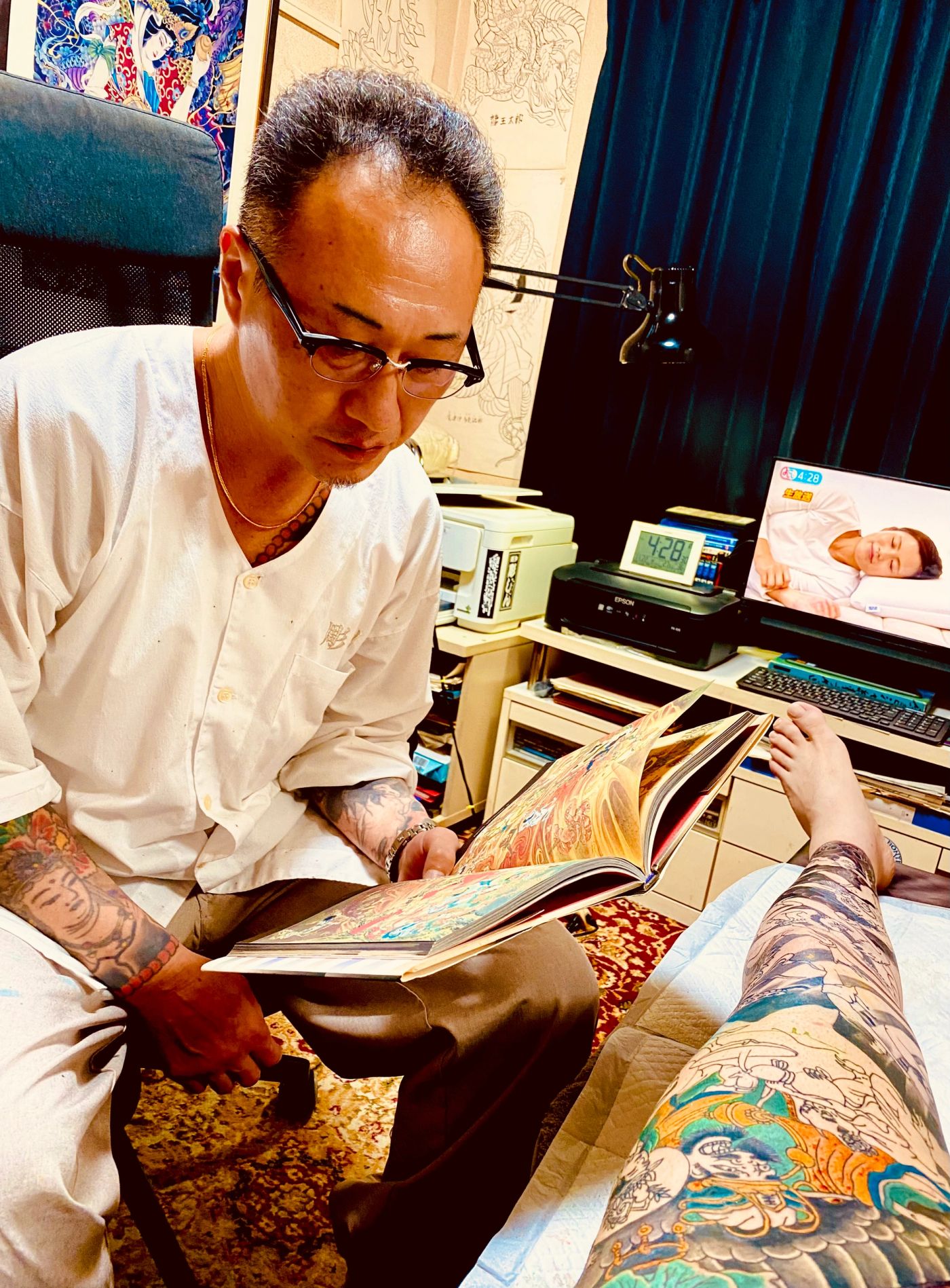
So there I was, once again, getting a somewhat maniacal, late Edo/early Meiji artist’s incredible painting channeled by an equally-talented Japanese and fully-alive Machida Horiken onto my own leg. Call me paranoid, but I couldn’t help noticing the coincidence I’d suddenly acquired a taste for good sake and begun collecting original Kyosai work and katanas for my own home. Crazy, sure, but at least I wasn’t menacing anybody with the antique sword now up above the door to the room anointed with several modest but beautiful Kyosai paintings.
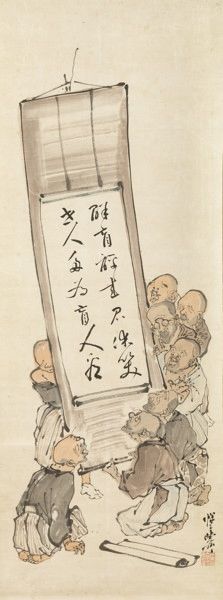
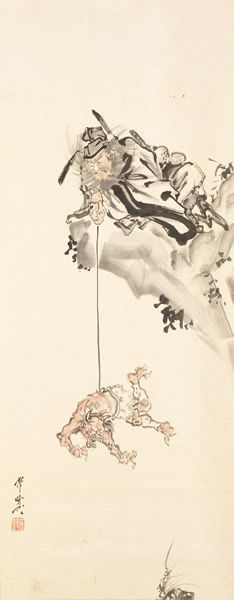
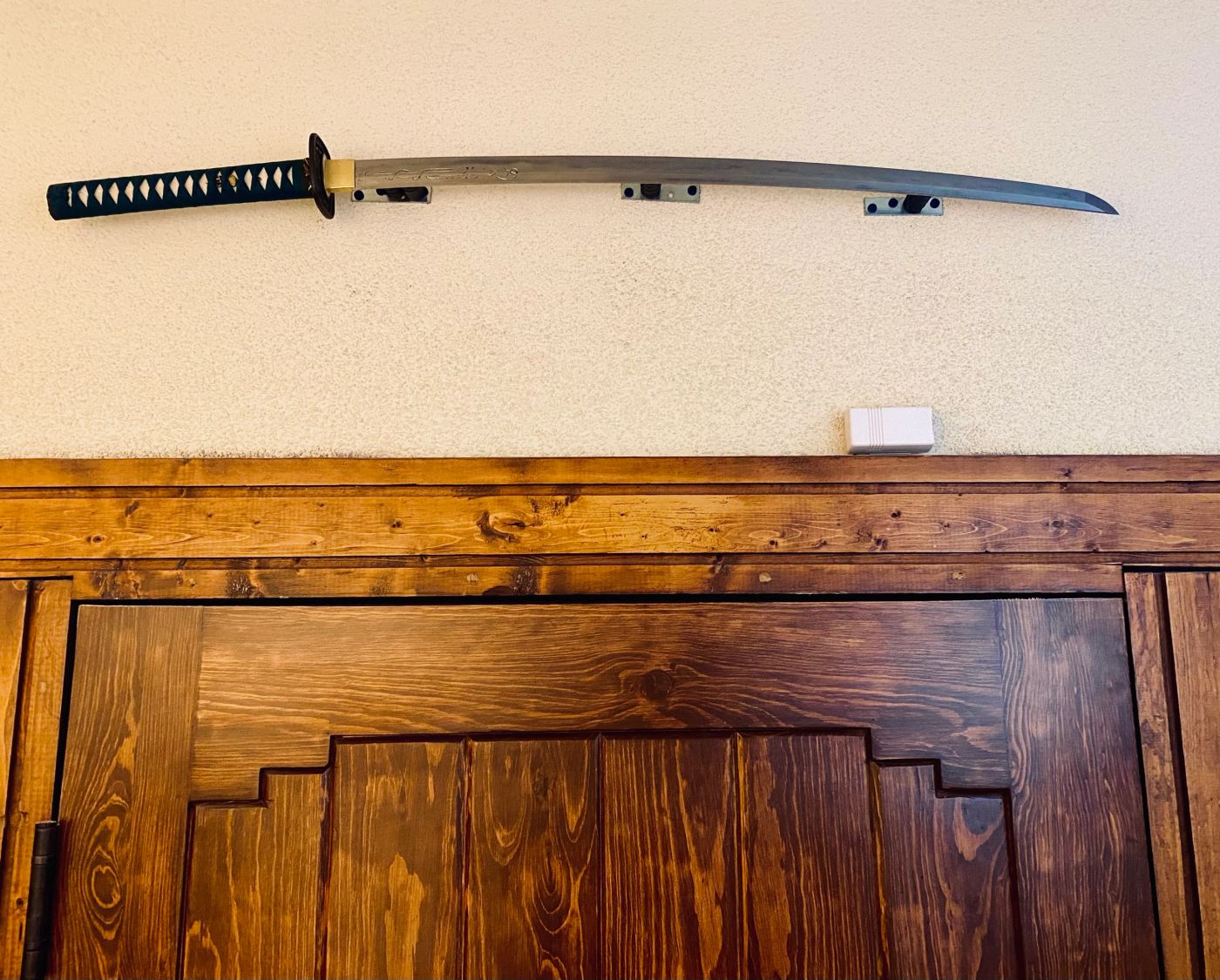
The double-edged sword of the Internet had made it all possible. Without that spawner of right and left-wing hate and TikTok and free porn, there’d have been absolutely no way I could ever have found Horiken, or navigated around the maze of the Tokyo metro, or met a leading collector of Kyosai residing in London. Israel Goldman, the collector, has spent much of his lifetime studying, acquiring and dealing a substantial body of Kyosai’s impressive catalogue—one that spans classical painting and woodblock prints ranging from traditional motifs to Yokai to political satire. (A few times that satire got him thrown in jail, but he kept on painting.) And he kept drinking a lot of sake, too, often at art parties where his inebriation was no match for his skills as a draftsman. Eventually, though, his sake consumption was a match for his stomach; he died at 59 of gastric cancer.
Along with the paintings Mr. Goldman (‘Izzy’) sent along a wonderful set of books covering his own museum shows and collection, and the greater body of Kyosai work. I remain indebted both to Izzy and Machida Horiken for such a wonderful introduction to an artist I’d never known. And now my legs are slowly but surely (and agonizingly—watch out for the popliteal fossa, that tender little enclave behind your knee, next time you get inked) being transformed into a Kyosai canvas in their own right, and here I am drinking sake and collecting Japanese art. Perhaps the leg sleeve will prop up my (lousy) foreign language skills and I’ll actually be able to learn more than five words of Japanese, too. I turn 58 next year, which makes me a little nervous. Hope my longevity decides not to synch with that of Kyosai; presumably I’ve got access to somewhat better medical care.
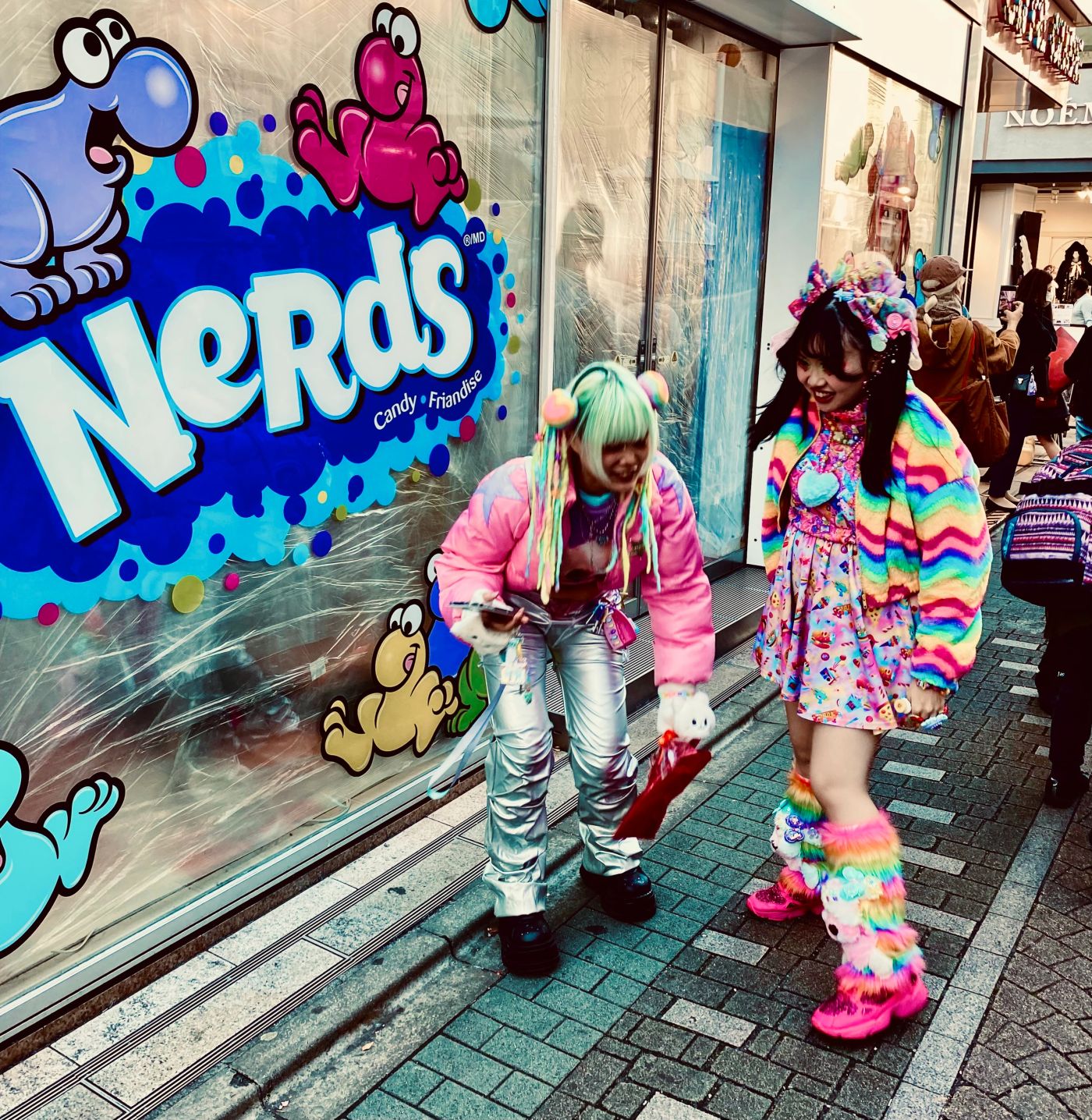
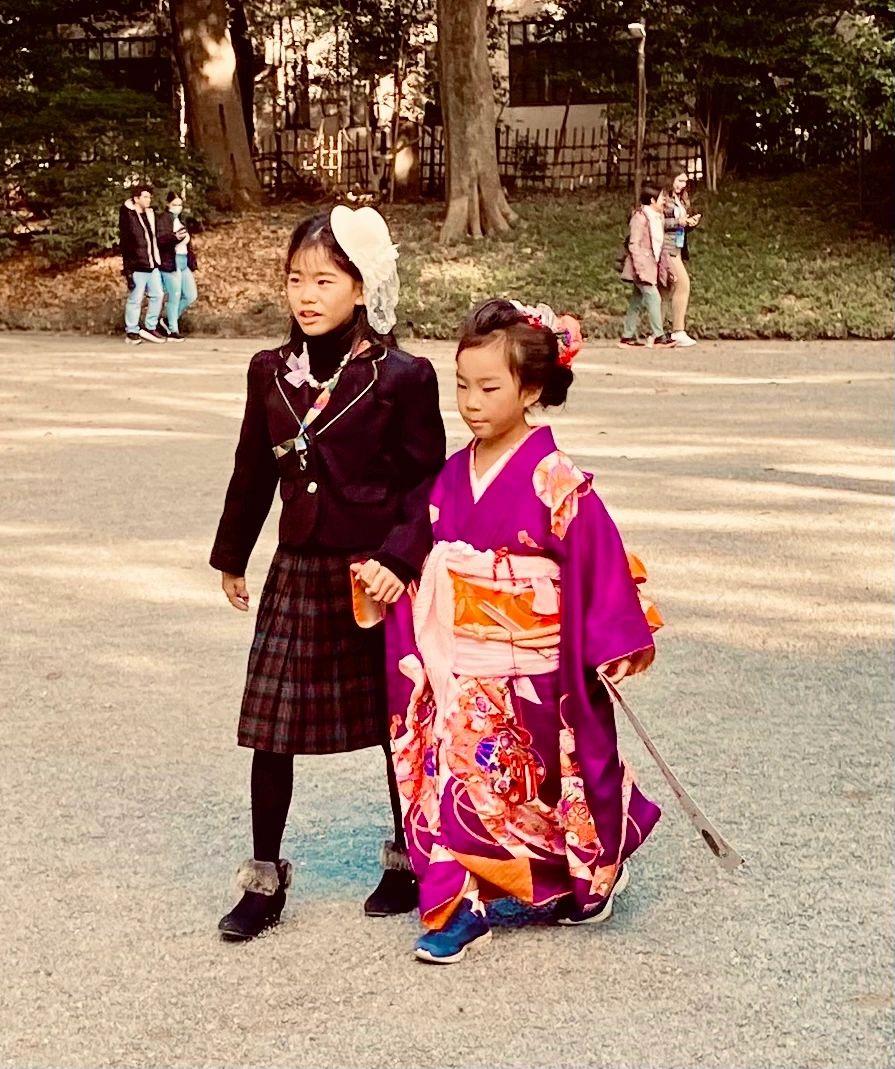
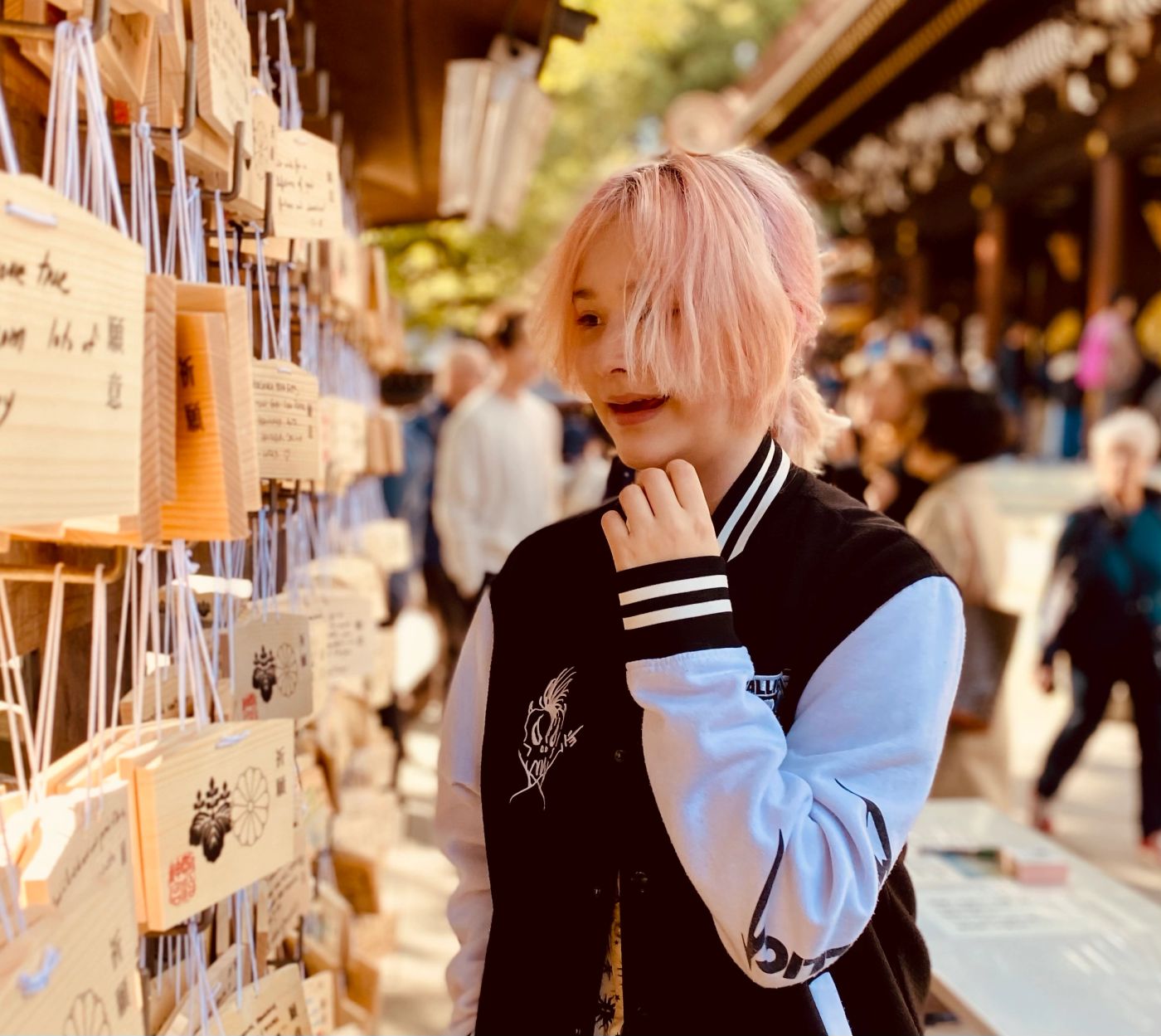
The second trip to Tokyo was trickier: my wife and Scott were along for Thanksgiving week, the weather had gotten much colder, and we were staying in Shinjuku—about an hour further from the studio—meaning the ante to get lost or be late was upped substantially. But it was great to be back: once you’ve started a lengthy tattoo project the interval between sessions can feel interminable, and this gap had been almost three months. It was time once again for some progress. The hiatus had given me opportunity to find some nice gifts for Horiken. Kyosai had his sake; Horiken has his cigarettes, which he faithfully smokes every 45 minutes or so during the very short breaks from the inking. So I dug deep into the Internet and found him a couple of vintage lighters, a silver one for pocket and another of onyx for table. He seemed pleased with these.
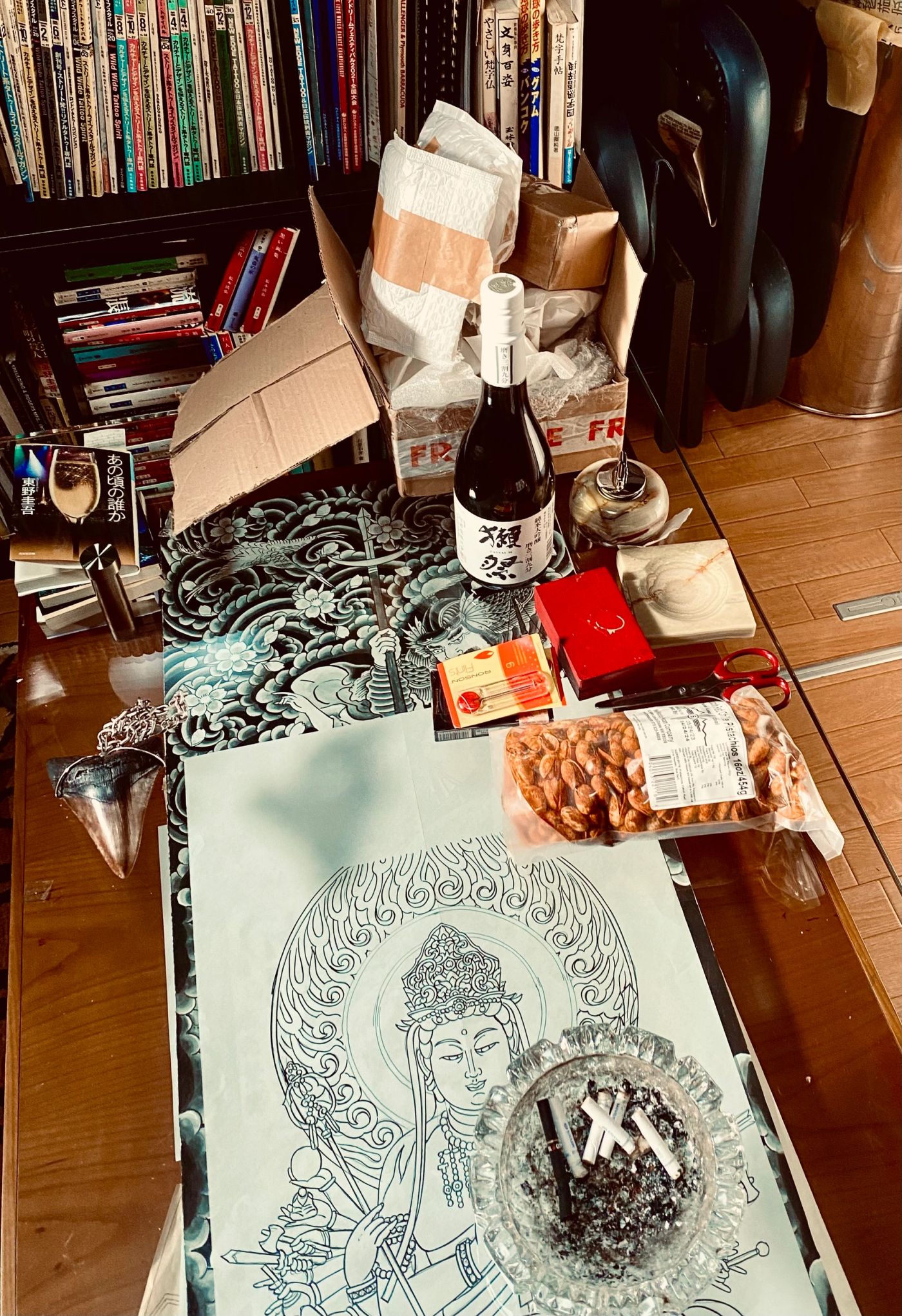
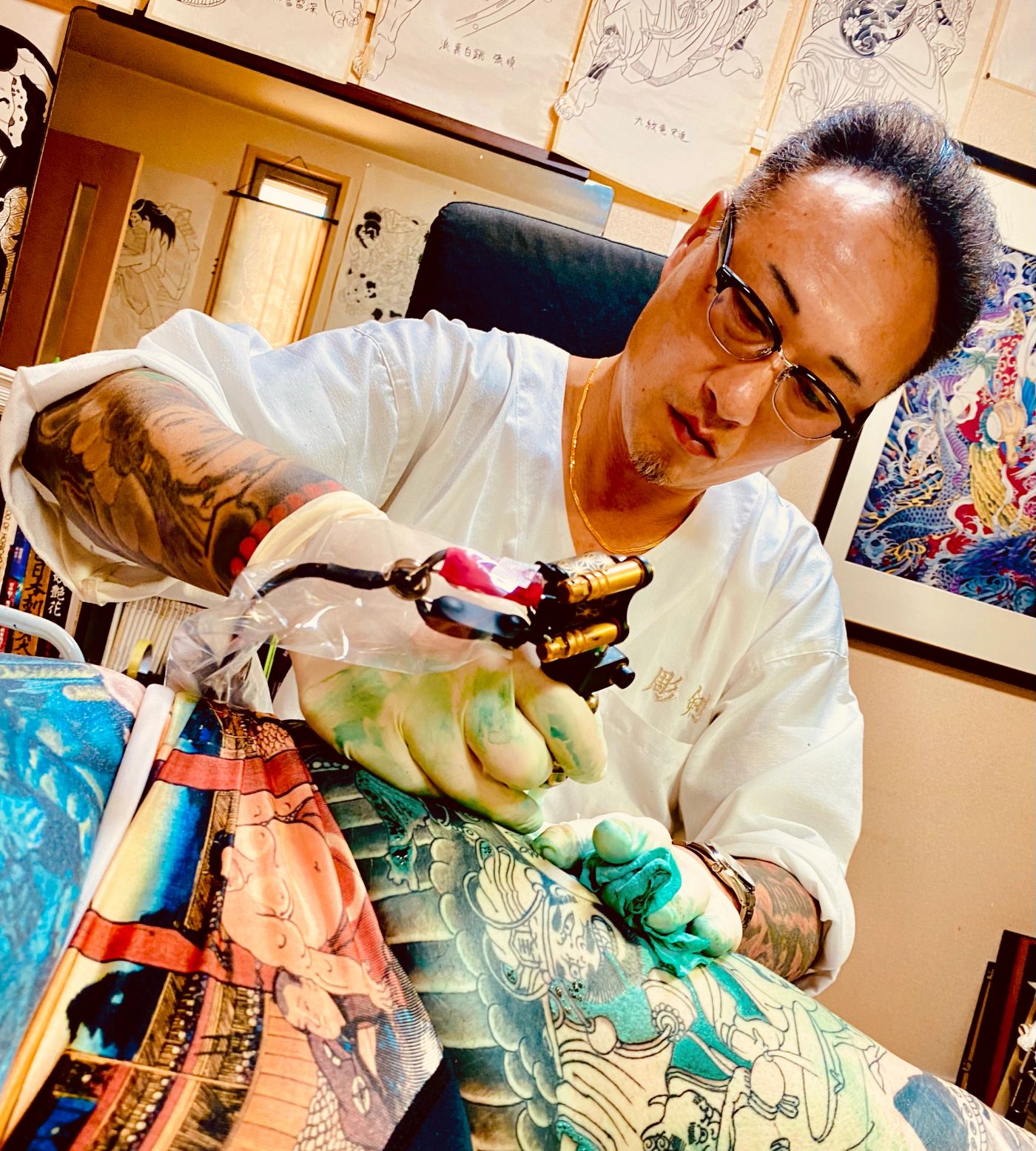
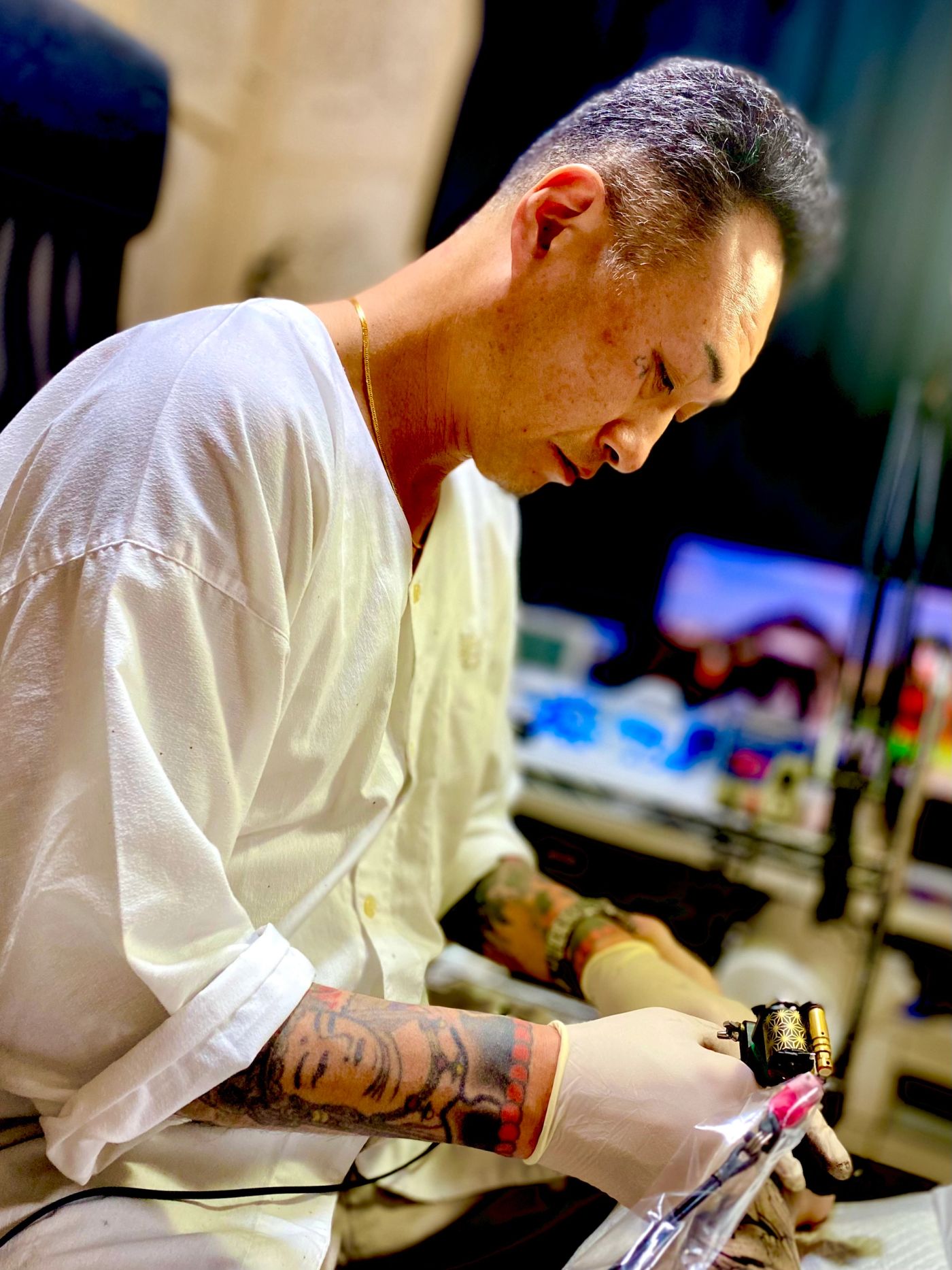
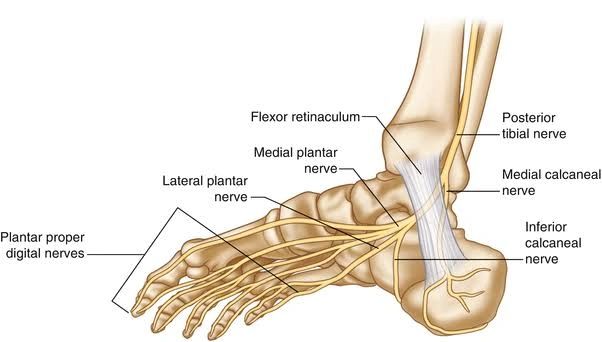
But he tortured me anyway. Drug-free once again, in the land where even Tylenol requires a trip to the pharmacy, I got fully assaulted on the shin and ankle for the entire first day. (If I’d needed any reminder who was boss here, I certainly was given all due notice.) Neat anatomy trick: getting needled on the lateral aspect of my shin generated an impressive electric/burning sensation in my big toe. Sure enough the posterior tibial nerve in the ankle branches off distally to supply sensation to the great toe via the medial plantar and digital nerves of the toes. So maybe it takes a doctor to appreciate *why *one’s toe is on fire, rather than merely jumping to any rash conclusions about losing one’s shit to hysteria. Or maybe it’s just obvious. Either way it was a long and arduous first day, and I really hoped he’d show some mercy to my bleeding and swollen ankle and carry on elsewhere the rest of the week.
Day two was spent on my thigh. A piece of cake, and I appreciated how he’d gotten the especially rough part over with first; Machida Horiken really knows what he’s doing, with needles and psyche both.
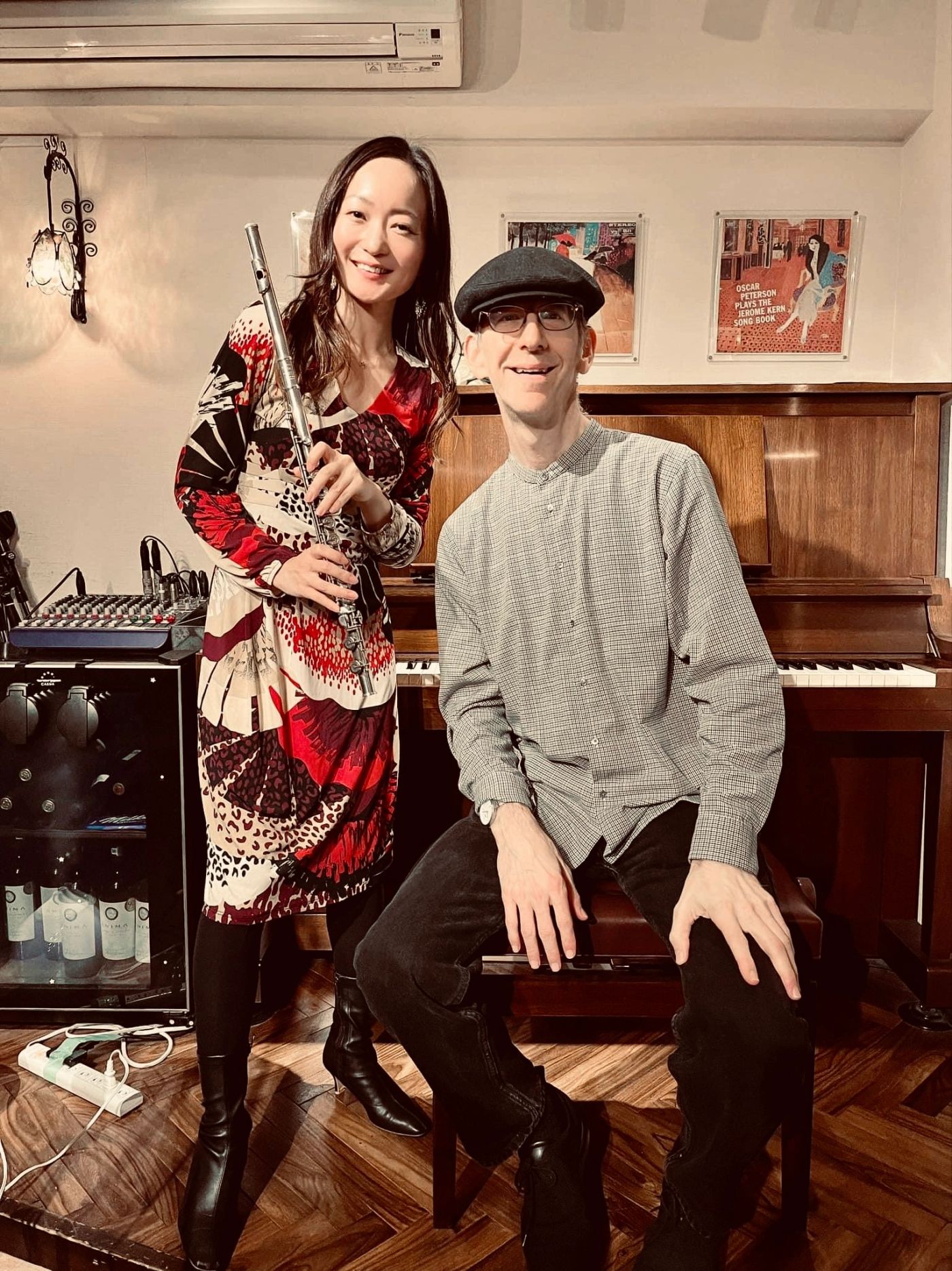
That night my family and I went to see my resident musician artist friend Jon Katz play a delightful duet with a really impressive Japanese flautist. The venue seated about a dozen, which was a nifty contrast to the three million plus who transit Shinjuku Station daily, nearly all of them getting inconvenienced by me in one fashion or another, as when I’d stop in my tracks in the middle of human traffic to fumble with Google Maps, or veer up the down side of a packed staircase, or stand around like a jerk in the fast lane on an escalator. The tiny bar, then, meant bothering several orders of magnitude fewer Japanese people, which was great, but also made me wonder how hard my friend has to work to put sushi on the table. Kudos to Katz for pulling it off for thirty two years and counting.
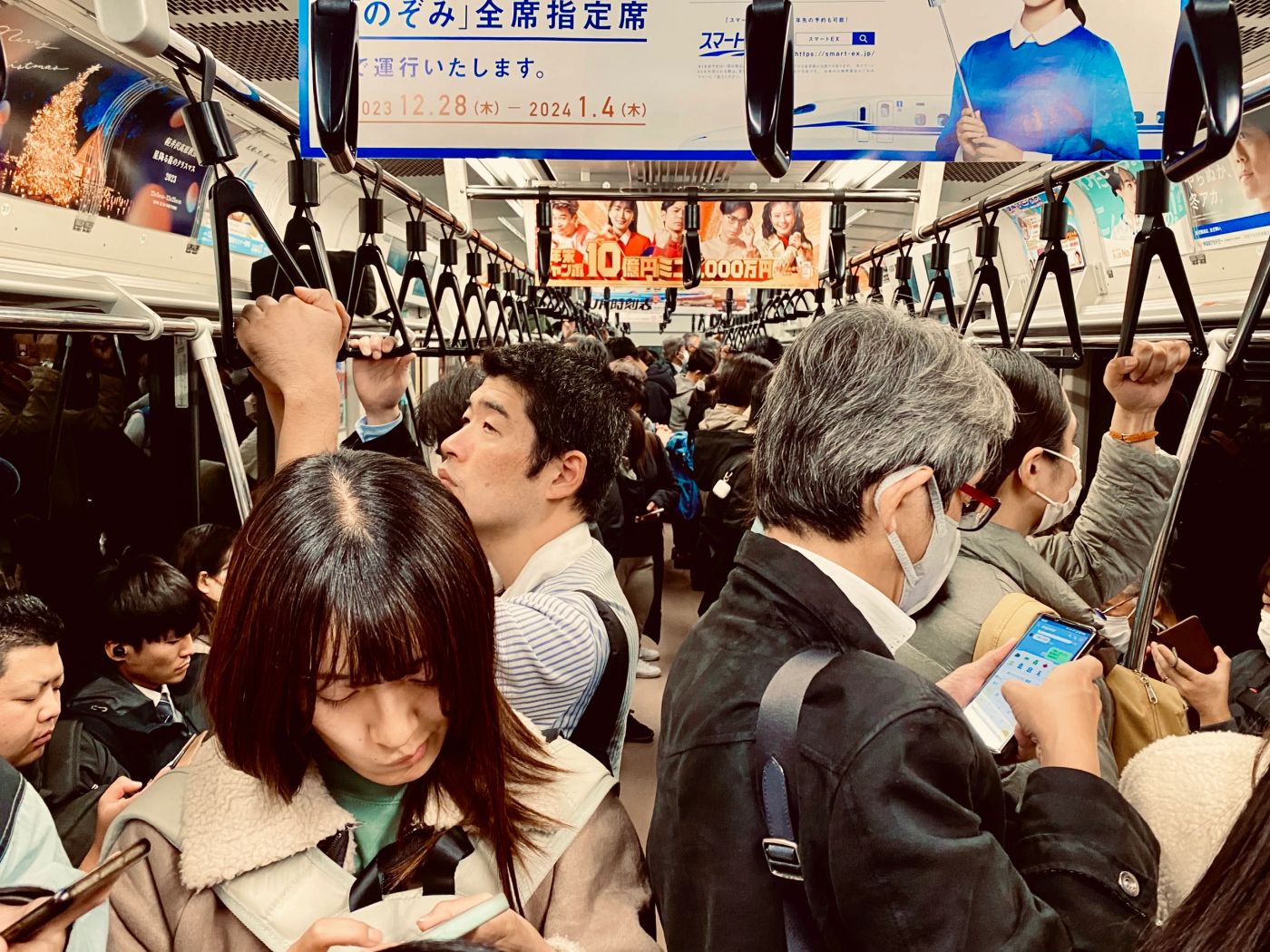
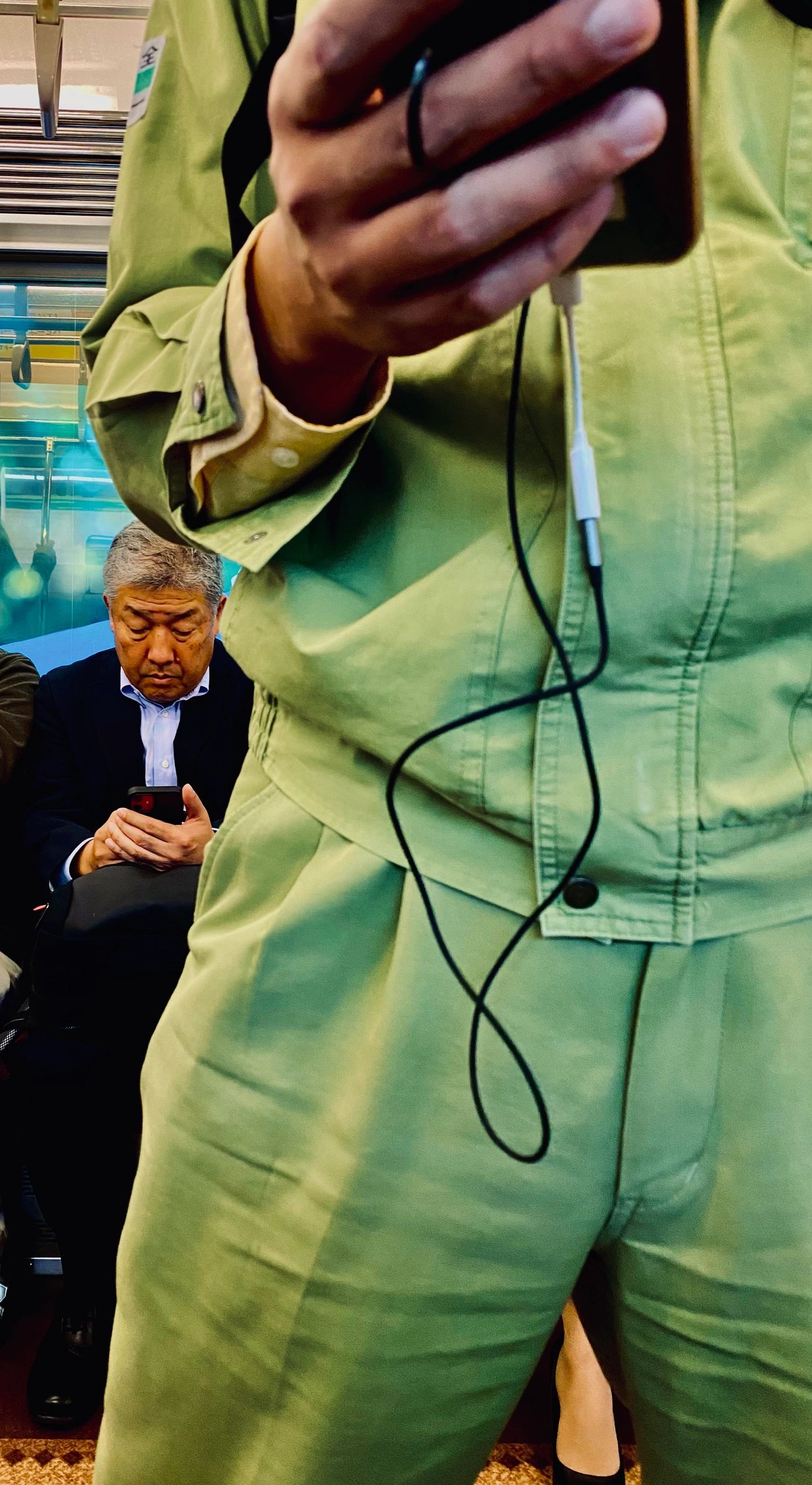
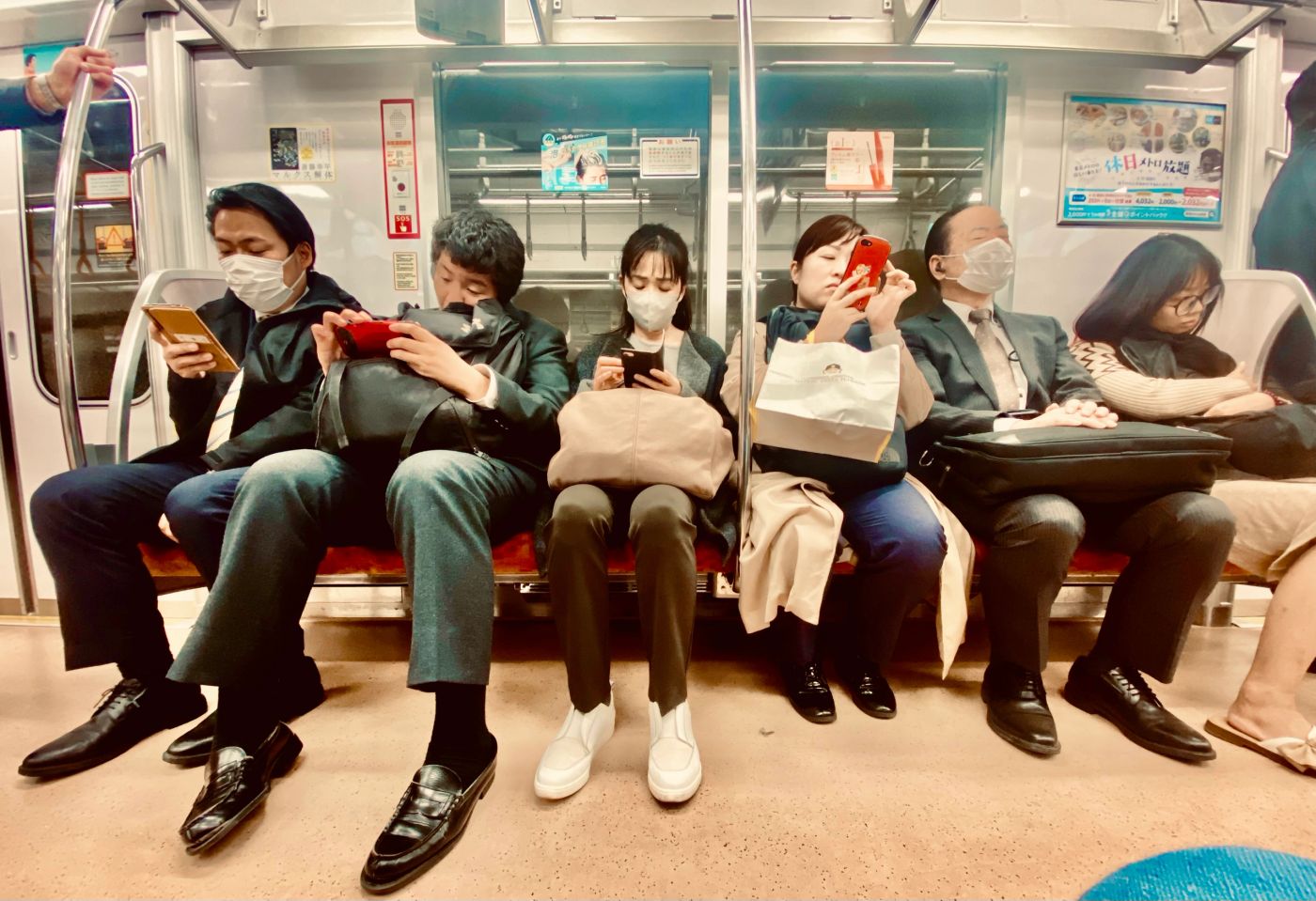
It’s also good to have another set or two of eyes along when you come to Tokyo. My wife Jaime noticed something interesting I’d missed thus far on the trains: those standing in the Metro cars universally will face those seated, presumably so as not to put their asses in others’ faces, universally except for I, who would stand more or less randomly, as either I was too oblivious to notice the custom, or, if you’re feeling charitable of me, I hadn’t yet personally concluded whether it’s better when seated to have an ass or a package jutting millimeters in front of your nose. I actually do think the jury is still out on this one, but thirty million Tokyo residents may have already made up their minds.
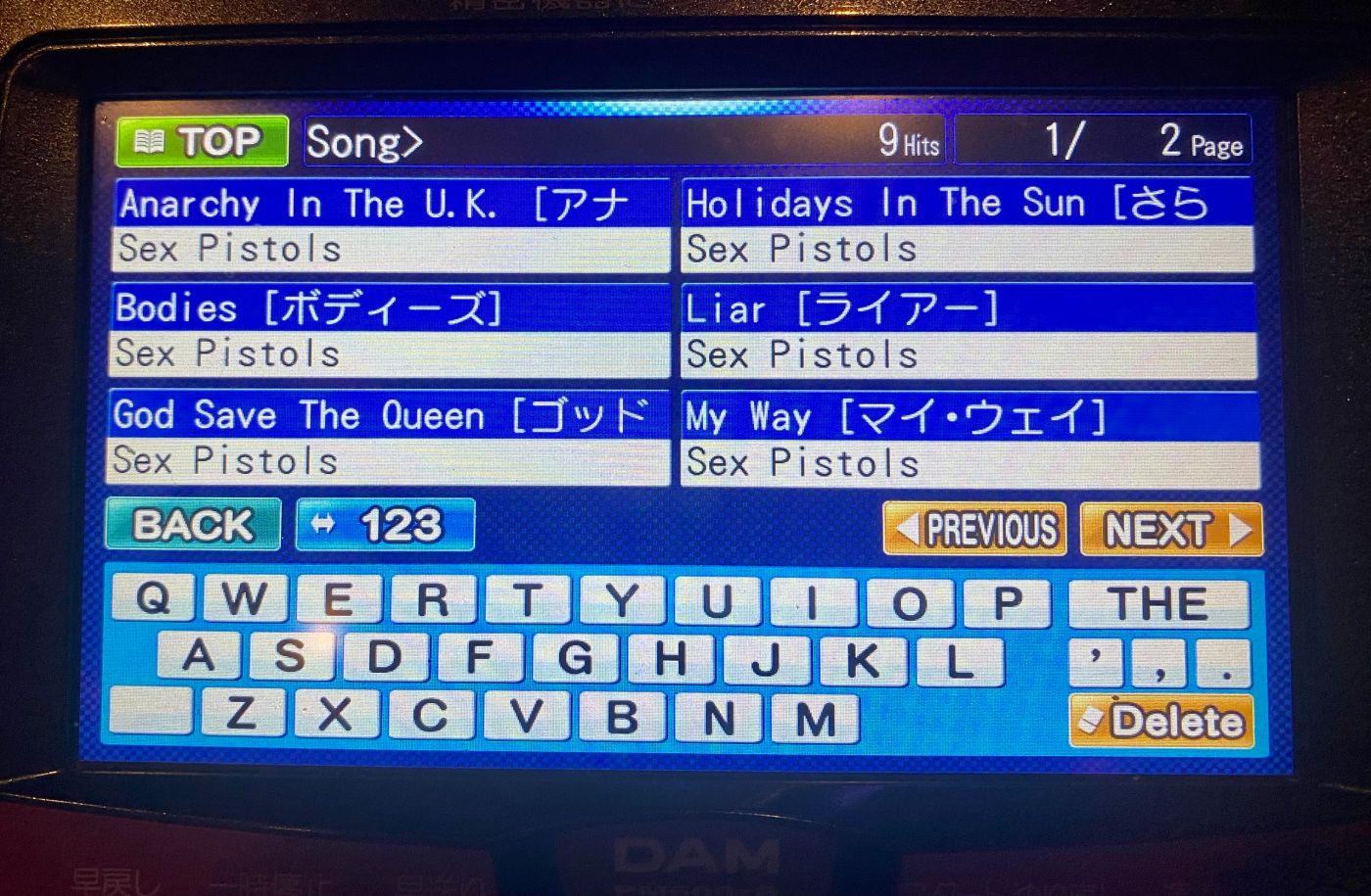
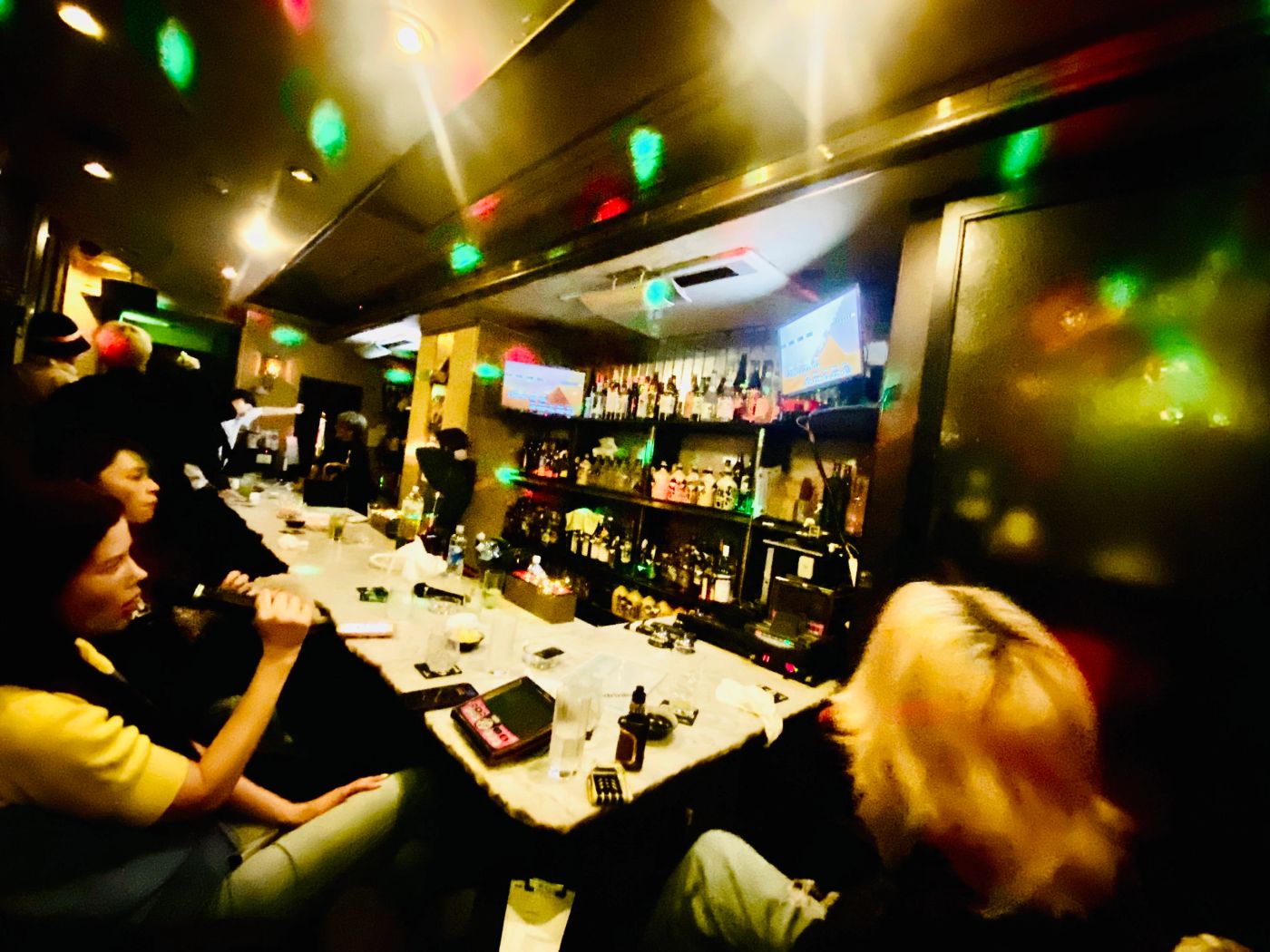
The little club was not an unusual thing. The next Katz show also was at a tiny venue, and a nice gal I’d met at a karaoke bar on the first trip took us out to two other diminutive bars one night.
Maybe it’s just the notoriously-high rents in Tokyo, but it’s also possible that nobody ever fully gets used to living and eating and traveling among tens of millions of other countrymen all the time, too. There did seem to be a pattern of Tokyoans making an effort, largely through technology, to avoid each other. Sure everybody is on the phone all the time, but that’s nothing unusual anywhere I’ve ever been the last few years, so that doesn’t count.

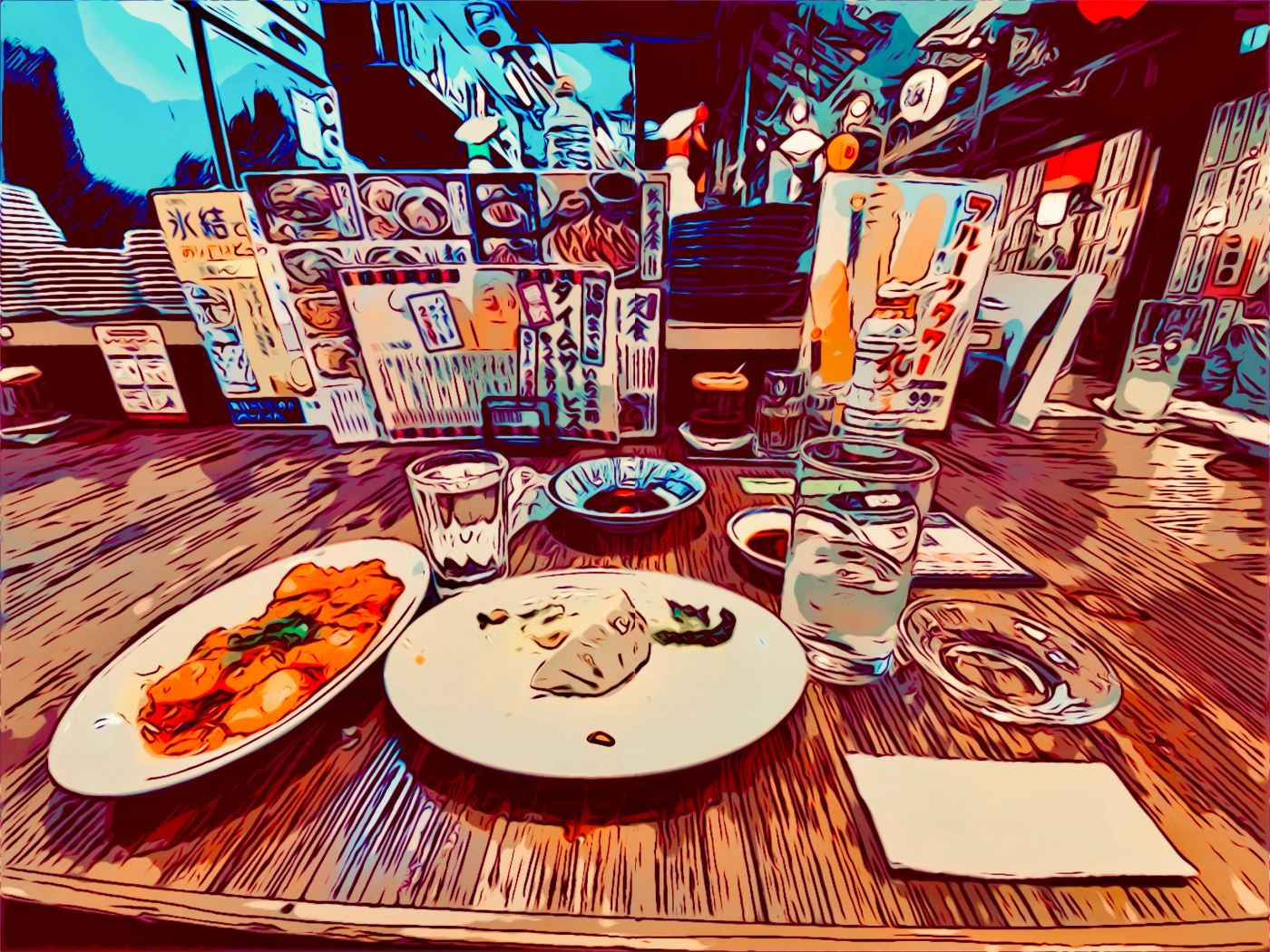
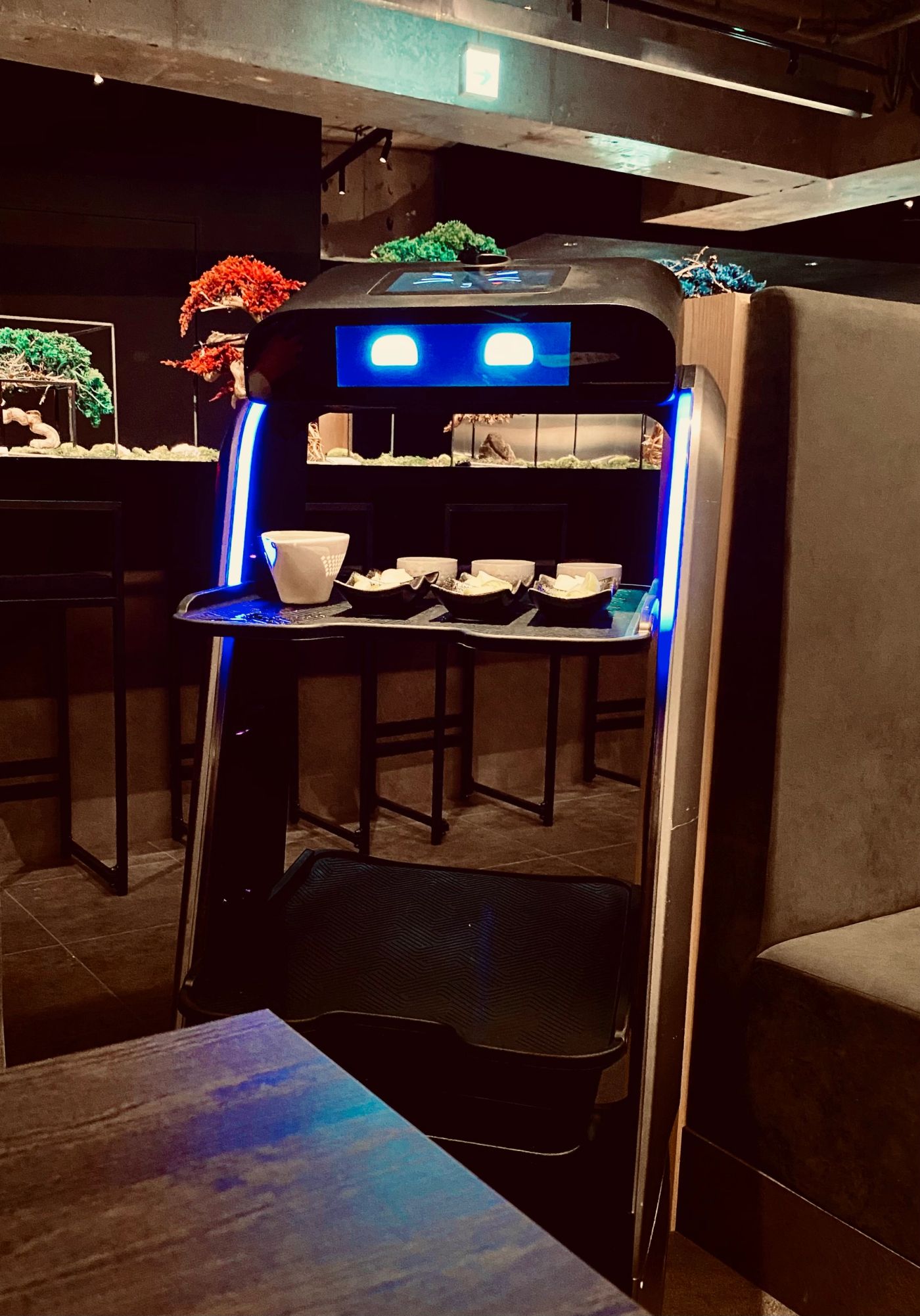
The things particular to Tokyo along these lines include the gazillion vending machines and food ordering/payment kiosks and ticket machines and even a clunky but cute robot in a restaurant that motored on over any time we needed another sushi roll or sake top-off. Perhaps it’s all about efficiency or germaphobia or saving money in a pricey town. But it’s also possible even the Japanese—especially the Japanese—need a little space to themselves some time. As far as the robot restaurant goes, I can’t decide whether it’s cool or pathetic (or maybe both) that you can go out to dinner and not have a single word with another human. Sure, the robot was kinda adorable, in the goofy sort of way Woody Allen approximated while shuffling around with a light bulb in his mouth in ‘Sleeper,’ but what with nobody in your actual dinner party ever looking up from their phones it’s perhaps nice to make eye contact with a hostess or a waiter or anybody once in a while. Which makes me wonder whether the Japanese, and the rest of us, for that matter, don’t actually need robotic assistance to achieve isolation in a restaurant or anywhere else, because we’ve already accomplished it, even in Shinjuku Station.
By the end of day three my leg was more or less continuously on fire. I did consume a lot of sake, I’ll admit, though officially only in an effort to subdue the pain, and look what good that did for Kyosai, though what was his excuse? I was in agony, and anyway we’ve already established my sake problem is really all his fault. It’s the ghost of Kawanabe Kyosai and his art on my leg, don’t blame me, I have nothing to do with it. Sake notwithstanding I broke down and went to a pharmacy. The equivalent of Tylenol was about a buck a dose, which is nuts, and came in the form of a grainy substance that both looked and tasted like baker’s yeast. I tried some anyway and it did seem to help.
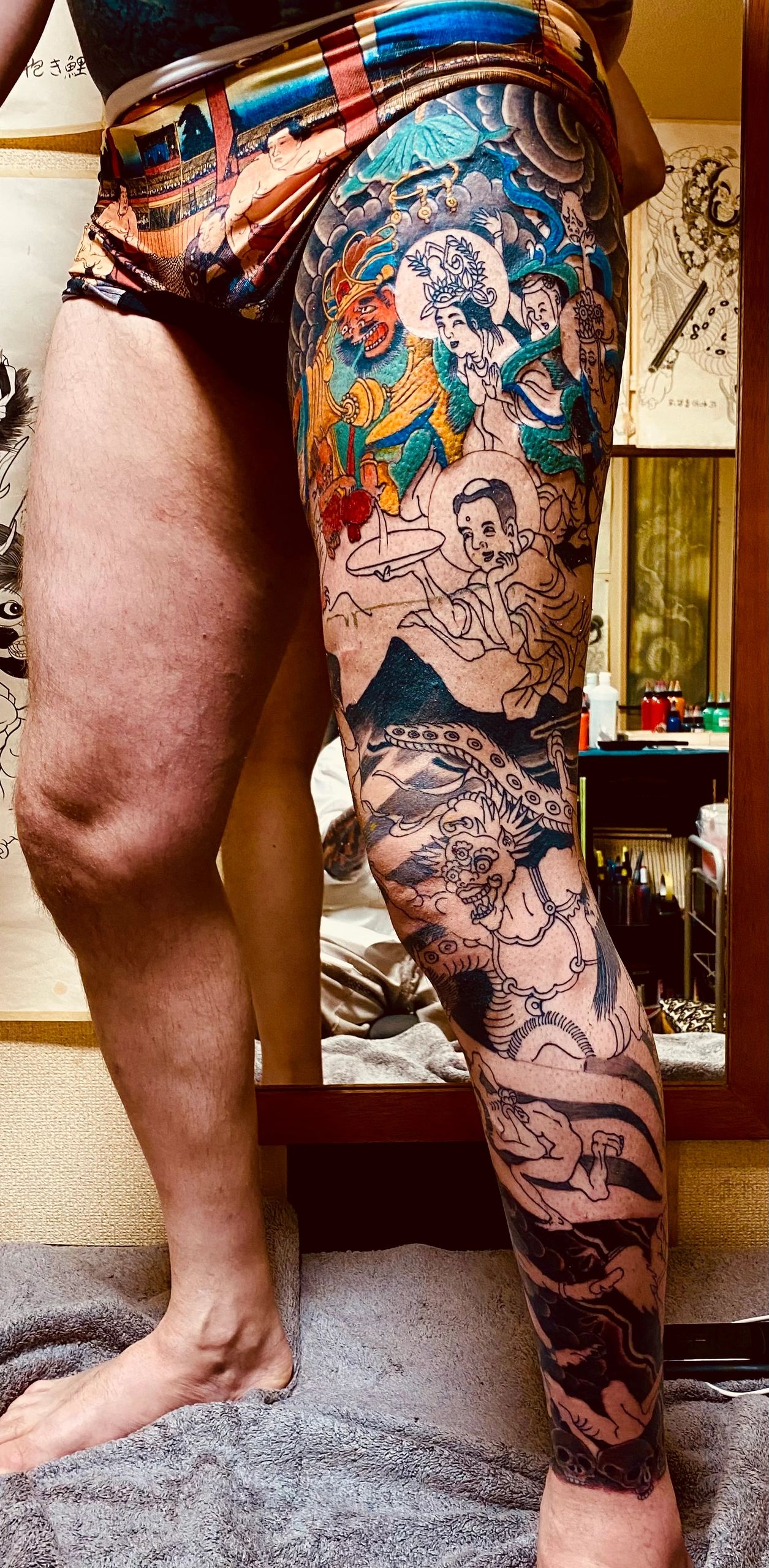
More substantial comfort arrived with the colorful ink to which Horiken had progressed: rich reds, blues and greens were now flowing into my leg, lighting it up like the Christmas trees sprouting everywhere, even in Tokyo, and complementing the jet-black calligraphy ink cooked up on Horiken’s tiny stove. This was real progress: though nowhere near done, the breadth of the project was coming into focus. It’s now clear I’m lucky to be able to get a handmade reproduction of a real and culturally significant work of art on my legs. Not to take a drop of ink away from the works of art on my back or front—they’re terrific and I am very proud of them—but this piece is something a little different. It’s obviously and beautifully Japanese, even though I’m not, and that’s signficant. It’s worth all the time, money, suffering and even the slight risk to my professional life (not every colleague in medicine thinks my ink efforts are rational, to say the least) because no other traditional artist in Japan I met was willing to take me on as a client. Me and my leg are both guests in their largely insular world, and while some restaurants or spas in Japan wouldn’t let me (or anybody, for the matter) in with visible ink, nonetheless I’m gaining admission at the same time to something bigger—an entire culture. I’m lucky to be getting a real, live Japanese tattoo. Not a Japanese-styled one, and for that I am grateful.
We had a nice reunion with a terrific saxophone player and much enjoyed hearing him play again. On the visit in September I’d noticed a suspicious mole on his arm; he told me he’d shown it to a doc who’d reassured him about it. I thought otherwise, and asked if the doc had used an instrument called a dermatoscope to evaluate the spot. He hadn’t. I strongly suggested a biopsy, and learned later the lesion was tested and found to be a melanoma. It’s since been fully excised and he is likely to be cured. I felt good about being helpful medically so far from home and my office.
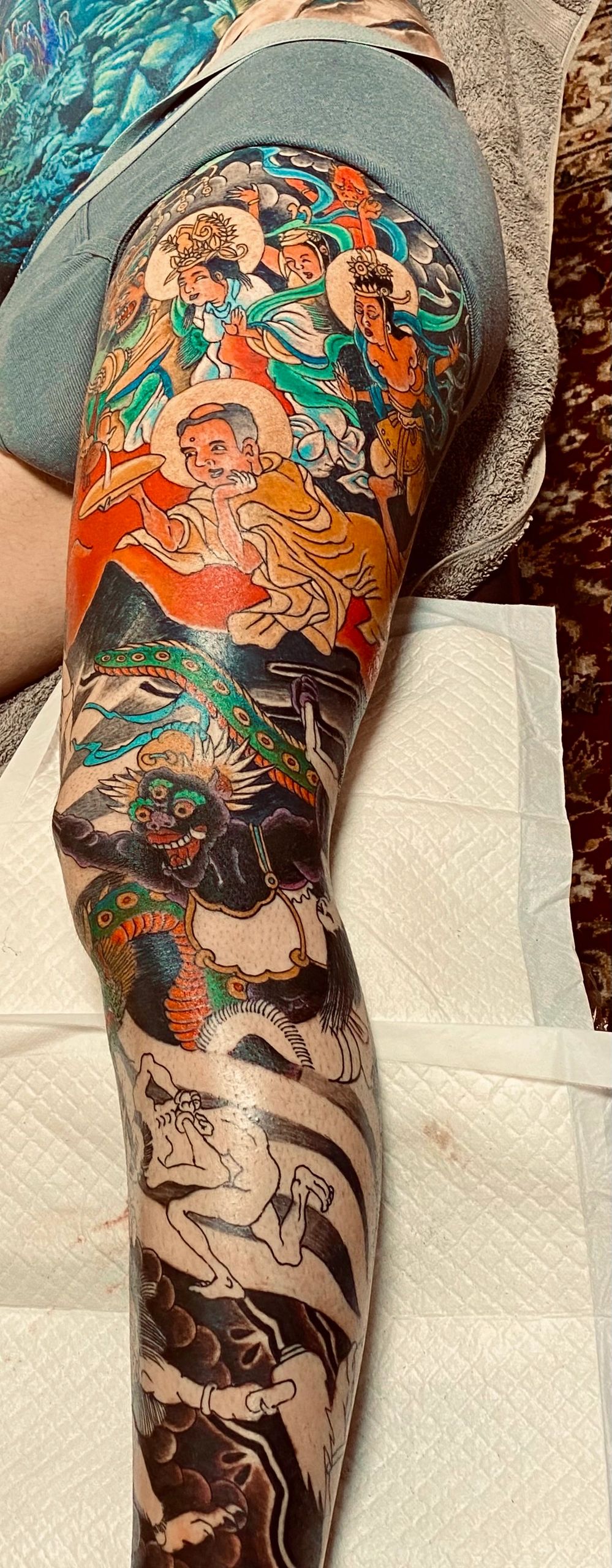
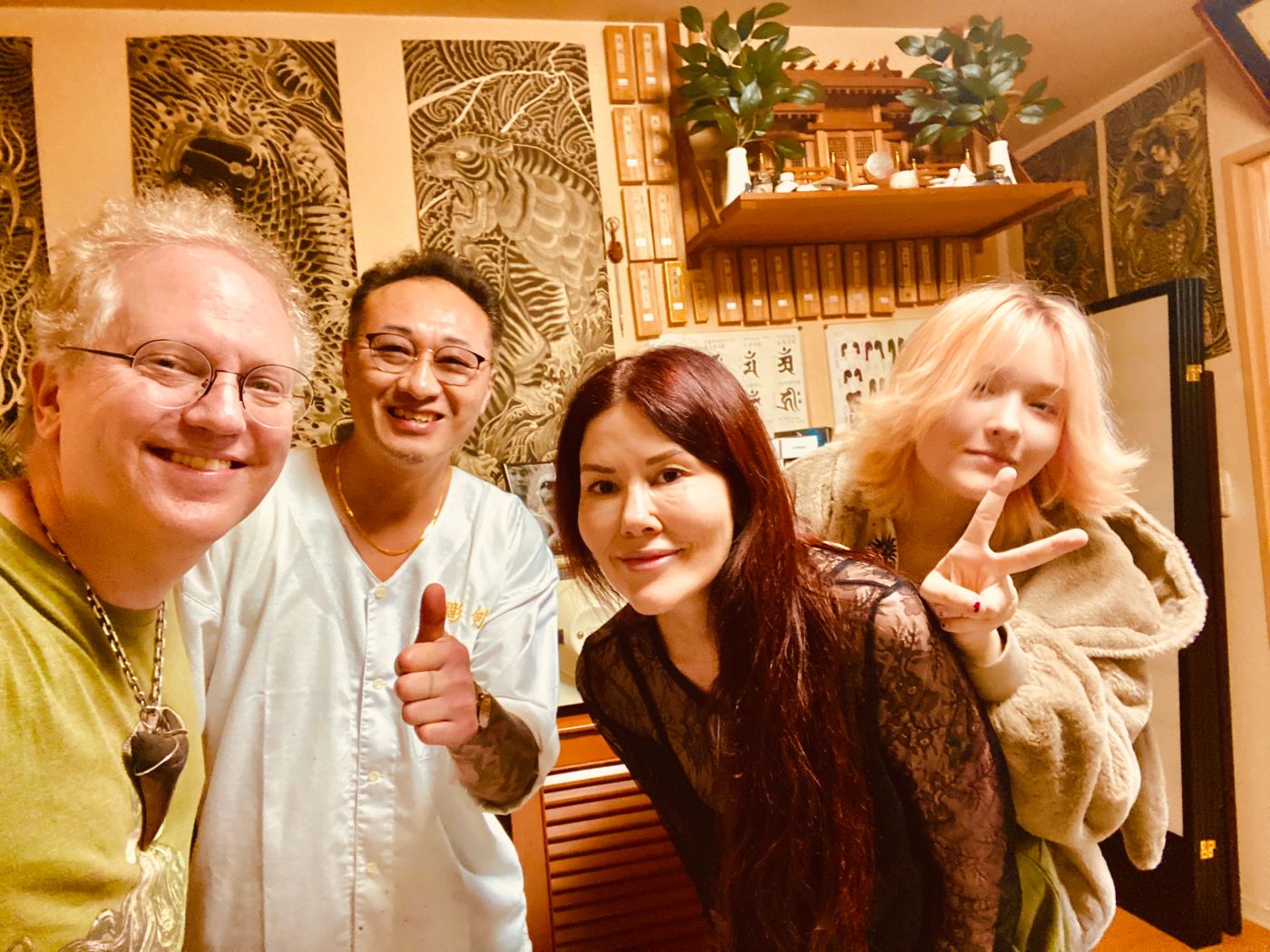
On day four Jaime and Scott trundled with me to Machida city and met my artist. That was really fun, and I warned Sensei I’ll be back again in December with even more reinforcements—they’ll be seven of us next time! It’s important to me for my family to meet my artists, whenever possible. I’m not sure why, exactly. Is that for their benefit, or for mine?
I’m going to write soon about the events unfolding in Israel and Gaza, as those are a very big deal to me as a Jew and have some relation to the trajectory of my tattoo projects, but not in this blog entry. The subject isn’t funny at all and doesn’t fit with my usual wise-guy tone, as in the above. Though we learned about it as kids all the time, the Holocaust was always something of an abstraction for me, and now it isn’t, but that merits a discussion all its own.